Yields at Multidecade Highs Force Markets to Weigh AI Earnings Against Bond Math
Tuesday's session is being shaped by a collision between strong semiconductor earnings and a bond market that keeps making equities harder to own.
The morning the bond market took charge
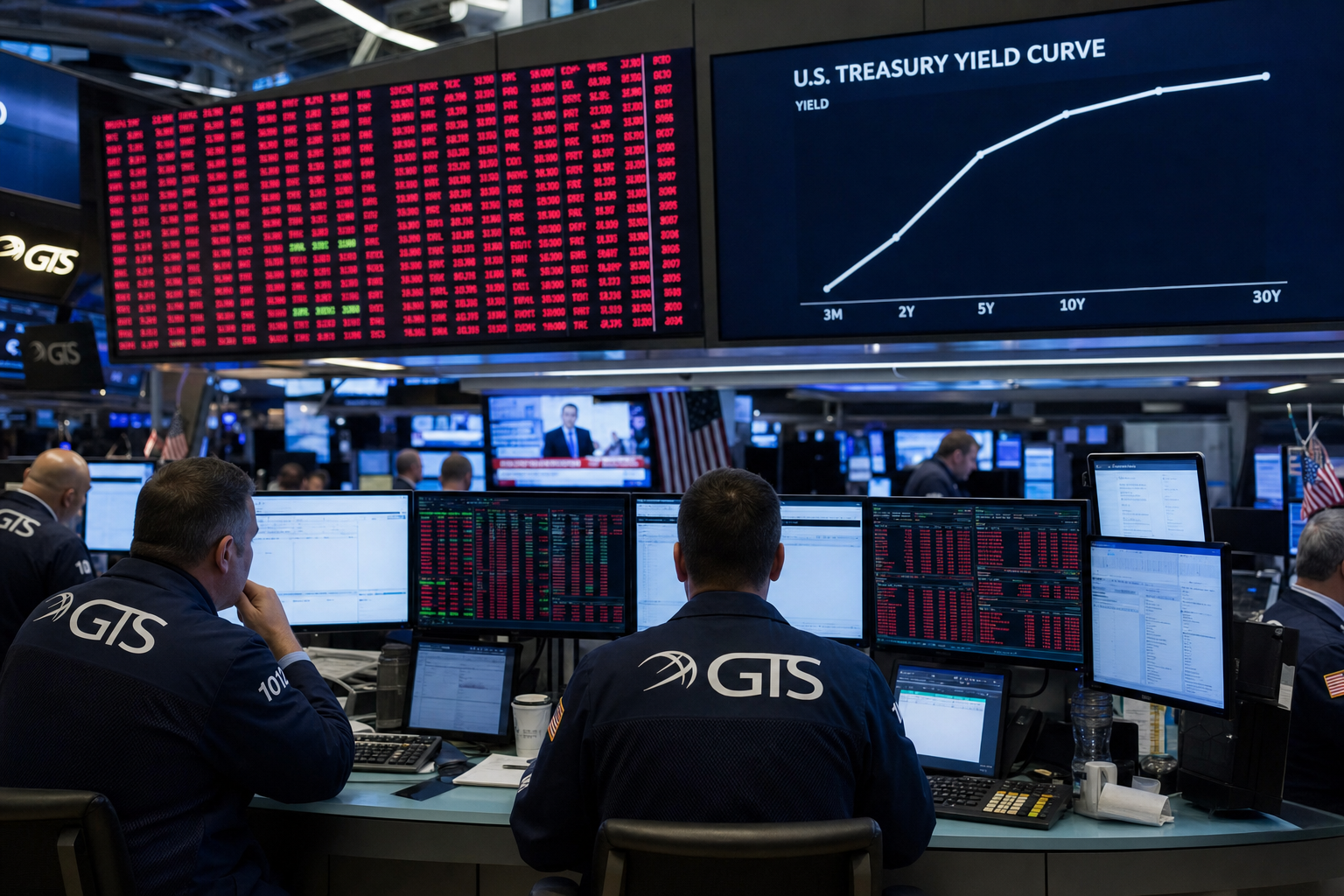
The session opened with a clear macro signal: long-dated Treasury yields — the interest rates the U.S. government pays on its debt, which move inversely to bond prices — climbed to their highest levels in decades. That single dynamic set the tone for everything that followed. When yields move this sharply, the calculus for holding equities changes. Future earnings get discounted at a higher rate, risk premiums expand, and investors who can earn more in government bonds without taking equity risk tend to do exactly that.
Stocks declined broadly in response. The S&P 500 (^GSPC), Dow (^DJI), and Nasdaq (^IXIC) all traded lower through the morning session, with growth-oriented technology names — the most sensitive to rate movements — bearing the brunt.
Geopolitics added a second layer of pressure. Progress toward a U.S.-Iran diplomatic resolution has stalled, which markets read as reducing the probability of near-term energy supply relief and increasing the likelihood that central banks maintain restrictive monetary policy for longer. Higher-for-longer rates are not a new story, but the bond market's Tuesday move gave the thesis fresh urgency.
What the morning confirmed — and complicated
The morning's narrative held: risk aversion dominated, and the macro backdrop remained the primary driver of cross-asset moves. But the session also surfaced a tension that has been building for weeks.
Central bank economists issued a pointed warning that AI-driven valuations are "worrisome" and could set markets up for a significant correction. The language is deliberate — central bank researchers rarely reach for words like that — and the timing is notable. The warning does not dispute AI's long-run economic potential. The concern is that current prices may already reflect an overly optimistic adoption timeline, leaving little margin for any disappointment.
That warning landed alongside a semiconductor earnings season that tells a different story. AMD (AMD), Apple (AAPL), ASML (ASML), and Broadcom (AVGO) all beat revenue expectations this quarter. The common thread was AI infrastructure spending — data centers buying chips at scale to train and run AI models. ASML's strength is particularly telling: the Dutch company makes the lithography machines essential to advanced chip manufacturing, and its results signal broad supply chain health rather than a single-company windfall. AMD's recent acquisition of a Canadian startup focused on AI-optimized chips also sharpened its competitive positioning against Nvidia (NVDA) in the AI inference market.
The contradiction is real and unresolved. Corporate spending on AI is happening now, at scale, and producing real revenue. Simultaneously, the macro environment — rising yields, geopolitical friction, and stretched valuations — is flashing caution. Both things are true at once, which is why the session has felt more unsettled than the earnings headlines alone would suggest.
The afternoon setup
Two dynamics deserve close attention through the rest of Tuesday's session.
First, the bond market. If long-dated yields continue to push higher into the close, expect equity selling pressure to persist or intensify. Watch whether the 10-year and 30-year Treasuries hold their elevated levels or attract dip buyers — any stabilization in yields would likely provide some relief to equity markets, particularly for rate-sensitive growth names.
Second, the Nvidia overhang. NVDA's August 26 earnings report is now the defining near-term catalyst for the entire AI trade, and Tuesday's session is being priced with that in mind. Bank of America has argued the stock may be trading at a discount of up to 50% to its fair value, and GF Securities raised its price target to $345. Nvidia separately committed $1.5 billion to build an AI data center in Ohio with OpenAI as the anchor tenant — a signal that the company is expanding its role from chip supplier to infrastructure participant. Bank of America's description of the August 26 report as a "moment of truth" reflects how much sentiment around the broader AI trade hinges on whether Nvidia can sustain its revenue trajectory. A miss, or cautious guidance, would ripple well beyond the stock.
On the M&A front, Goldman Sachs (GS) confirmed its acquisition of LCN Capital Partners for up to $410 million, extending its asset management footprint in real estate. Amazon (AMZN) is reportedly among bidders for AI startup Decart at a valuation of $6 billion to $7 billion — a price that, if confirmed, would rank among the larger AI acquisition figures to date and underscores how aggressively the major cloud platforms are competing for proprietary AI assets.
Walmart is scheduled to report second-quarter earnings, which will offer a read on consumer health and e-commerce momentum at a moment when macro signals are mixed.
What to watch into the close
The session's key variables are straightforward. Treasury yields are the primary lever: their direction into the close will determine whether equity markets find footing or extend the morning's losses. The Nasdaq's relative performance versus the broader market will indicate whether traders are specifically repricing AI-linked growth names or selling more indiscriminately.
For those tracking the AI trade specifically, AMD's post-earnings price action is a useful signal — the stock beat expectations but is contending with the same yield headwinds as everything else. If it holds gains despite the macro pressure, it suggests the market is still willing to reward AI earnings on their own merits. If it gives back ground, the macro is winning the argument for now.
The August 26 Nvidia report remains the week's most consequential event. Everything between now and then is positioning.