Warsh's Hawkish Fed Debut Sends Stocks and Bonds Reeling
The Federal Reserve's first rate decision under Kevin Warsh delivered a hawkish shock — a held rate paired with a dot plot pointing to a hike — that repriced equities, bonds, and the dollar in a single session.
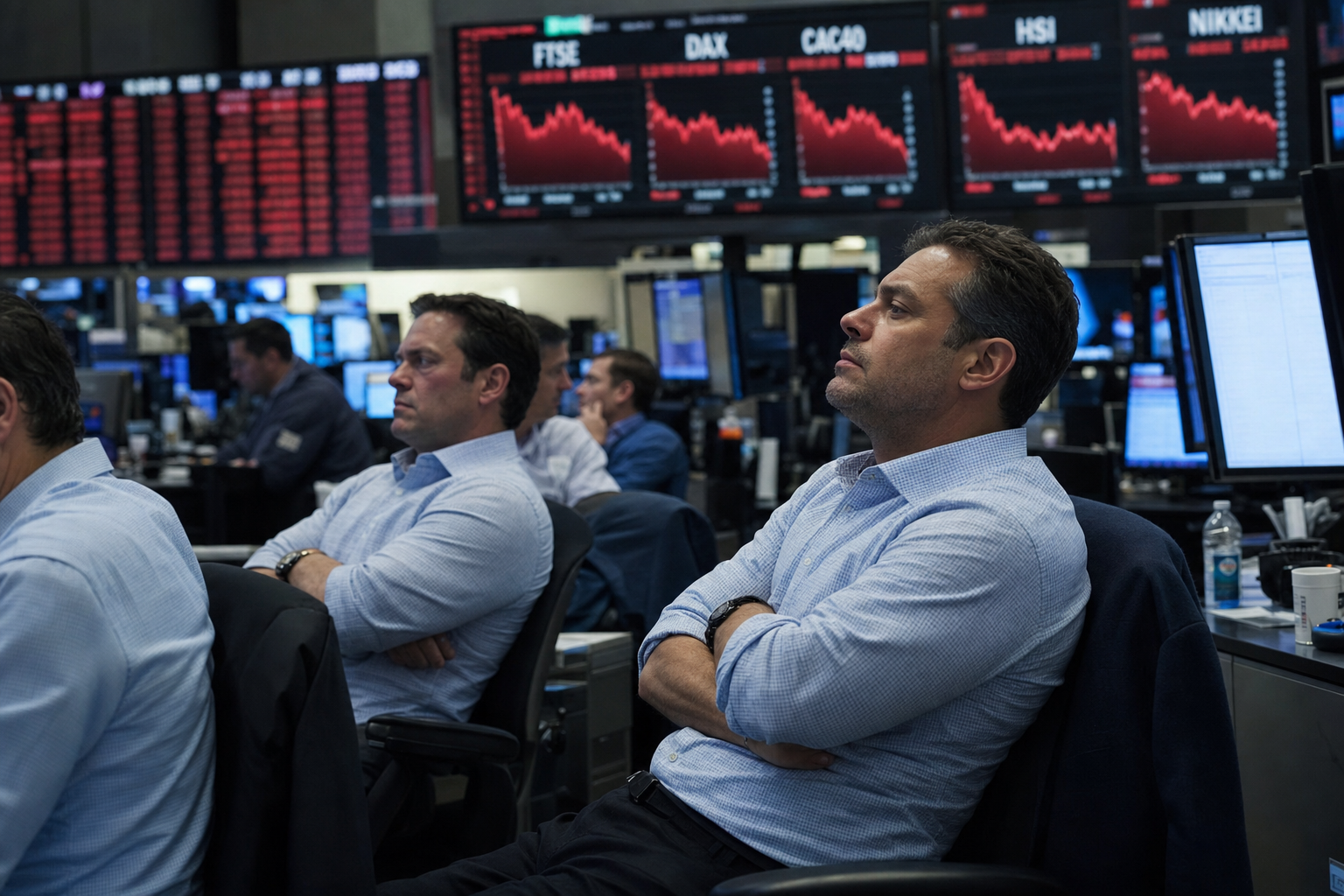
The Session
Wednesday's close confirmed what the afternoon had been signaling: this was a Fed day that genuinely surprised. The S&P 500 fell approximately 1.1% and the Dow Jones Industrial Average dropped around 410 points by the closing bell. Treasury yields rose, gold weakened, and the U.S. dollar index strengthened as traders rapidly repriced the path of monetary policy after Kevin Warsh's first press conference as Federal Reserve chair.
Markets had entered the session broadly expecting a hold — and they got one. What they did not expect was the degree of hawkish lean that accompanied it. The updated dot plot, a quarterly chart in which individual Fed officials mark their rate forecasts, shifted in a direction that implied the next move is more likely a hike than a cut. That single signal was enough to unwind months of market positioning built around an easing bias.
The session's tone was set within minutes of the 2:30 p.m. ET press conference. There was no ambiguity in how traders read Warsh's emphasis on the Fed's 2% inflation mandate.
Winners and Losers
Consumer discretionary names bore the sharpest pain. AMZN (Amazon) was hit from two directions simultaneously: the broader risk-off selloff triggered by the Fed's hawkish signal, and a separate Federal Trade Commission enforcement action alleging deceptive advertising practices. The FTC, the U.S. consumer protection and antitrust regulator, has the authority to impose financial penalties and mandate operational changes. Amazon has not publicly responded to the action.
TGT (Target) also featured among the session's notable decliners as consumer-facing names retreated on the prospect of rates staying higher for longer — a dynamic that tends to compress consumer spending and squeeze discretionary retailers.
The financials sector presented a more complicated picture. GS (Goldman Sachs) and MS (Morgan Stanley) had climbed to record highs in the hours before the Fed's decision, reflecting investor positioning ahead of what some had anticipated would be a neutral or mildly dovish signal. Banks can benefit from higher rates over time — wider spreads between borrowing and lending rates support net interest income, the difference between what banks earn on loans and pay on deposits. But the broader equity selloff and uncertainty around Warsh's stated intention to revisit the Fed's communication strategy tempered the earlier enthusiasm. Whether those record highs hold will depend heavily on the economic data that follows.
In European equities, BMW (BMW AG) delivered the session's most jarring single-stock move, falling 7.8% after cutting its 2026 automotive profit margin guidance. The culprit: an intensifying price war in China, where domestic electric vehicle manufacturers have been aggressively discounting, eroding the pricing power that premium foreign brands have historically relied upon. China is BMW's largest single market, and the guidance revision signals the damage has become material enough to affect full-year forecasts. The move is a warning to peers — Mercedes-Benz, Volkswagen, and others with heavy China exposure — that the competitive pressure from local EV makers is no longer a rounding error.
Under the Surface
The bond market's reaction was swift and clean. Treasury yields climbed as prices fell, consistent with a market adjusting to a higher-for-longer rate environment. The dollar's strength reinforced the same message: higher expected U.S. rates make dollar-denominated assets more attractive to global investors, pulling capital toward the currency.
Precious metals weakened, which fits the pattern. Gold tends to underperform when real rates rise and the dollar strengthens, as both reduce the opportunity cost of holding non-yielding assets and make dollar-priced commodities more expensive for foreign buyers.
Warsh also signaled he may alter the Fed's communication approach — a detail that added a second layer of uncertainty on top of the rate signal itself. Markets have spent years calibrating to a particular Fed communication style. Any structural change to press conference formats, statement language, or the dot plot's role in guidance creates model risk for fixed-income traders and macro funds that have built frameworks around existing conventions.
Away from the macro, NVDA (Nvidia) provided a counterpoint to the risk-off mood. The company priced $25 billion in investment-grade senior notes earlier in the week — one of the largest corporate bond deals in the technology sector in recent memory — to fund its AI and data center expansion. Nvidia also began European manufacturing of its Vera Rubin NVL72 AI platform in partnership with French technology firm Bull and Taiwan's Foxconn. The bond deal found strong investor demand even as broader markets sold off, a signal of how differentiated appetite for Nvidia credit remains relative to the general equity risk environment.
The day's most striking corporate headline came from outside public markets. SpaceX confirmed a $60 billion acquisition of Anysphere, the San Francisco-based company behind AI coding tool Cursor. The all-stock deal, pending regulatory approval, is among the largest private AI acquisitions on record and positions SpaceX — primarily an aerospace and satellite company — as a serious player in enterprise AI software. The transaction reportedly pushed SpaceX's implied valuation past Amazon's, making it the fifth most valuable company globally. Elon Musk's ambition to embed AI across his business operations has been a recurring theme; this deal is its most concrete expression yet.
Tomorrow's Setup
The session's dominant question carries directly into Thursday: how much of the Fed's hawkish signal is already priced in, and how durable is it? A single dot plot shift does not guarantee a hike — it signals a bias. Markets will now watch incoming inflation data and any public remarks from FOMC (Federal Open Market Committee) members for clarification on the timing and conditions that would trigger an actual increase.
Warsh's communication strategy comments deserve continued attention. If the Fed is considering structural changes to how it signals policy — whether that means fewer press conferences, a revised dot plot format, or different statement language — the implications for fixed-income volatility could be significant.
The BMW warning will likely prompt analyst updates on European auto sector exposure to China. Watch for any guidance revisions from Mercedes-Benz or Volkswagen in the sessions ahead. The SpaceX-Anysphere deal will draw regulatory scrutiny and further analyst commentary on AI M&A valuations. And Amazon faces the dual headwind of the FTC action and a rate environment that pressures consumer spending — two separate risks that landed on the same day.