Warsh's Fed Debut Looms as SpaceX, Nvidia Reshape the Market Landscape
With Kevin Warsh's first press conference minutes away, bond markets, the dollar, and equities are all waiting for their cue — while a 50% SpaceX rally and a $25 billion Nvidia debt deal reframe the session's broader narrative.
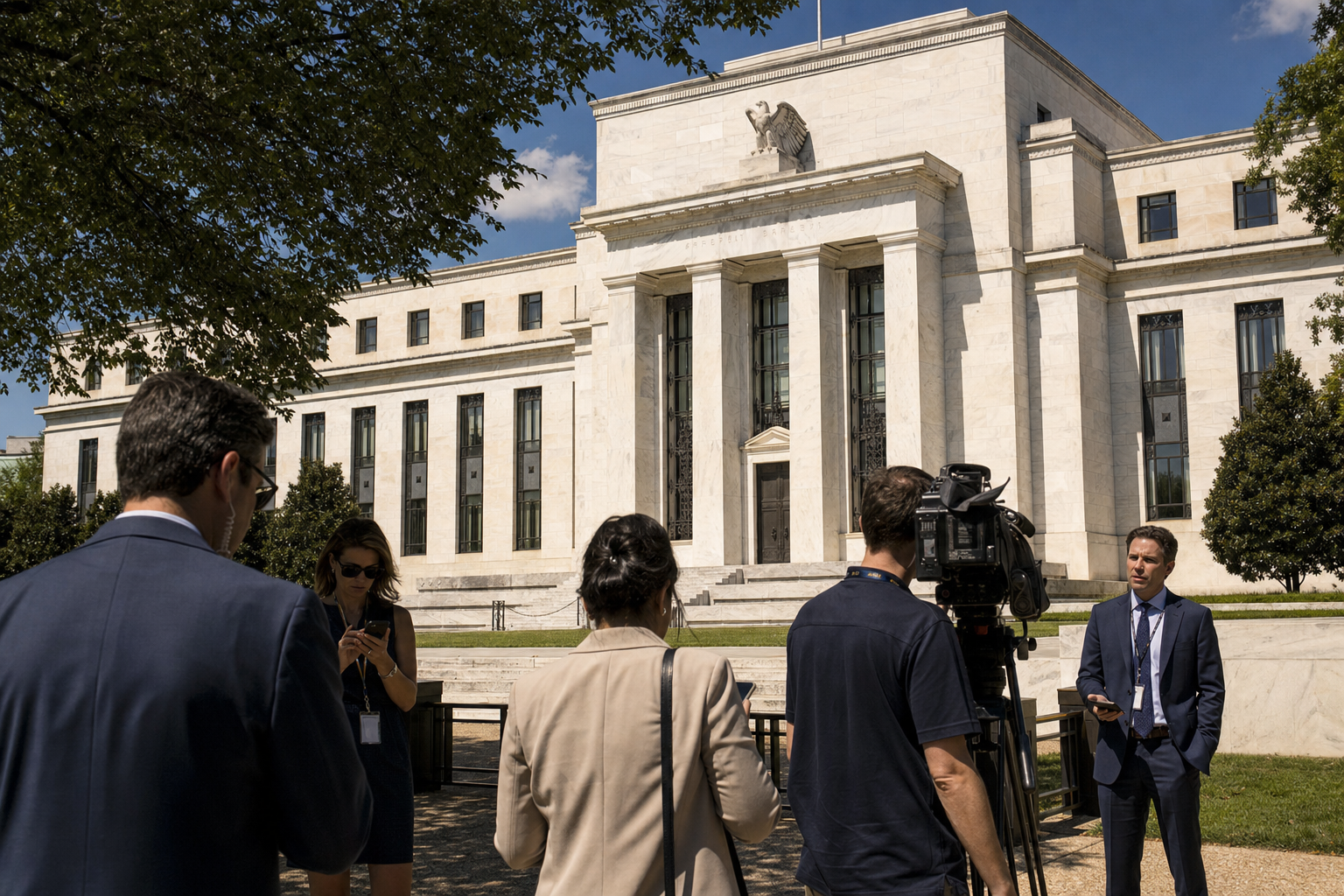
The Morning in Review
Wall Street spent the first half of Wednesday's session in a familiar pre-Fed holding pattern — volumes measured, moves contained, traders reluctant to commit size ahead of an event that could reprice the entire rate curve. The Federal Reserve's interest rate announcement, followed by new Chair Kevin Warsh's inaugural press conference at 2:30 p.m. ET, is the dominant catalyst. But the morning was far from quiet.
SpaceX (SPCX) continued its remarkable post-IPO run, with shares holding gains that have now reached roughly 50% since the company's Nasdaq debut. That move pushed SpaceX's valuation above $2.66 trillion, overtaking Amazon in the global market-cap rankings and cementing its place among the five most valuable publicly traded companies in the world. The company's announced $60 billion all-stock acquisition of AI coding startup Cursor — pending regulatory approval — added further fuel, signaling that SpaceX's ambitions extend well beyond rockets and satellite internet.
Nvidia (NVDA) priced its $25 billion investment-grade bond deal earlier today, one of the largest corporate debt raises in recent memory. The capital will fund AI infrastructure and data center expansion, placing Nvidia alongside Meta, Amazon, Oracle, and Salesforce in the cohort of technology companies that have turned to debt markets to bankroll the AI buildout. Nvidia also commenced European manufacturing of its Vera Rubin NVL72 AI platform in partnership with Bull and Foxconn — a supply chain move designed to reduce geographic concentration risk.
The Narrative Holding — With One Caveat
The morning's price action has broadly confirmed the setup from the overnight session: risk assets are in a wait-and-see mode rather than a risk-off retreat. That is itself a signal. Markets are not pricing in a hawkish shock from Warsh. The lack of defensive positioning — no meaningful spike in the VIX, no sharp Treasury rally, no dollar surge — suggests participants expect either a hold with neutral language or a modest dovish tilt.
The caveat is BMW (BMW). The German automaker's shares fell 7.8% after it cut its 2026 automotive profit margin guidance, citing China's intensifying price war among electric vehicle manufacturers. That move is a live reminder that the macro backdrop outside the United States carries its own risk premium. China's auto sector headwinds are squeezing margins at one of Europe's most profitable manufacturers — a structural pressure, not a one-quarter aberration.
China's macro picture is further complicated by Beijing's announcement of a CNY 300 billion special bond issuance to recapitalize banks and address local government debt. The scale of the intervention — roughly $41 billion — underscores the stress on Chinese financial institutions. For global investors, it is a signal that Beijing is willing to deploy the sovereign balance sheet to contain credit risk, but it also confirms that the underlying vulnerabilities are real.
What the Afternoon Hinges On
Everything in the afternoon session flows through Warsh's press conference. The rate decision itself — whatever it is — will be absorbed quickly. The language is what matters.
Warsh is known for a historically hawkish disposition, having previously served as a Fed governor with a preference for tighter policy to contain inflation. But his first press conference as chair is a communication exercise as much as a policy one. Markets will be dissecting his word choices for any shift in the Fed's reaction function — the framework it uses to decide when and how to move rates.
Treasury yields are the most direct read. A statement that leans toward holding rates higher for longer would push the 10-year yield up and compress equity multiples, particularly in rate-sensitive sectors. A more balanced tone — acknowledging inflation progress while flagging growth risks — would likely support the current positioning, leaving equities near session highs and the dollar range-bound.
Goldman Sachs (GS) has crossed $1 trillion in M&A advisory volume year to date, a figure that reflects the breadth of the current dealmaking wave. The SpaceX-Cursor transaction is part of that pipeline. Whether that pace holds into the second half of the year depends in part on what the cost of capital looks like after today.
What to Watch Into the Close
The immediate focus is the 2:30 p.m. ET press conference. Watch the 10-year Treasury yield as the cleanest real-time signal of how bond markets are reading Warsh's tone — a move above the morning's high would suggest the market heard something more restrictive than expected. The U.S. dollar index is the secondary tell; a sharp rally would indicate a hawkish surprise.
For equities, sector rotation matters as much as index level. Rate-sensitive areas — utilities, real estate, long-duration growth stocks — will react most sharply to any shift in the rate path narrative. NVDA's bond deal has already been absorbed; the stock's afternoon performance will reflect whether AI capital deployment enthusiasm survives a potentially tighter monetary backdrop.
BMW's warning carries a tail for the broader European auto sector. If China's price war is now severe enough to force guidance cuts at BMW, the pressure on Volkswagen, Stellantis, and other exposed manufacturers is worth monitoring in the days ahead — even if those names are not directly in today's session headlines.
Regulatory threads remain open. The FTC's action against Amazon (AMZN) and the Senate investigation into Tesla's (TSLA) Full Self-Driving safety claims are both developing stories that could generate headlines after the close or early Thursday. Neither is a same-day catalyst, but both carry headline risk for two of the market's most widely held names.