Warsh at the Fed: What a Hawkish Chair Means for Markets
Kevin Warsh's confirmation as Federal Reserve Chair signals a structural shift toward tighter monetary discipline, with far-reaching implications for rate-sensitive assets.
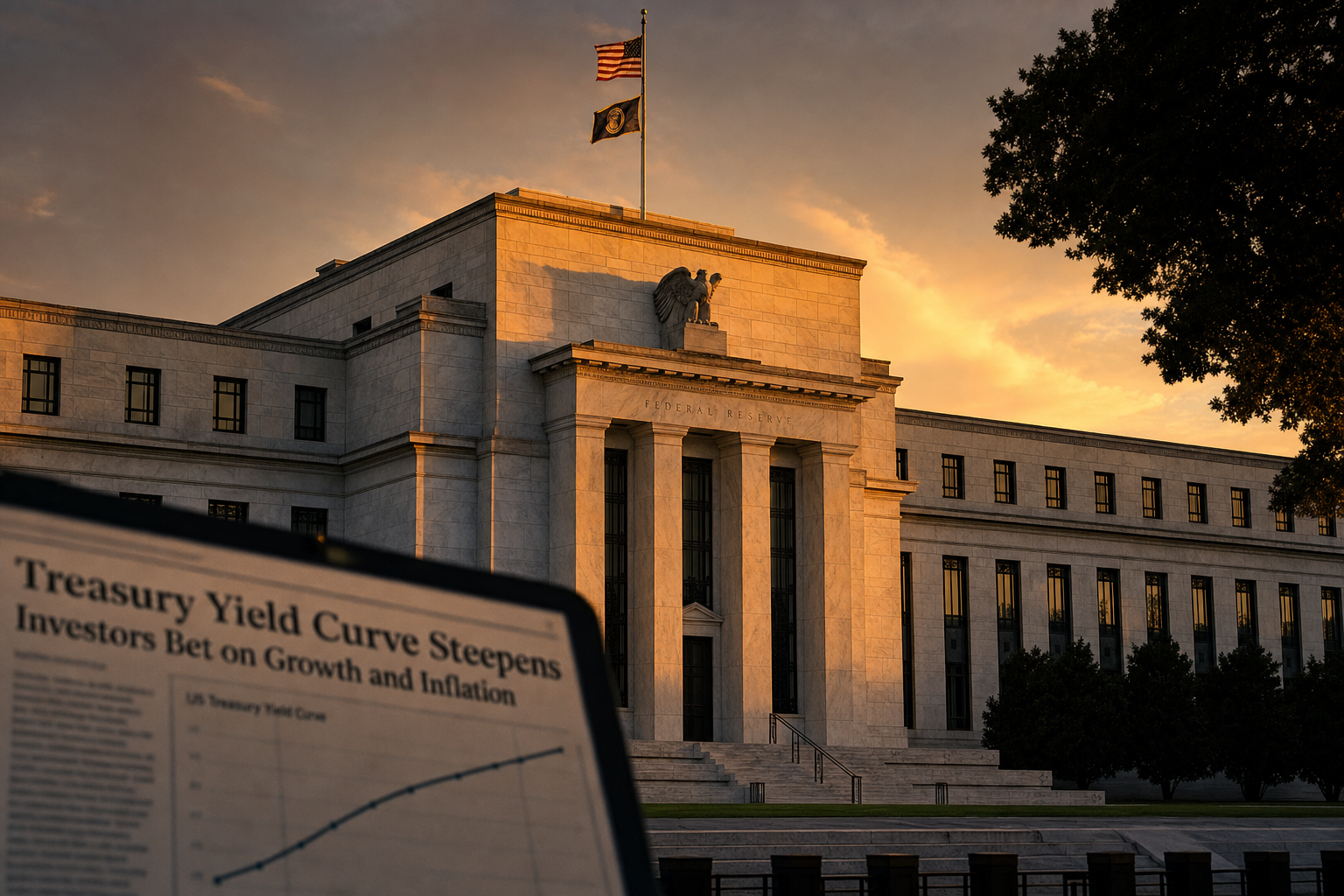
A New Regime at the Fed
The confirmation of Kevin Warsh as Chair of the Federal Reserve marks one of the most consequential leadership transitions at the central bank in decades. Warsh, a former Fed governor and Morgan Stanley investment banker, has long been associated with monetary hawkishness, institutional reform, and skepticism toward the expansive balance-sheet policies that defined the post-2008 era. For professional investors, this is not merely a personnel change — it represents a potential recalibration of the Fed's reaction function, with meaningful implications across fixed income, equities, and the dollar.
Who Is Warsh, and Why Does It Matter?
Warsh served on the Federal Reserve Board of Governors from 2006 to 2011, giving him firsthand experience navigating the Global Financial Crisis. He was notably critical of quantitative easing as a long-term policy tool, arguing that prolonged asset purchases distort price discovery and create financial stability risks. His academic and policy writing since leaving the Fed has consistently emphasized the importance of credibility, rules-based frameworks, and a leaner central bank balance sheet.
This ideological profile stands in contrast to the more accommodative posture that characterized much of the Jerome Powell era. Markets should expect a Fed under Warsh to be less inclined toward preemptive easing, more transparent about its normalization timeline, and potentially more aggressive in communicating tolerance for above-trend unemployment if it serves the inflation mandate.
Fixed Income: Repricing Duration Risk
The most immediate market implication falls on the Treasury curve. A Warsh-led Fed is likely to maintain a higher-for-longer bias on the federal funds rate and accelerate quantitative tightening (QT) — or at minimum, resist any near-term balance sheet expansion. This places upward pressure on long-duration yields, particularly the 10-year and 30-year Treasuries, as term premium re-enters the equation.
Investors holding long-duration fixed income — including those with significant exposure to TLT (iShares 20+ Year Treasury Bond ETF) — should reassess their duration positioning. Credit spreads in investment-grade and high-yield may also widen modestly as the cost of capital normalizes upward.
Equity Markets: Valuation Compression Risk
For equities, the calculus is more nuanced but directionally cautious. Higher real rates compress price-to-earnings multiples, particularly for long-duration growth assets. Technology and software stocks trading at elevated forward multiples — names like NVDA, MSFT, and high-multiple SaaS platforms — face a structural headwind if the risk-free rate remains elevated or moves higher.
Conversely, financials stand to benefit. A steeper yield curve and a more normalized rate environment improve net interest margins for banks. The KRE (Regional Banking ETF) and large-cap financials in the XLF basket could see multiple expansion as the operating environment improves.
Value-oriented and dividend-paying sectors — energy, industrials, and consumer staples — may also attract rotation as investors seek yield and earnings durability over speculative growth.
The Dollar and Global Spillovers
A hawkish Fed Chair typically supports dollar strength, as rate differentials widen relative to the ECB, Bank of Japan, and emerging market central banks. A stronger DXY creates headwinds for U.S. multinationals with significant overseas revenue, while pressuring emerging market debt denominated in dollars. Investors with international exposure should monitor currency hedging costs carefully.
Forward Outlook: Watching the First Signals
The critical near-term catalyst will be Warsh's first FOMC press conference and any early signals on balance sheet policy. Markets will parse his language on the neutral rate — if Warsh signals a higher structural neutral, the repricing across asset classes could be swift and significant.
Institutional investors should also watch for potential changes to the Fed's communication framework. Warsh has previously advocated for greater rules-based guidance, which could reduce the discretionary flexibility markets have come to rely on under forward guidance regimes.
The bottom line: Warsh's confirmation is a regime-change event for monetary policy. Portfolios built on the assumption of a structurally dovish Fed deserve a thorough reassessment.