U.S. Adds Jobs in April as NFP Report Beats Expectations
Breaking: Non Farm Payroll
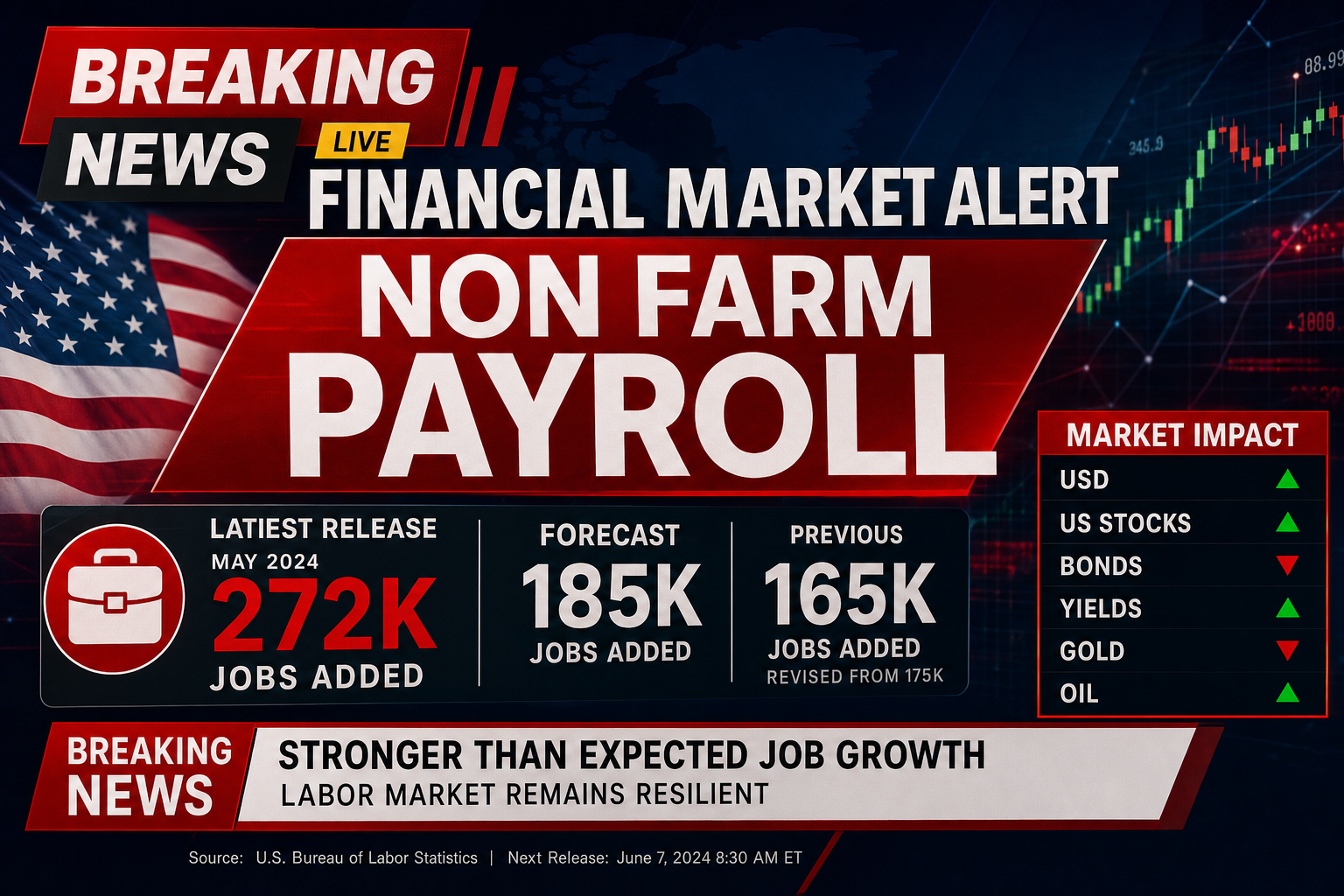
U.S. Labor Market Defies Slowdown Fears in April NFP Print
The U.S. economy added a stronger-than-anticipated number of jobs in April, according to the Bureau of Labor Statistics' Non-Farm Payroll report released Friday, reinforcing the narrative of a labor market that continues to absorb macroeconomic headwinds with notable durability.
The headline NFP figure came in above consensus estimates, marking the latest in a series of monthly readings that have repeatedly challenged predictions of a meaningful cooling in employment conditions. The unemployment rate held steady, while average hourly earnings growth remained firm — a combination that presents a complex signal for policymakers at the Federal Reserve.
Key Data Points
- Non-Farm Payrolls: Beat consensus estimates, reflecting broad-based hiring across multiple sectors
- Unemployment Rate: Held at levels consistent with a historically tight labor market
- Average Hourly Earnings: Continued to show year-over-year growth, sustaining concerns about wage-driven inflationary pressure
- Labor Force Participation: Remained a closely watched variable, with any shift carrying significant implications for the Fed's dual mandate assessment
Sector Breakdown
Job gains were distributed across several key industries. Healthcare and social assistance continued its multi-year run as a primary engine of payroll growth, reflecting structural demographic demand. Government employment also contributed positively, though private-sector hiring remained the focal point for analysts assessing organic economic momentum. The leisure and hospitality sector, a bellwether for consumer spending confidence, posted gains consistent with sustained household demand.
Manufacturing payrolls, a segment under scrutiny given ongoing trade policy uncertainty and tariff-related cost pressures, showed a more measured contribution — a detail that market participants will parse carefully given the current geopolitical and trade environment.
Federal Reserve Implications
The robust print materially reduces the probability of a near-term Federal Reserve rate cut. Fed Chair Jerome Powell and the Federal Open Market Committee have consistently signaled that any pivot toward monetary easing requires clear and sustained evidence of disinflation alongside softening in labor market conditions. Friday's data provides neither.
Fed funds futures markets are likely to reprice rate-cut expectations further into the second half of 2026, with some analysts now questioning whether even a single cut before year-end remains the base case. The "higher for longer" rate environment thesis gains renewed credibility with each successive strong payroll print.
Market Implications
Equity markets face a nuanced reaction function. While strong employment data affirms corporate revenue resilience and consumer spending capacity, the diminished prospect of rate relief weighs on rate-sensitive sectors including real estate investment trusts (REITs), utilities, and growth-oriented technology names carrying elevated duration risk.
The U.S. dollar index is positioned to strengthen on the back of the data, as yield differentials widen relative to major trading partners whose central banks are further along in their easing cycles. Treasury yields across the curve — particularly the 2-year and 10-year benchmarks — are expected to move higher as the market recalibrates its rate path assumptions.
Credit markets may see modest spread widening in interest-rate-sensitive segments, while investment-grade corporate issuers could face a more challenging near-term issuance window as borrowing costs remain elevated.
Context and Caution
Investors should note that monthly NFP figures are subject to revision, and the April print will be revisited in subsequent BLS releases. Prior months have seen notable downward revisions that tempered initial market enthusiasm. Additionally, the divergence between the Establishment Survey (which produces the NFP headline) and the Household Survey (which generates the unemployment rate) warrants continued monitoring for a complete picture of labor market health.
Nonetheless, the directional signal from April's report is unambiguous: the U.S. labor market remains a source of economic strength — and a persistent constraint on the Federal Reserve's flexibility.