U.S. Adds 172,000 Jobs in May, Complicating Fed Rate-Cut Path
The stronger-than-expected payroll print rattles rate-cut expectations, sending S&P 500 futures lower and reigniting debate over the Fed's next move.
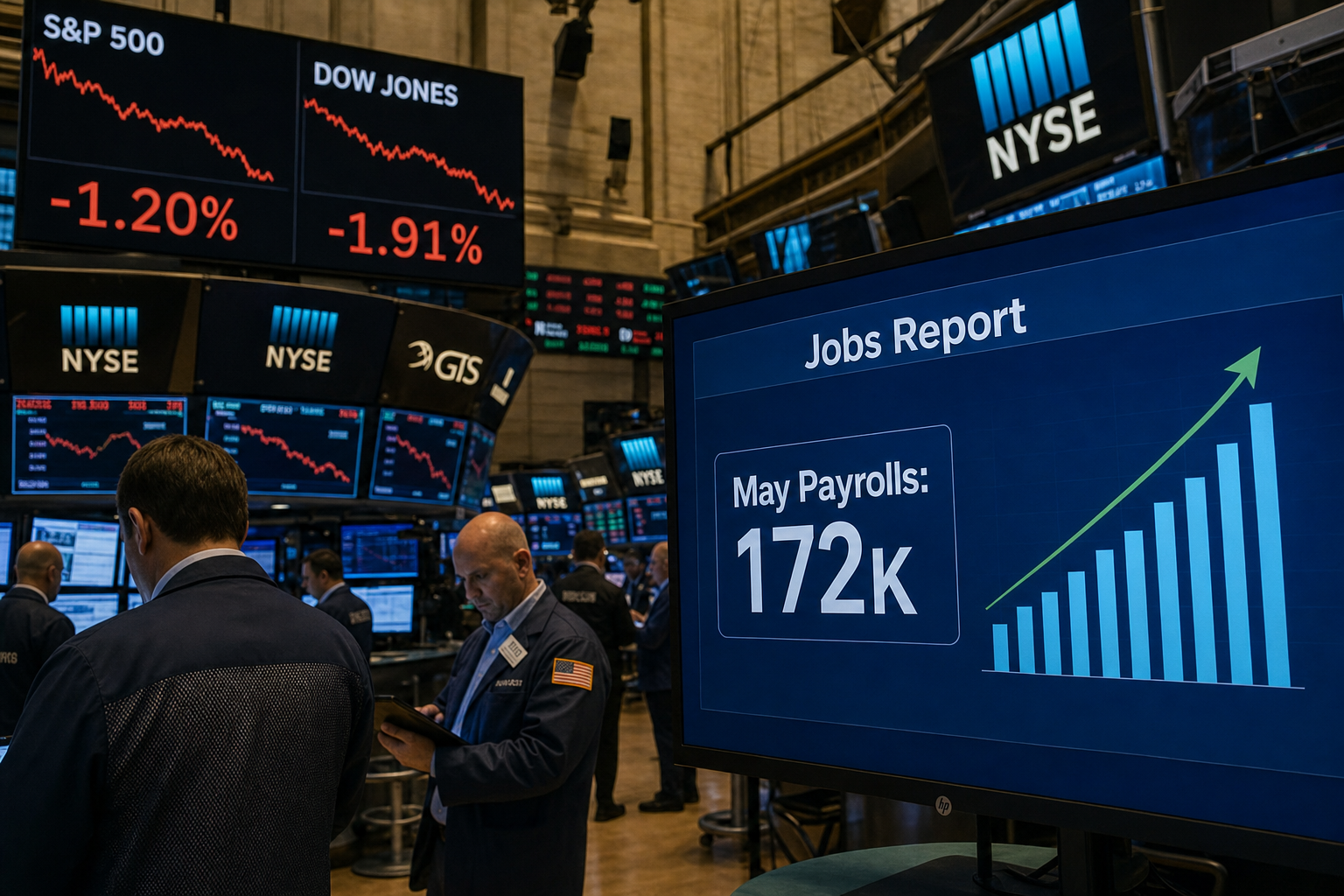
May Payrolls Beat Tempers Fed Easing Hopes
The U.S. economy added 172,000 nonfarm payroll jobs in May, a reading that landed above consensus forecasts and immediately pressured equity futures and rate-sensitive assets as markets reassessed the timeline for Federal Reserve interest rate cuts.
The report, released Friday morning by the Bureau of Labor Statistics, signals that the labor market remains resilient despite more than two years of restrictive monetary policy — a dynamic that gives Fed officials limited political cover to pivot toward easing in the near term.
Market Reaction: Equities Slip, Rate Expectations Shift
S&P 500 futures slipped following the release, while the Dow Jones Industrial Average wavered in early trading as investors digested the implications. Bond markets moved swiftly, with yields on the 2-year Treasury — the maturity most sensitive to Fed policy expectations — ticking higher as traders trimmed bets on an imminent rate reduction.
The reaction underscores how acutely professional investors are monitoring labor data ahead of the Federal Open Market Committee's upcoming policy meeting. A labor market generating jobs at this pace makes it harder for the Fed to justify cutting rates without risking a re-acceleration of inflation.
Fed Tripwire: What 172K Means for Policy
The 172,000 figure sits in an uncomfortable middle ground for policymakers. It is strong enough to suggest the economy is not cooling at the pace required to bring inflation sustainably back to the 2% target, yet not so robust as to definitively rule out any easing this year.
Fed Chair Jerome Powell and other FOMC members have consistently emphasized a data-dependent approach. This jobs print — particularly if accompanied by steady or rising wage growth — reinforces the case for the Fed to hold rates at their current restrictive level through at least the summer, pushing any potential cut further into the second half of 2026 or beyond.
The unemployment rate, which analysts had expected to hold steady, will be closely scrutinized alongside the headline number for any signs of slack emerging in the broader labor market.
Sector and Single-Stock Fallout
Beyond the macro implications, Friday's session saw notable single-stock volatility. Lululemon Athletica (LULU) plunged sharply after the athleisure retailer reported disappointing earnings, compounding the negative sentiment already weighing on consumer discretionary names. The confluence of a hawkish macro signal and weak corporate results from a bellwether consumer brand added pressure to an already cautious market open.
Broader Context: Tariff Uncertainty Lingers
The May payroll data arrives against a backdrop of ongoing trade policy uncertainty, with tariff-related cost pressures continuing to cloud the corporate earnings outlook. A Fed that remains on hold — or is perceived as leaning hawkish — raises the cost of capital at precisely the moment businesses are navigating elevated input costs and softer consumer sentiment in some segments.
For fixed-income investors, the report reinforces a higher-for-longer rate environment. For equity markets, it narrows the valuation cushion that rate-cut expectations had provided to growth and technology stocks over recent months.
What to Watch Next
Investors will now focus on the May Consumer Price Index (CPI), due in the coming weeks, as the next critical data point that could either validate or challenge the hawkish read of today's jobs report. Fed speakers in the days ahead will also be closely monitored for any shift in tone following the payroll surprise.
For now, the May nonfarm payrolls print has materially reduced the probability of a near-term Fed rate cut and reset the risk calculus for rate-sensitive asset classes heading into the summer.