Trump's China Visit: Recalibrating Trade Risk in Portfolios
A diplomatic thaw between Washington and Beijing carries asymmetric implications for equities, supply chains, and the dollar — but structural tensions remain unresolved.
The Market's Misread on U.S.-China Diplomacy
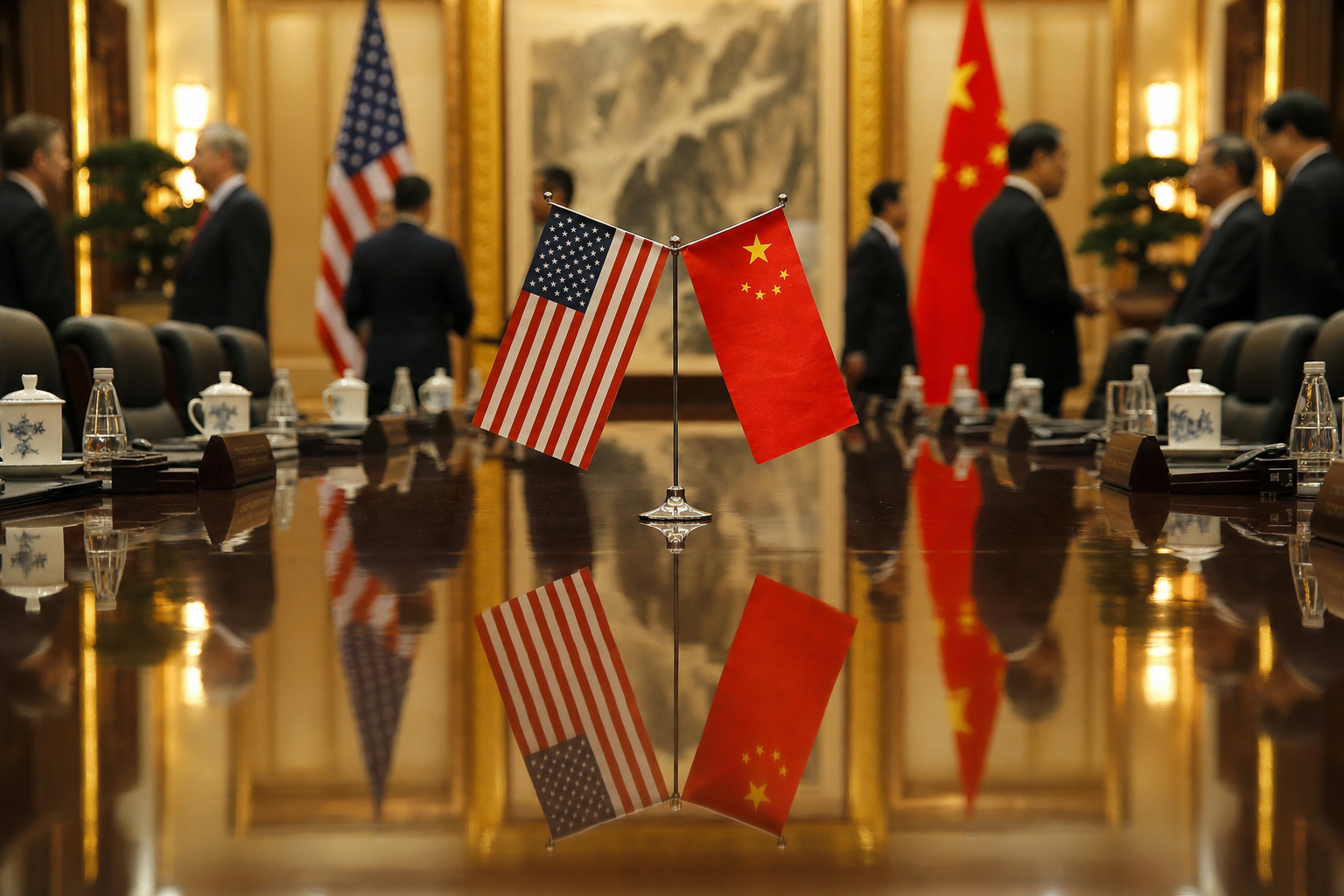
The optics of a Trump visit to China tend to generate outsized market reactions relative to the durable policy shifts that actually follow. Investors who treat diplomatic pageantry as a fundamental re-rating catalyst risk being caught offside when the structural architecture of the trade conflict reasserts itself. The more disciplined read: a Trump-China summit creates a tactical window of reduced volatility, not a secular reversal of decoupling pressures.
That said, the market impact is real and measurable — and positioning accordingly matters.
Immediate Equity Market Implications
Historically, U.S.-China diplomatic engagement produces a predictable rotation. Risk assets rally, particularly in sectors with high China revenue exposure. Names like Apple (AAPL), which generates roughly 18% of revenue from Greater China, and NVIDIA (NVDA), whose data center ambitions in Asia remain constrained by export controls, tend to outperform in the days surrounding such meetings.
Broad emerging market ETFs — particularly EEM and FXI, the iShares China Large-Cap ETF — typically see inflows as investors reduce their geopolitical risk discount. The S&P 500 (SPY) and Nasdaq-100 (QQQ) also benefit from the general risk-on impulse, though the lift is more diffuse.
On the flip side, defense contractors and domestic semiconductor manufacturers that have benefited from the decoupling narrative — think companies supplying reshoring infrastructure — may face modest headwinds as the geopolitical premium compresses temporarily.
Trade Policy: What a Summit Can and Cannot Do
The critical analytical distinction is between tariff optics and tariff mechanics. A Trump visit can yield a joint communiqué, a pause on escalation, or even a targeted rollback of specific levies — all of which move markets. What it cannot easily do is unwind the structural export control regime that has accumulated since 2018, including semiconductor restrictions under the Entity List framework and CHIPS Act provisions designed to onshore advanced manufacturing.
The Phase One Trade Deal of 2020 offers a cautionary precedent: China met only a fraction of its $200 billion purchasing commitments, yet markets priced in the full optimism of the agreement at signing. Investors should apply a similar discount to any headline commitments emerging from a 2026 summit.
Currency and Commodity Channels
A diplomatic thaw typically exerts downward pressure on the U.S. dollar in the near term, as reduced safe-haven demand and improved risk sentiment reduce dollar inflows. This dynamic benefits commodity exporters and emerging market currencies more broadly.
Copper — a bellwether for Chinese industrial demand — tends to rally on China engagement news, making FCX (Freeport-McMoRan) a tactical long in this environment. Agricultural commodities, particularly soybeans, are also sensitive given China's role as the dominant buyer of U.S. soy exports.
The Forward-Looking Framework
For professional investors, the appropriate framework is to fade the euphoria at the margin while maintaining exposure to the genuine structural beneficiaries of any tariff relief. A few key questions to monitor:
- Are export controls on advanced semiconductors included in any deal framework? If so, that is a material positive for NVDA and AMD beyond the typical diplomatic bounce.
- Is there a formal purchasing agreement with enforcement mechanisms? Absent that, treat commodity rallies as tactical rather than fundamental.
- How does Beijing respond on Taiwan rhetoric? Any softening of U.S. posture on Taiwan in exchange for trade concessions would be a significant negative signal for defense sector positioning.
Positioning Takeaway
The Trump-China visit warrants a modest tactical tilt toward China-exposed equities and risk assets, with a hard stop on treating it as a structural de-escalation. Use any volatility compression to reassess hedges rather than remove them entirely. The decoupling of global supply chains remains a decade-long structural theme — one summit does not bend that arc.