Trade Deal Holds, SpaceX IPO Advances, and Nvidia Waits in the Wings
Wednesday's session is running on three distinct engines: a U.S.-China commercial breakthrough, Wall Street's most anticipated IPO mandate in years, and a chip-sector earnings report that will define the AI trade's next move.
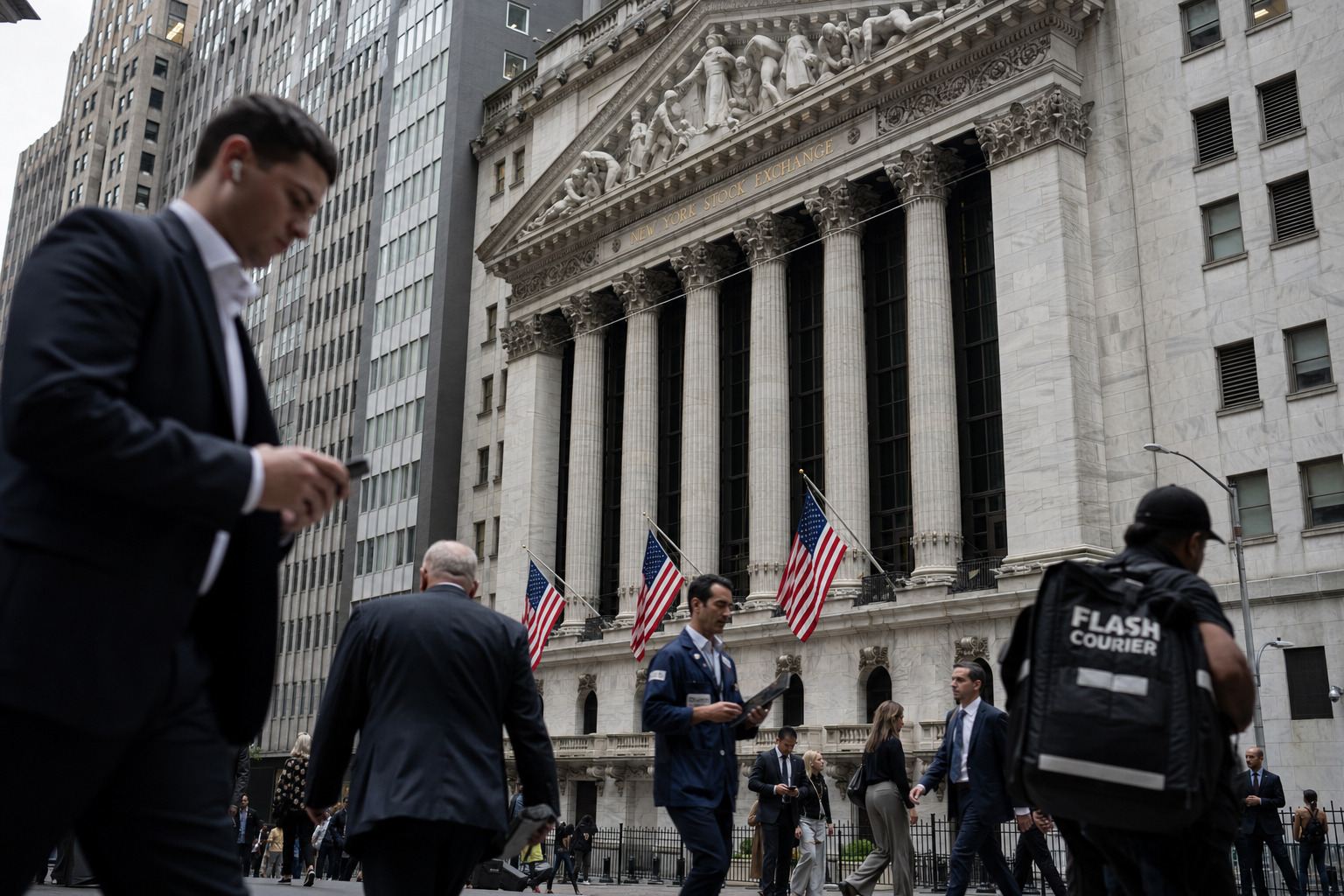
How the morning played out
Wednesday opened with more confirmed news flow than most sessions see in a week, and the market largely absorbed it constructively. The U.S.-China trade agreement — featuring a 200-jet Boeing (BA) order and reciprocal tariff cuts on $30 billion of goods from each country — provided the broadest and most durable lift. BA responded positively, and the deal's rare earth component carried secondary implications across defense and technology supply chains that had been exposed by prior export controls.
The morning's other headline — Goldman Sachs selected to lead SpaceX's anticipated IPO — added a distinct layer of market excitement. No pricing or timeline has been confirmed, but the selection of a lead underwriter is a concrete step forward in a process Wall Street has been tracking for years. If the deal proceeds at the scale widely anticipated, it would surpass all prior IPO records.
Both stories reinforced a risk-on tone that has been building since the trade framework was first confirmed following the Trump-Xi meeting. The session's early direction: broadly constructive, with industrial and materials names benefiting from the trade news and financials getting a secondary read-through from the SpaceX mandate.
The themes holding — and the one adding friction
Three narratives are shaping the afternoon session.
The trade deal remains the day's anchor. China's agreement to ease rare earth export restrictions is the detail that extends beyond Boeing. Rare earths are embedded in defense systems, consumer electronics, and clean energy hardware — their controlled supply has been a pressure point for U.S. manufacturers for years. The easing is described as limited in scope, which means the market is pricing in progress without assuming a full resolution. That's a reasonable read: the deal signals that high-level diplomatic engagement is producing tangible commercial outcomes, but broader negotiations are clearly ongoing.
The SpaceX IPO mandate is a different kind of story — one with no immediate price discovery but significant forward implications for equity capital markets. Goldman Sachs leading an offering of this scale would represent one of the most consequential investment banking assignments in recent memory. For investors, the more immediate question is what a SpaceX listing would mean for the broader technology IPO pipeline. A successful deal at record size could reopen appetite for large private-company listings that have been deferred through the rate-uncertainty cycle.
The third theme is the one adding friction: rising Treasury yields and their fiscal consequences. Higher long-term yields have added roughly $2 trillion to the projected cost of U.S. government debt, compounding the pressure on a federal balance sheet that has already drawn periodic scrutiny from bond markets this year. This dynamic doesn't move equities in a straight line, but it sits beneath the surface of every rate-sensitive sector and complicates the Federal Reserve's eventual pivot calculus.
The ECB signal and its cross-asset read
Europe added its own macro undercurrent. Sources cited by ForexLive indicated that a European Central Bank rate hike in June is now considered very likely, with persistent inflation driven by high energy costs outweighing concerns about slowing eurozone growth. That framing — inflation imperative overriding growth risk — is a hawkish signal that puts upward pressure on the euro and European short-duration bond yields.
For U.S. markets, the ECB signal matters at the margin. It reinforces a global picture of central banks maintaining restrictive policy longer than markets had hoped earlier this year. That backdrop doesn't derail Wednesday's risk-on tone, but it sets a ceiling on how aggressively rate-cut expectations can be repriced in the near term.
The afternoon setup: everything points to Nvidia
Nvidia (NVDA) reports first-quarter results after today's close, and the setup going in is unusually consequential. Analysts are focused on three items beyond the headline numbers: any share buyback announcement, updates on new chip rollouts, and management's commentary on data center demand. Because NVDA supplies the GPUs that power the majority of large AI training workloads, its guidance functions as a proxy for the entire AI capital expenditure cycle.
The broader chip sector has its own subplot running in parallel. Qualcomm (QCOM) has reportedly expressed acquisition interest in AI chip startup Tenstorrent. Intel (INTC) shares rose after separate reports emerged that Intel is also in talks to acquire the same company — raising the prospect of a competitive bidding process. Both moves reflect the intensity with which established chipmakers are racing to close the gap with Nvidia in AI infrastructure, and both stories will be read through the lens of whatever Nvidia's report reveals about the market's actual trajectory.
Options markets have been pricing in meaningful single-session price swings for NVDA, which means the after-hours reaction will set the tone for chip stocks when Thursday's session opens. A strong result with confident guidance could reinforce the AI trade's momentum; a cautious outlook would test a rally that has been built substantially on AI infrastructure spending expectations.
What to watch into the close
The trade deal narrative is largely priced for now — the market will be watching for any follow-up details on the scope of rare earth relief and whether the $30 billion tariff framework expands. BA is the cleanest single-stock expression of the deal's commercial value, but materials and defense names with rare earth exposure deserve attention as the details firm.
For the macro picture, the ECB signal adds to a week that is already testing the market's tolerance for higher-for-longer rates globally. The $2 trillion addition to U.S. debt-service projections from rising yields is a slow-moving pressure, not a session catalyst — but it frames the bond market's posture heading into any further fiscal news.
The session closes with NVDA as the unresolved variable. The chip sector's afternoon trading will reflect positioning ahead of the print, and the after-hours reaction will be the first real data point on whether the AI trade's underlying demand story is holding at the pace the market has assumed.