Tesla's Record Quarter Lifts Sentiment as Google Absorbs Final EU Blow
A blowout Tesla delivery number and a closed Google antitrust case are pulling markets in opposite directions on a shortened holiday week.
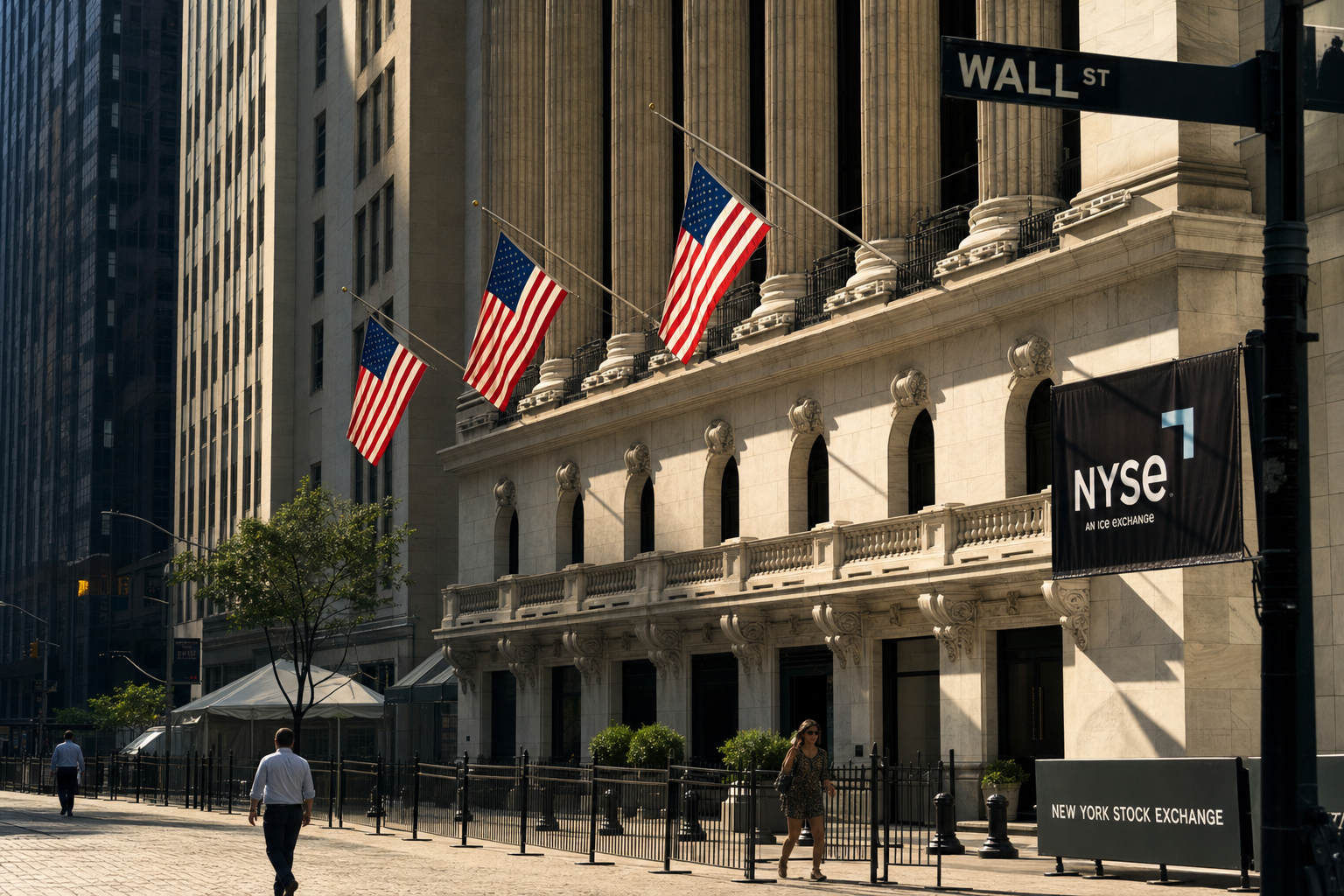
How the morning played out
The session opened with two competing forces: a genuinely strong demand signal from Tesla (TSLA) and a definitively closed legal chapter for Alphabet (GOOG, GOOGL). Neither story was a surprise in isolation — Tesla delivery data and the EU Google ruling had both been flagged in earlier briefs — but the scale of the Tesla beat and the finality of the Alphabet ruling gave each story fresh weight by the time U.S. markets opened.
The morning brief had also flagged a weak June payrolls print — 57,000 jobs added against a consensus of 110,000 — as the macro backdrop. That number remains the most consequential data point of the week for rate expectations, but it has been somewhat overshadowed in equity-market conversation by the Tesla delivery figure. The S&P 500, Dow, and Nasdaq have been navigating the tension between a consumer-discretionary positive and a macro negative since the open.
The two stories defining the afternoon
Tesla's delivery beat is the session's clearest bullish catalyst. The company delivered 480,126 vehicles in the second quarter, against Wall Street's estimate of roughly 406,600 — a gap of nearly 74,000 units. That margin matters because deliveries are Tesla's primary revenue-recognition event: the company books income when vehicles reach customers, not when they leave the factory. A beat of this size compresses concerns about inventory buildup and suggests that demand in Europe and China absorbed supply more quickly than analysts had modeled.
The result directly addresses the "EV winter" narrative that had weighed on TSLA through much of the first half of the year. Whether that narrative is fully retired will depend on Tesla's full Q2 earnings report, which will include margins, average selling prices, and energy division results. But the delivery number alone removes the most acute near-term risk — a demand shortfall — from the equation.
The Alphabet ruling is the session's most structurally significant negative. The European Court of Justice dismissed Alphabet's appeal of a €4.1 billion fine — approximately $4.71 billion — tied to anticompetitive practices in how Google licensed the Android operating system to device manufacturers. The ruling is final. There are no further avenues for appeal within the EU court system.
The fine itself is manageable relative to Alphabet's balance sheet, but the ruling's significance extends beyond the dollar amount. It confirms that the EU's enforcement model — imposing large structural fines on platform behavior, then holding them through multi-year appeals — is durable. For Alphabet, it closes a years-long legal overhang. For other large U.S. technology platforms operating in Europe, it reinforces that similar proceedings carry real finality.
What the morning brief got right — and what shifted
The earlier brief correctly identified Asian tech weakness as a third theme running beneath the two headline stories. South Korea's KOSPI and Japan's Nikkei both fell in overnight trading, with Samsung Electronics and SK Hynix among the decliners on AI overcapacity concerns. That weakness has not reversed; if anything, Morningstar's warning that AI-exposed memory names like Micron (MU) could face corrections of 20% to 30% before valuations normalize has added an analyst-opinion layer to what had been purely a sentiment-driven move.
What has shifted is the relative weight of the Tesla story. The morning framing treated deliveries as one of three parallel themes. By midday, the delivery beat has emerged as the dominant equity catalyst — the number was large enough to move sector-wide EV sentiment, not just TSLA specifically.
The payrolls miss, meanwhile, is doing more work in fixed income than in equities. A 57,000-job print against a 110,000 forecast is the kind of data that typically reprices rate-cut expectations forward, and bond markets have been the more active venue for digesting that signal. Equity markets appear to be treating the labor weakness as a background variable rather than an immediate trigger — in part because the U.S. market closes early ahead of the Independence Day holiday, compressing the window for sustained directional moves.
The financials divergence worth watching
A quieter story running beneath the headline names is the emerging analyst preference for Mastercard (MA) over American Express (AXP) as credit card delinquency rates rise. The distinction is structural: Mastercard earns fees on transaction volume without carrying credit risk on its own books, while American Express issues cards and holds balances, making it directly exposed to loan losses when consumers fall behind.
With delinquencies trending higher, that model difference is drawing real positioning attention. It is a useful read on where financial sector sentiment is moving — away from credit-exposed names and toward fee-based payment networks — and it may become a more prominent theme as Q2 earnings season for financials gets underway.
Afternoon setup
With U.S. markets closing early today and shut Friday for Independence Day, the afternoon session will be compressed and volume is likely to thin. That cuts both ways: it limits the market's ability to sustain a directional move on the Tesla news, but it also limits downside follow-through from the payrolls miss and Asian tech weakness.
The most consequential near-term watch remains TSLA into its full Q2 earnings report — the delivery beat sets a high bar for margins and profitability to confirm. For GOOG and GOOGL, the ruling's finality removes uncertainty but does not remove regulatory risk; watch for any EU commentary on whether the Android ruling informs active proceedings against other platform behaviors.
AAPL's lobbying effort to source memory chips from restricted Chinese suppliers sits in a policy queue that will not resolve this week, but any government signal — approval, denial, or public pushback — would move both Apple and the broader memory supply chain. Samsung, SK Hynix, and MU all have exposure to that outcome.
The jobs number is done for the week. The next major labor data point and any Fed response to the June miss will be the first significant macro catalysts when markets reopen next week.