Tech Earnings Rescue the Session as Macro Data Clouds the Outlook
Strong cloud and AI results from Alphabet, Microsoft, and Amazon pulled markets out of early losses, even as inflation and GDP data complicated the Fed's path.
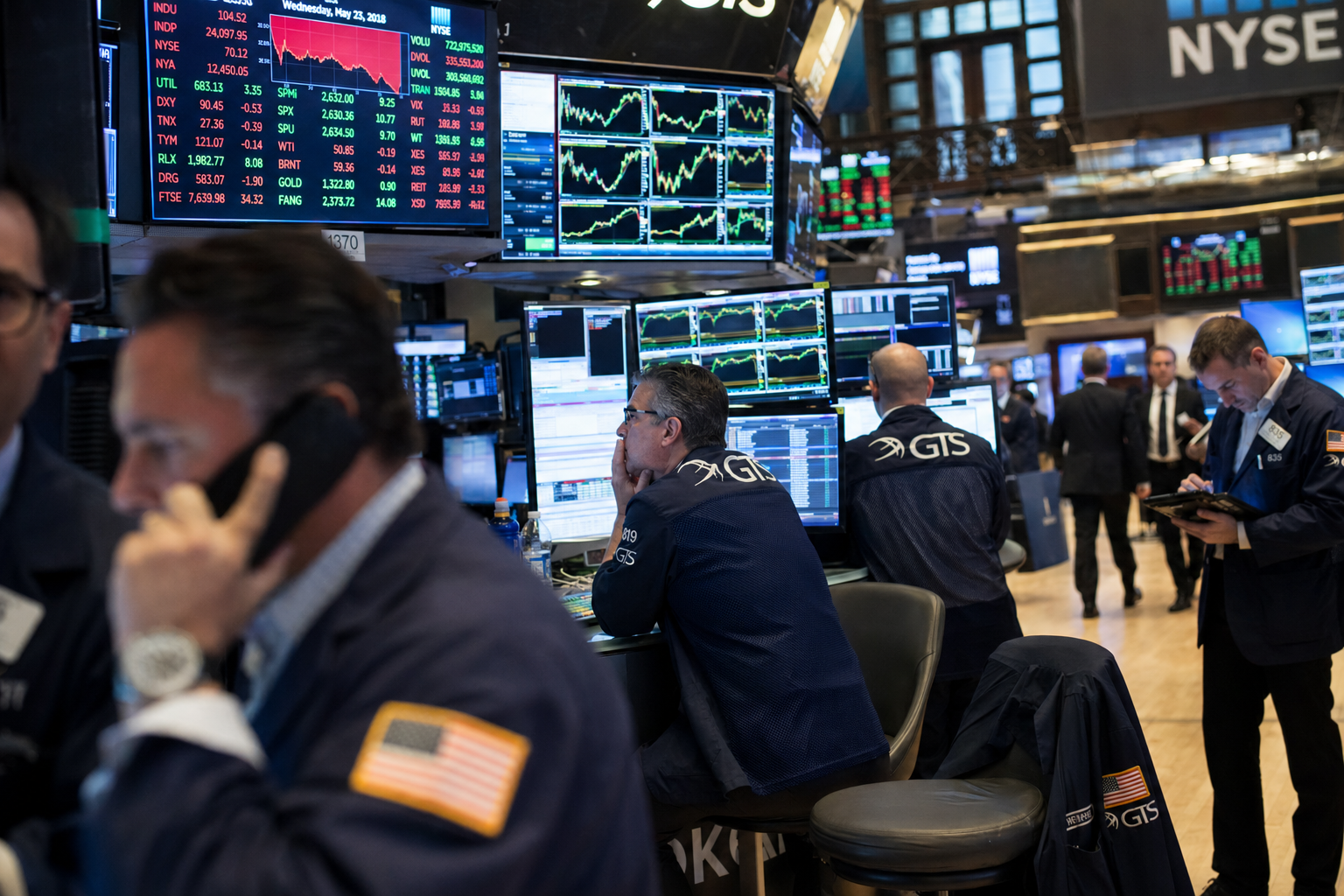
Morning Recap: Earnings Override the Data
Thursday opened under pressure. The Fed's preferred inflation gauge — the PCE index — printed at a two-year high overnight, and first-quarter GDP growth came in below analyst forecasts. Futures pointed lower. The macro setup looked like a headwind.
Then the earnings hit.
GOOGL led the reversal. Alphabet's first-quarter revenue crossed $100 billion for the first time, with Google Cloud outpacing rivals in growth and AI-integrated search defying the disruption narrative that had weighed on the stock. Shares climbed roughly 5–6% on the open, pulling the Nasdaq with them. MSFT and AMZN added to the momentum, both reporting cloud beats that confirmed enterprise AI demand is holding firm despite the broader economic uncertainty.
By mid-session, the early losses were gone. The Nasdaq had turned positive. The S&P 500 followed. LLY and CAT contributed to the turnaround as well, with strong reports from Eli Lilly and Caterpillar demonstrating that the earnings strength wasn't purely a tech phenomenon.
The Shift: AI Spending Is the Story — and the Complication
The number that defined the morning was $685 billion. That's the combined AI infrastructure commitment disclosed across META, GOOGL, MSFT, and AMZN during this earnings cycle. Microsoft alone projected nearly $200 billion in capital spending for calendar 2026, driven by data center buildout and rising memory chip costs. These are not speculative line items — they're signed infrastructure plans.
The market read that as bullish for the AI trade broadly. But one stock didn't get the memo.
NVDA fell Thursday even as the sector rallied. The reason is embedded in the same earnings reports driving everything else higher: both Google and Amazon used their results to highlight progress on proprietary AI chips — in-house silicon designed to reduce reliance on Nvidia's GPUs. This isn't a new concern, but the earnings cycle sharpened it. When your largest customers are also your most credible emerging competitors, that warrants a separate valuation conversation.
AMD tells a different version of the chip story. Its stock has risen roughly 55% year-to-date and approximately 3.5 times over the past year, as investors bet that a two-supplier market in AI accelerators is more likely than Nvidia's continued monopoly. The data center hardware market is expanding fast enough — Microsoft's $200 billion commitment alone illustrates that — to support more than one winner. But Nvidia's session divergence from the broader tech rally is a signal worth tracking.
The Macro Complication the Market Chose to Ignore
Equity markets looked past Thursday's economic data. That's a judgment call that could matter later.
The PCE index reaching a two-year high is not a trivial reading. It's the number the Federal Reserve watches most closely when calibrating interest rate policy. A two-year high, arriving alongside a GDP miss, creates a stagflationary echo — softer growth, stickier prices — that historically makes central bank decisions harder, not easier.
Analysts noted that the GDP shortfall was partly mechanical: a surge in AI-related imports and capital spending, as companies rushed to bring in hardware ahead of potential tariff changes, subtracted from the headline growth figure even as underlying domestic demand remained solid. That's a legitimate mitigating factor. But the inflation reading doesn't have the same asterisk.
The Fed's next policy meeting is the event that will force the market to reconcile the earnings optimism with the macro reality. If PCE stays elevated, the case for near-term rate cuts weakens further. Markets absorbed Thursday's data with relative calm, but the tradeoff between corporate earnings strength and Fed policy constraint hasn't been resolved — it's been deferred.
Afternoon Setup: What the PM Session Needs to Confirm
The session's narrative is holding, but it has a specific shape: tech earnings are doing the heavy lifting, and the macro data is being discounted. For that to remain stable into the close, a few things matter.
First, watch whether the Nasdaq's intraday recovery holds. A late-session fade would suggest the earnings pop was already priced in pre-market and that the PCE data is starting to reassert itself in rates-sensitive positioning.
Second, NVDA's divergence is worth monitoring through the afternoon. If the stock stabilizes or recovers, the market is treating the competitive chip concern as a long-term issue rather than an immediate one. If it continues to slide while GOOGL and AMZN hold gains, the wedge between AI infrastructure beneficiaries and AI chip suppliers is widening — a meaningful rotation signal.
Third, the bond market's reaction to the PCE print deserves attention. Equity markets may be looking past the inflation data, but if Treasury yields are moving higher in response, that's a friction point that doesn't disappear by the close.
After hours, any additional earnings commentary or guidance revisions from companies that have already reported could shift tomorrow's setup. The broader question carrying into next week: whether the $685 billion AI spending wave is enough to sustain the tech rally when the Fed's rate path remains genuinely uncertain.