SpaceX Trades, Oil Slides: Friday's Two-Story Session Holds Its Shape
The morning's twin catalysts — the largest IPO in history and a potential U.S.-Iran deal — are both holding up through midday, reshaping equities, energy, and fixed income simultaneously.
The morning held
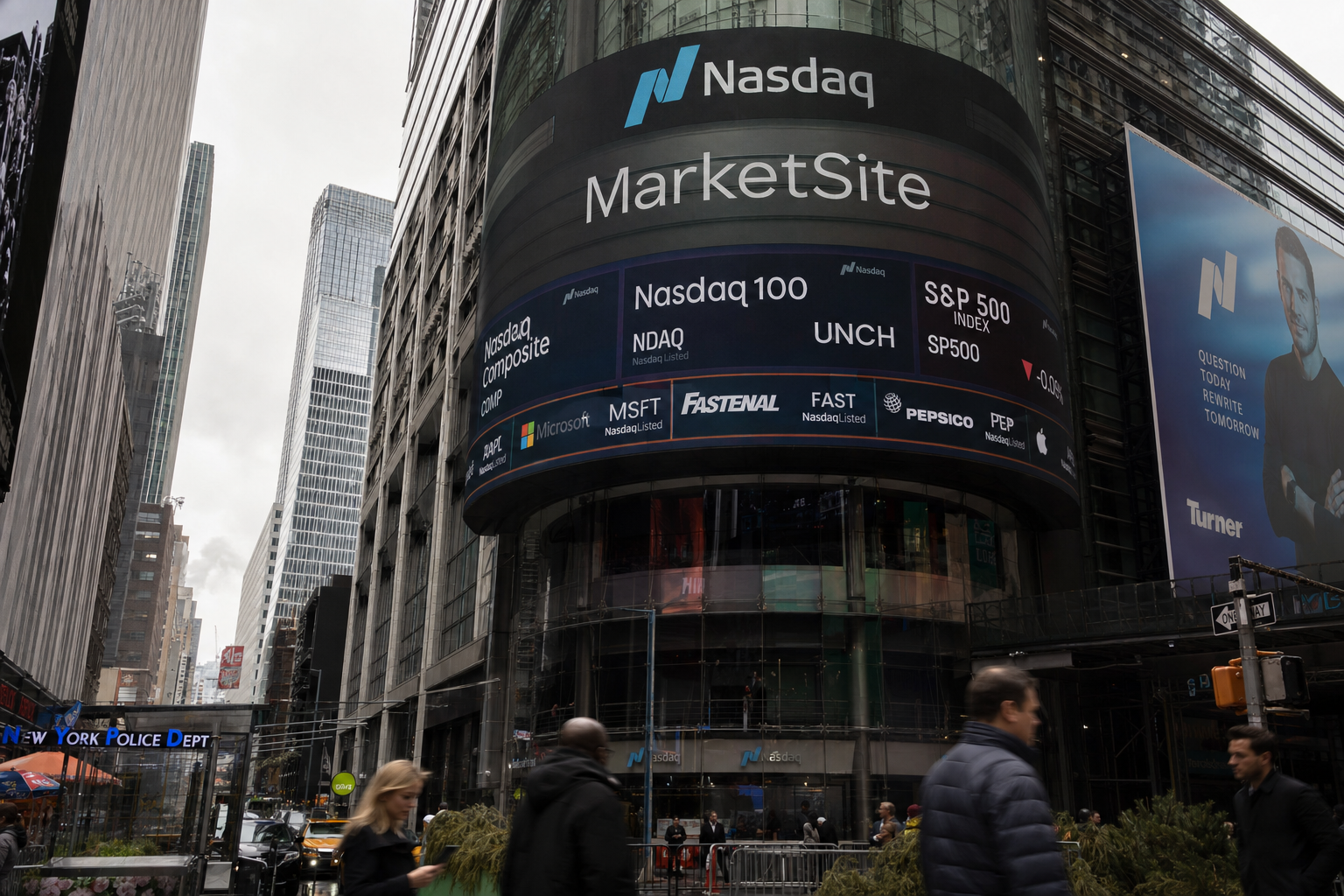
Friday opened with two stories large enough to define the week, and through midday, neither has reversed course. SpaceX (SPCX) is trading on the Nasdaq following the largest initial public offering in market history — $75 billion raised at a $1.77 trillion valuation, priced at $135 per share. Simultaneously, crude oil has dropped more than 4% on the prospect of a U.S.-Iran diplomatic agreement, dragging energy prices lower and lifting sentiment across equities and bonds. The session is, unusually, running exactly as advertised.
For traders, the absence of a reversal is itself a signal. Two catalysts of this magnitude arriving on the same Friday — ahead of a weekend when a formal deal could be signed — have not produced the kind of profit-taking or skepticism that often greets opening-hour euphoria. The rally has legs, at least through noon.
SPCX: the mechanics of a $1.77 trillion debut
The SpaceX listing is not just a headline number. The structural consequences of SPCX's Nasdaq inclusion are already working through the market. Index funds that track Nasdaq benchmarks are required to buy shares as the stock is incorporated into those indices — a mechanical demand floor that doesn't depend on any individual investor's conviction about the company's prospects.
Elon Musk's stake in SpaceX is large enough that multiple outlets are tracking whether today's listing pushes his net worth past the $1 trillion threshold. That figure is more symbolic than market-moving, but it reflects the scale of value being unlocked. Early-stage backers including Founders Fund and Andreessen Horowitz are among the venture capital firms realizing gains from the debut — gains that had been locked up in a private company for years.
The IPO also sets a new benchmark against which every future large listing will be measured. Saudi Aramco's 2019 offering, the previous record-holder, has been surpassed by a company that didn't exist as a public entity 24 hours ago. For the broader IPO market, which has been navigating an uneven environment for the past several years, the SpaceX debut carries a halo effect: it demonstrates that investor appetite for landmark listings remains intact.
Oil and the Iran trade
The energy market's reaction to U.S.-Iran diplomacy has been the session's cleanest macro signal. Brent crude (BRN) and West Texas Intermediate (WTI) are both down more than 4% as traders price out the geopolitical risk premium that had been embedded in crude over recent weeks.
The mechanism is straightforward. A deal between the U.S. and Iran raises the prospect of eased restrictions on Iranian oil exports and — critically — the potential reopening of the Strait of Hormuz, the narrow waterway through which a substantial share of global seaborne crude passes. Any credible signal that this chokepoint remains open and uncontested reduces the supply-disruption premium that had been supporting prices.
President Trump confirmed that planned U.S. military strikes against Iran were called off. Bloomberg reported that a memorandum of understanding — a preliminary, non-binding agreement framework — could be signed as soon as Sunday in Geneva, with G7 officials signaling cautious optimism. No final agreement has been signed, and the situation remains fluid. But the market is trading the probability, not waiting for the signature.
The bond market has responded in kind. Lower energy prices reduce near-term inflation expectations, which in turn supports the case for easier monetary conditions. U.S. Treasuries have rallied alongside equities — a simultaneous move that typically signals genuine risk reduction rather than a simple rotation between asset classes.
Semiconductors: two separate signals
Taiwan Semiconductor Manufacturing Company (TSM) CEO C.C. Wei stated publicly that AI-driven demand for advanced chips will continue to outstrip available supply for the foreseeable future. The comment is a supply-chain reality check dressed as a forward outlook: TSMC manufactures chips designed by companies including Nvidia (NVDA) and Apple, making its capacity assessment a direct read on the entire AI hardware stack. Constrained supply, sustained over time, supports elevated chip prices and the revenue visibility of everyone upstream.
Separately, South Korean memory chipmaker SK Hynix (SKHNY) is planning a formal Nasdaq listing as early as August, according to sources. The company is a key supplier of high-bandwidth memory chips used in Nvidia's AI accelerators, and its shares have risen sharply on that demand. A U.S. listing would give SK Hynix access to deeper institutional capital and raise its profile among global technology funds that benchmark against American indices. No final decision has been confirmed, and the August timeline is based on sources rather than official guidance.
The two semiconductor stories are distinct but point in the same direction: the AI infrastructure trade is generating structural demand that is pulling capital — and now listings — toward the sector.
What the afternoon holds
The dominant question heading into the close is whether both narratives sustain. On the Iran side, any signal from Geneva — positive or negative — before markets close at 4 p.m. ET would move crude and risk assets sharply. A weekend deal confirmation would likely extend the oil selloff and equity rally into Monday's open. A collapse in talks would reverse the day's energy trade and test how much of the equity gain was driven by geopolitics versus the SpaceX debut alone.
On SPCX, the index-inclusion buying pressure is structural and ongoing — it doesn't evaporate at the close. But first-day trading dynamics are inherently noisy, and the stock's behavior in the final hour will be watched closely for any sign of institutional distribution against the retail and passive-fund buying.
SPY and QQQ are both higher on the session. The TSM comments on chip supply add a durable undercurrent to the technology trade that extends beyond today's specific catalysts. The afternoon session, barring a Geneva surprise, is likely to be a matter of holding what the morning built.