SpaceX Rewrites IPO History While Iran Relief Lifts Broader Markets
A $75 billion debut, a geopolitical de-escalation, and a lone Wall Street sell call defined one of the most event-dense Friday sessions in recent memory.
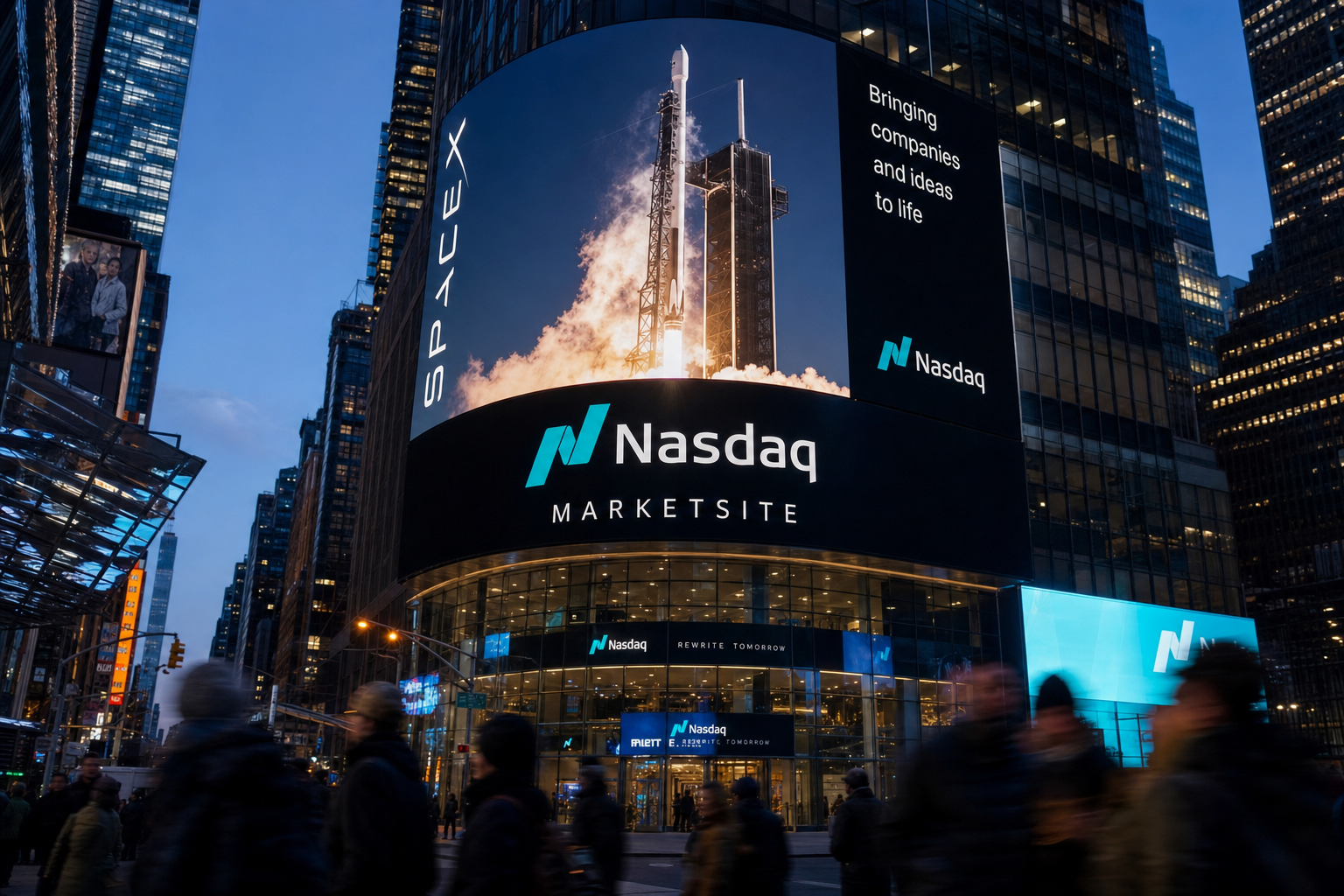
The Session
Friday closed as one of the most consequential single trading days in recent market history — not because of a Federal Reserve decision or an earnings beat, but because a private rocket company went public and a geopolitical flash point quietly defused at the same time.
SPCX, SpaceX's Nasdaq ticker, opened at $150 against an IPO price of $135 and climbed to a first-day high of $176.52, a gain of roughly 28% from the offer price. The debut raised $75 billion — the largest initial public offering ever recorded — and pushed the company's market capitalization above $2 trillion at its intraday peak. At the IPO price, SpaceX was valued at $1.77 trillion, placing it among the seven most valuable U.S. companies. By the time shares hit $176.52, it had crossed the $2 trillion threshold.
The S&P 500 and Nasdaq both posted meaningful gains on the day, supported by two distinct tailwinds: the IPO euphoria and a geopolitical relief trade following President Trump's announcement that planned U.S. military strikes against Iran had been called off.
Winners and Losers
The clearest winners from Friday's session were SpaceX's earliest backers. Venture capital firms Founders Fund and Andreessen Horowitz, both long-time holders of private stakes accumulated across multiple funding rounds, realized substantial gains from the listing. Underwriting banks collected significant fees from the record transaction, though specific figures were not disclosed.
Elon Musk's personal stake in SpaceX, combined with his other holdings, puts him on track to become the world's first trillionaire based on current valuations, according to multiple reports. That outcome depends on where SPCX trades in the sessions ahead, but the first-day print alone represents a historic shift in the wealth rankings.
Elsewhere in the market, AMD was a notable equity mover, rising approximately 5% after Citi analyst Atif Malik issued a bullish upgrade citing the company's potential in the AI accelerator market. NVDA and Micron Technology also benefited from a separate Wall Street forecast warning that high-bandwidth memory — a critical component in AI accelerator chips — could remain in short supply for years. That supply constraint, analysts argue, structurally advantages both companies across multiple spending cycles from cloud providers.
GSK announced a $10.6 billion acquisition of oncology biotech Nuvalent, paying approximately a 40% premium to Nuvalent's pre-deal share price. The deal is a direct response to the patent cliff GSK faces as key drug exclusivities expire — Nuvalent's late-stage lung cancer assets are designed to fill that revenue gap. The transaction is subject to regulatory approval.
Under the Surface
The macro backdrop deserves more attention than it received in the shadow of the SpaceX debut. President Trump's announcement that U.S. military strikes against Iran had been cancelled — with a diplomatic agreement potentially days away — removed a meaningful risk premium that had been building in equity and energy markets. Geopolitical tension in the Middle East typically lifts oil prices and compresses equity multiples; the reversal of that pressure contributed directly to the day's broad gains.
No formal Iran deal has been announced. The situation remains fluid, and any breakdown in negotiations would likely reverse the relief trade quickly.
The session's most contrarian note came from Bank of America, which issued a sell call on the S&P 500 on the same day markets were rallying hard. The bank cited extreme levels of market optimism as a warning signal — the logic being that when investor sentiment reaches such elevated readings, there are fewer marginal buyers left to sustain further gains. Bank of America did not specify a price target or time horizon in available reporting, but the call from one of Wall Street's largest institutions is not easily dismissed.
The timing is pointed. The SpaceX IPO euphoria and the Iran relief trade are precisely the kind of events that push sentiment surveys toward extreme readings. Bank of America is, in effect, flagging that the day's good news may already be more than priced in.
VIX and bond market data were not available in source material for this session, limiting a fuller picture of how hedges and rates responded to the day's moves.
Tomorrow's Setup
The two variables that matter most heading into next week are also the two that remain unresolved.
First, the Iran diplomatic process. Trump said a deal could come within days. If that materializes, oil prices face further downward pressure and risk assets get another leg of support. If talks stall or collapse, the geopolitical risk premium returns — and with it, pressure on equities that have already priced in a benign outcome.
Second, SPCX itself. First-day IPO pops are not uncommon, but the scale of this one — a $75 billion raise with a 28% opening-day gain — creates its own dynamics. Analyst initiation coverage, index inclusion timelines, and lock-up expiry schedules will all shape how the stock trades once the debut euphoria fades. Institutional investors who received IPO allocations will be making sizing decisions. Retail flows into the name will be closely watched.
Bank of America's sell call on the S&P 500 adds a third variable: whether other major strategists echo the caution or push back against it. A chorus of similar calls would shift the tone of next week's market conversation considerably. For now, it stands as a single dissenting voice in an otherwise risk-on close.