SpaceX, Oil, and the AI Trade Collide in a Session Full of Structural Shifts
Three unrelated stories — a historic IPO, a geopolitical oil deal, and an AI chip milestone — are converging into one of the more consequential trading sessions of the year.
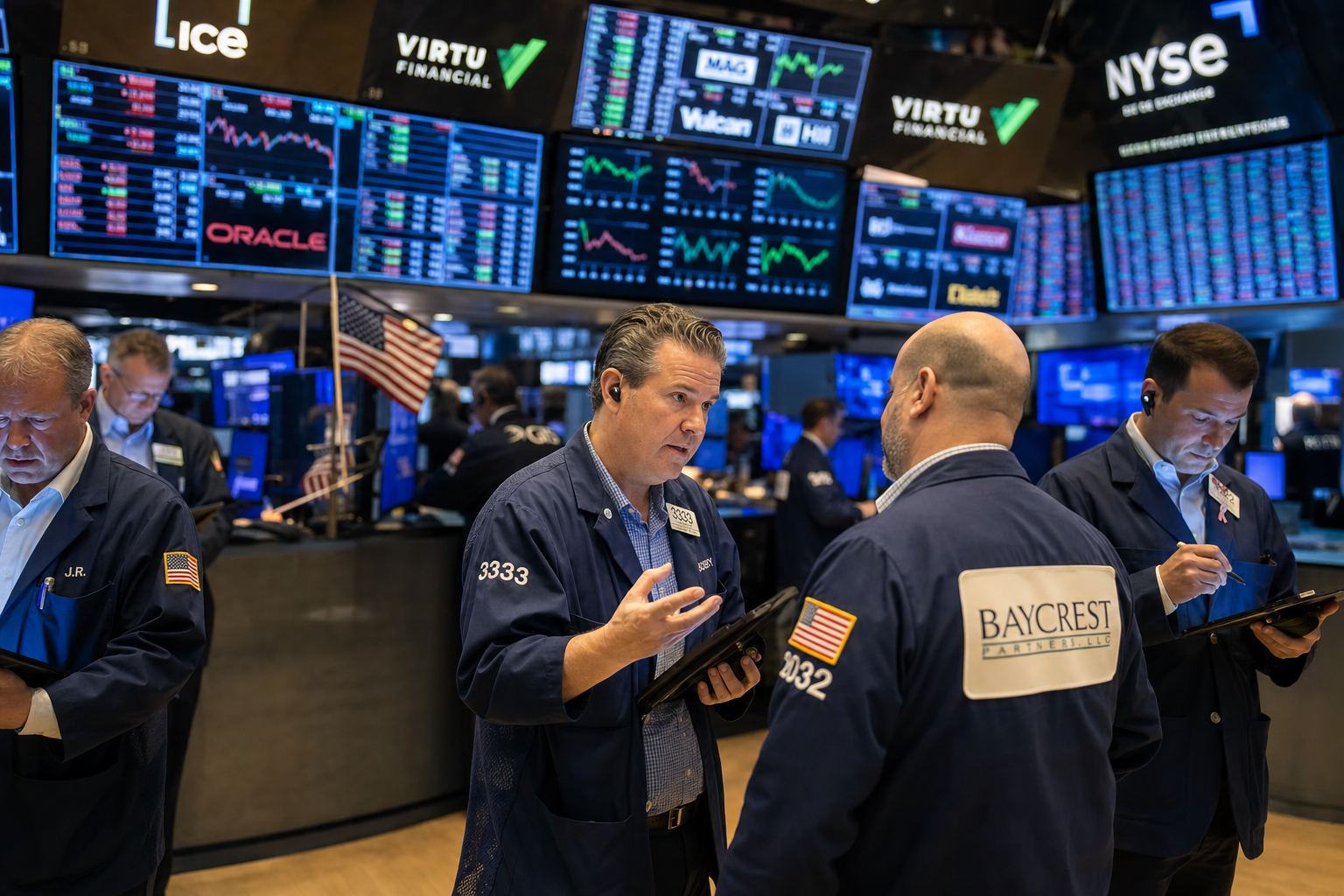
The morning in three moves
Tuesday's session opened with three distinct forces pulling markets in different directions simultaneously. SpaceX (SPCX) extended its post-IPO surge on the back of a $60 billion all-stock acquisition. Crude oil faced structural downward pressure as a U.S.-Iran diplomatic agreement moved toward implementation. And Nvidia (NVDA) quietly recrossed the $5 trillion market cap threshold, a milestone that would have dominated any other session's headlines.
The morning did not produce a clean directional read. It produced complexity — which is worth unpacking carefully.
SpaceX: the acquisition changes the story
The SpaceX rally was already underway before Tuesday's open, fueled by three consecutive sessions of gains following the largest IPO in U.S. history, which raised $85.7 billion. What shifted the narrative this morning was the Cursor deal.
SpaceX agreed to acquire Anysphere — the company behind AI coding assistant Cursor — in an all-stock transaction valued at $60 billion. Shares climbed 14% on the announcement, pushing the company's market capitalization past $2.9 trillion. That places SpaceX ahead of Amazon (AMZN) and within striking distance of Microsoft (MSFT) and Apple in the global rankings.
The deal matters for a reason beyond the headline number. SpaceX is using its newly public shares as acquisition currency — a structure that signals the company views its elevated valuation as a durable asset rather than a temporary condition. All-stock deals carry dilution risk for existing shareholders, but they preserve cash and avoid the leverage that cash-and-debt transactions impose. The market's 14% approval suggests investors read the strategic logic as sound.
The enterprise AI angle is the key. Cursor is a developer tool — software used by engineers to write code faster with AI assistance. It is not a consumer product. SpaceX is positioning itself to compete in the business-to-business AI market, a segment with recurring revenue characteristics that aerospace and satellite businesses do not naturally provide.
Elon Musk's stake in the company appreciated by $164.8 billion in a single session as a result of the surge — a figure worth noting not for its tabloid dimension but because it illustrates the concentration of the rally's wealth effect.
Oil: the more important story for the broader economy
While SpaceX dominated equity screens, the more consequential macro development of the session may be happening in crude markets.
A diplomatic agreement between the United States and Iran has paved the way for a phased reopening of the Strait of Hormuz — the narrow waterway through which a significant share of global crude oil transits. Wall Street's major banks moved quickly to reduce their oil-price forecasts in response. Goldman Sachs cut its Brent crude outlook for both 2026 and 2027. Exxon Mobil (XOM) said it is evaluating how resumed flows through the strait will affect its production plans and cash flows.
The Strait of Hormuz had been embedding a geopolitical risk premium into crude prices — the extra cost markets charge to account for potential supply disruption. Its reopening, even on a phased basis, removes that premium. Lower oil prices carry a deflationary impulse that flows through to headline inflation readings, transport costs, and ultimately central bank policy calculations.
For bond markets and rate expectations, this is not a trivial development. If energy prices soften meaningfully in the coming weeks, it adds to the case for central bank patience — or even easing — across multiple economies. That read-through deserves attention from fixed-income investors who may be focused elsewhere today.
Energy equities with significant exposure to elevated crude prices face renewed analyst scrutiny. XOM is the most directly named name in the source material, but the pressure is sector-wide.
Nvidia and the AI infrastructure baseline
Nvidia's return above $5 trillion in market capitalization arrived with less fanfare than it might otherwise command, crowded out by the SpaceX story. But the underlying data point is significant: CEO Jensen Huang cited 92% year-over-year growth in Data Center revenue in the first quarter of fiscal year 2027. That is not a deceleration story.
Huang also outlined a major AI infrastructure upgrade in partnership with optical components maker Coherent, framing the initiative partly around U.S. manufacturing employment — a positioning that carries political as well as commercial logic in the current environment.
The counterpoint worth holding alongside Nvidia's momentum: strategists at Capital Economics have flagged that stretched valuations on the S&P 500 may signal a late-stage phase in the AI-driven rally. The index's price-to-earnings ratio sits at elevated levels by historical standards. Strong earnings momentum and cautious valuation signals are not mutually exclusive — they can coexist for extended periods — but the tension is real and worth tracking.
Media M&A adds another layer
Two separate M&A stories in the media and entertainment space are running in parallel, adding noise to an already busy session.
Reports emerged that Netflix (NFLX) is considering an acquisition of Lionsgate Studios (LGF.A). Lionsgate shares jumped on the news; Netflix stock declined — the classic acquirer-discount pattern, where markets question whether the buyer is overpaying. No terms have been disclosed and neither company has confirmed the talks.
Separately, Fox Corporation (FOXA) agreed to acquire streaming platform Roku (ROKU) for $22 billion in an earlier-announced deal. The Fox-Roku transaction gives Fox direct ownership of a major connected-TV distribution platform at a moment when traditional linear viewership continues to erode.
Both deals reflect the same underlying pressure: streaming platforms and media companies are racing to secure content libraries and distribution infrastructure before the competitive window narrows further.
Intel: geopolitics as a business model
Intel (INTC) shares have moved higher on renewed confidence in its foundry division — the business that manufactures chips for external clients. The rally reflects the view that U.S. government support for domestic semiconductor manufacturing has given Intel a structural advantage in winning contracts. Nvidia, Tesla (TSLA), and Google (GOOG) are among the companies cited as customers or prospective customers for Intel's foundry services.
The caveat is straightforward: political backing attracts customers but cannot substitute for technical execution. Intel's processes still need to demonstrate competitiveness with TSMC and Samsung on yield, cost, and performance. The coming quarters will test whether goodwill converts into durable revenue.
Afternoon watch list
Three things to monitor into the close. First, crude futures — the pace at which the Hormuz reopening timeline becomes concrete will determine how aggressively banks continue to revise their forecasts, and whether energy equities reprice further. Second, any formal statement from Netflix or Lionsgate on the reported acquisition talks; unconfirmed deal rumors have a short half-life and resolution in either direction will move both stocks. Third, the SpaceX valuation — whether the $3 trillion threshold holds as a psychological ceiling or gets tested before the close will set the tone for how the post-IPO narrative develops into the rest of the week.
The Bank of Japan's rate hike to 1% — the highest since 1995, announced earlier this session — also deserves a longer-horizon watch. Japanese investors hold substantial positions in foreign bonds, and a sustained yen strengthening cycle could prompt capital repatriation that ripples into Treasury markets in ways that are not yet fully priced.