SK Hynix's $28B Nasdaq Bet Headlines a Day Defined by AI Capital
A landmark equity offering, a multi-year chip partnership, mass layoffs, and a bank earnings preview — Monday's session was a referendum on how markets are pricing the AI buildout.
The Session
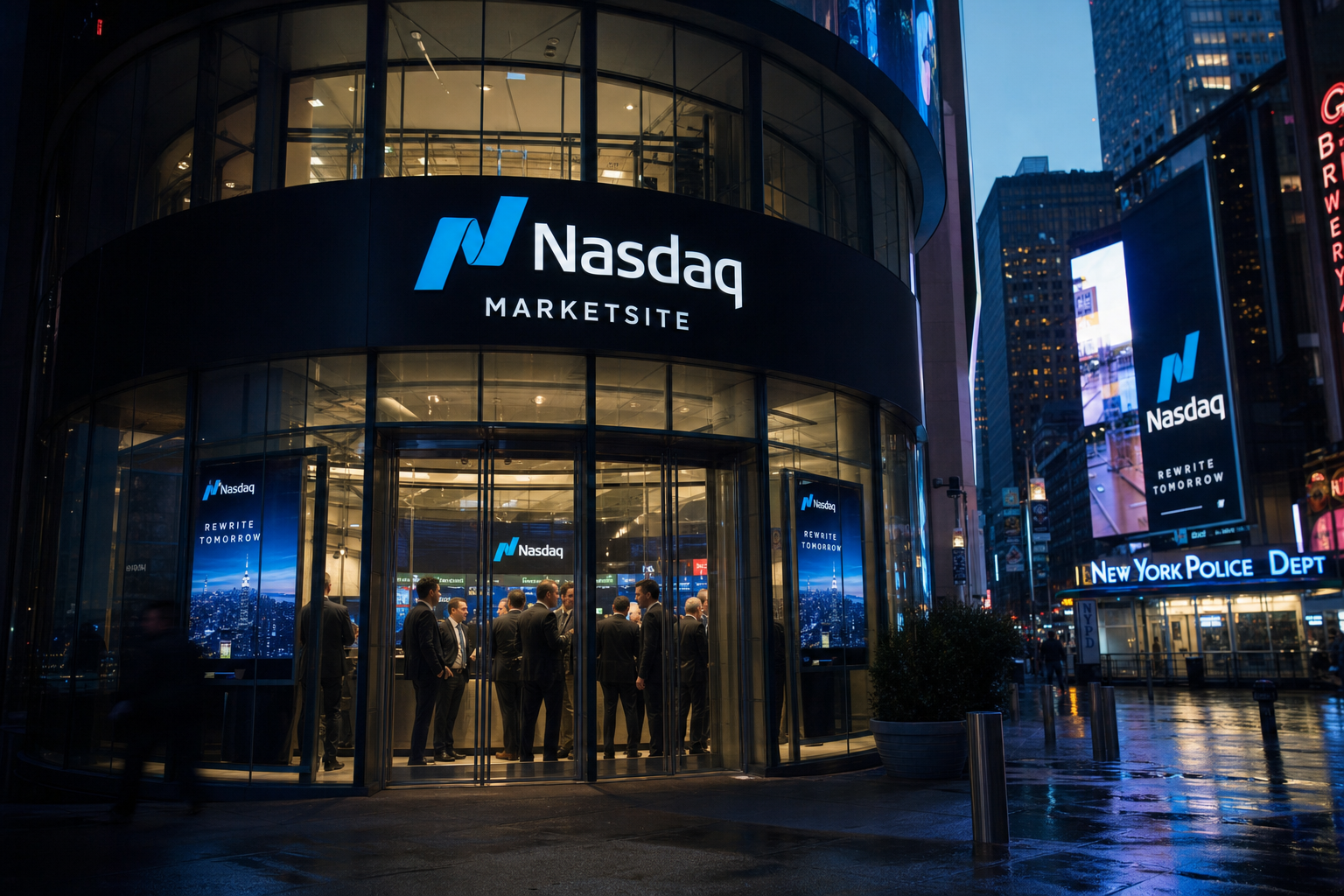
Monday closed with a clear theme: capital is still flowing toward artificial intelligence, and markets spent the day pricing that conviction across asset classes. The session's anchor was SK Hynix (SKHNY), whose planned $28 billion Nasdaq listing — structured as American depositary receipts — would rank as the second-largest stock sale in recorded history if completed at that scale. Chip stocks rallied broadly in anticipation, with the offering serving as a live sentiment gauge for institutional appetite in AI-linked hardware.
The day's breadth was notable. Semiconductor names, financials, and select technology stocks all participated in a risk-on tone that stretched from the open. The session confirmed, rather than surprised: the setup heading into Monday had been constructive, and the tape delivered.
Winners and Losers
Broadcom (AVGO) was among the session's clearest winners after the company announced an extended custom chip supply agreement with Apple (AAPL) running through 2031. The deal covers application-specific integrated circuits — chips designed for Apple's own hardware rather than general computing — and gives Broadcom a decade of predictable, high-volume orders from one of the world's largest technology buyers. Analysts flagged the AI dimension: Apple's on-device AI features increasingly require purpose-built silicon, making the partnership strategically durable beyond its headline revenue implications. Broadcom shares jumped on the news.
Microsoft (MSFT) was the session's most prominent laggard in terms of sentiment, though the market's reaction was characteristically measured. The company announced 4,800 job cuts — more than 2% of its global workforce — framed as a reallocation of resources toward AI infrastructure. The restructuring fits a pattern investors have seen repeatedly across large-cap technology: headcount reductions paired with rising capital expenditure on data centers and chips. Markets have generally rewarded that trade-off when the AI spending commitment is credible, which kept the negative reaction contained.
In financials, major U.S. bank stocks moved higher ahead of what is shaping up to be a consequential earnings week. JPMorgan analysts indicated they expect investment banking and trading revenues across the sector to come in above prior guidance, prompting raised price targets for names including Citigroup (C). Investment banking fees — earned from advising on mergers, underwriting offerings, and arranging debt — have been a recovery story in 2026, and the pre-earnings tone suggests that story is holding.
The M&A backdrop added further texture to the session's risk-on posture. AbbVie completed its $10.9 billion acquisition of Apogee Therapeutics, while Novartis (NVS) agreed to acquire Myricx Bio for $1.1 billion to bolster its cancer drug pipeline. In the UK, Comcast's Sky agreed to buy ITV's broadcast channels and streaming service for £1.6 billion, and budget carrier EasyJet announced it intends to accept a £5.5 billion takeover from U.S. investment firm Castlelake. Four significant deals across four sectors in a single session is not noise — it reflects corporate confidence that financing conditions are workable and that strategic buyers see value worth pursuing.
Under the Surface
The SK Hynix listing carries implications beyond the equity issuance itself. The offering is a direct bet on the durability of high-bandwidth memory demand — the chips that power Nvidia's (NVDA) AI accelerators and have become a critical bottleneck in data center buildouts. At $28 billion, the scale of the raise suggests SK Hynix's advisors believe institutional demand for that exposure is deep enough to absorb one of the largest offerings ever brought to market.
The Microsoft layoffs, read alongside the Broadcom-Apple deal and the SK Hynix listing, sketch a consistent picture: the AI infrastructure cycle is consuming capital at a rate that is forcing even the largest technology companies to make hard choices about where headcount fits into the cost structure. The companies cutting jobs and the companies raising billions in equity are, in a meaningful sense, responding to the same pressure.
The bank earnings preview deserves attention as a macro signal. A recovery in investment banking fees would confirm that the M&A and capital markets pipelines — dormant through much of 2024 and early 2025 — have genuinely reopened. Trading revenues beating guidance would suggest that elevated market activity and AI-related positioning are generating real client flow, not just paper volatility.
Tomorrow's Setup
The most important near-term data points now sit with Samsung Electronics (SSNLF) and Taiwan Semiconductor Manufacturing Company (TSM). Samsung's earnings and TSMC's June sales figures are due this week and will serve as the most direct read yet on whether AI memory chip demand is sustaining the rally or beginning to show signs of saturation. A strong print from either — particularly on high-bandwidth memory volumes — would validate the SK Hynix listing's timing and likely extend the chip sector's momentum.
Bank earnings follow shortly after, with investment banking and trading revenues the primary line items to watch. If JPMorgan's pre-earnings optimism proves accurate, the financial sector could provide a second leg to a market that has been heavily concentrated in technology. Credit quality and net interest income commentary will matter equally — those are the metrics that distinguish a cyclical trading-revenue bounce from a structurally healthier banking environment.
Monday's session was a day when the AI trade showed up in the form of concrete capital commitments: a $28 billion listing, a decade-long chip contract, and thousands of jobs reallocated in its direction. Whether those commitments are rewarded depends on what Samsung and TSMC say this week.