Samsung's Miss Cracks the Chip Sector as Tesla and Banks Offer Shelter
Tuesday's session was defined by a sharp semiconductor selloff, a structural AI threat from China, and countervailing strength in Tesla and financials ahead of bank earnings.
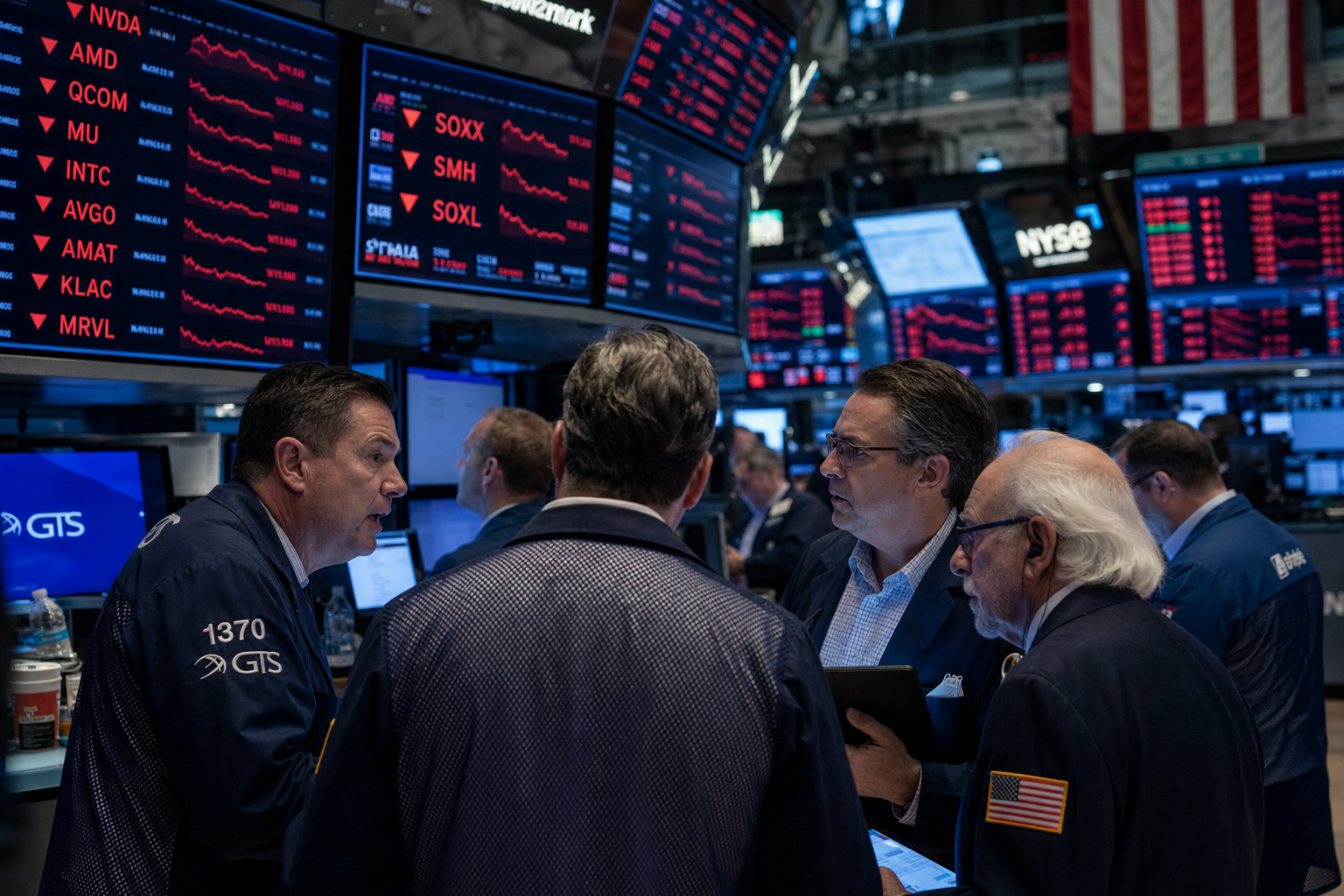
The Session
Tuesday closed as a story of fractures — within the technology sector, within the semiconductor space itself, and between the stocks that investors are willing to hold and those they are not. The proximate cause was Samsung Electronics, whose quarterly results disappointed markets and triggered one of the sharper single-session selloffs in chip-related names in recent memory. But the day's damage ran deeper than one earnings report.
Intel (INTC) and Applied Materials (AMAT) each fell roughly 10%. Advanced Micro Devices (AMD) dropped approximately 8%. The declines reflect the interconnected nature of the global chip supply chain: when a bellwether like Samsung signals weakness in memory pricing or order visibility, the pain radiates quickly to equipment suppliers, competing processors, and anyone exposed to the same end markets.
The broader indices absorbed the blow unevenly. The Nasdaq bore the brunt of the semiconductor weight, while the Dow found relative support from financial names. The S&P 500 ended the session in negative territory, though the damage was concentrated rather than broad.
Winners and Losers
The semiconductor sector's loss was Tesla's (TSLA) gain — at least on Tuesday. Shares climbed after RBC Capital raised its price target to $500, citing unconfirmed reports of a potential merger between Tesla and SpaceX, Elon Musk's private rocket and satellite company. A separate analyst note suggested the combination, if it materializes, could add roughly 20% to Tesla's stock price. No deal has been confirmed, and the structural complexity of merging a publicly traded automaker with a privately held aerospace company — questions of valuation, shareholder dilution, and regulatory review — remains substantial. Tesla also carried independent momentum: the company reported record second-quarter deliveries that exceeded Wall Street estimates, giving the stock a fundamental tailwind separate from the merger narrative.
Nvidia (NVDA) faced a compounded threat. Beyond the Samsung-driven sector selloff, two separate developments pointed to structural erosion in its AI hardware dominance. A survey of Chinese technology firms found they are accelerating a shift away from Nvidia and AMD chips toward domestically produced alternatives. Then DeepSeek, the Chinese AI lab that rattled markets earlier this year with its efficient large language models, announced plans to design its own semiconductor chips — moving from being a customer of AI hardware to a potential competitor in it. For Nvidia, which has built its position on the assumption that AI model developers are buyers rather than builders of silicon, the vertical integration threat is a meaningful escalation beyond what export restrictions alone had implied.
Applied Materials deserves particular attention among the session's losers. As a supplier of chip-manufacturing equipment, it sits one step removed from the end-market demand that Samsung's results called into question. Any slowdown in capital spending by major foundries — the contract manufacturers that build chips for others — flows directly into AMAT's order book. Tuesday's 10% decline reflected that exposure.
Under the Surface
The most striking undercurrent of the session was the divergence within the semiconductor space itself. While INTC, AMD, and AMAT were selling off sharply, SK Hynix (SKHNY) was drawing a very different response from institutional investors. The South Korean memory chipmaker's $28 billion U.S. listing, set to price Thursday, was reported to be multiple times oversubscribed — meaning investor demand significantly exceeded the shares available. At $28 billion, it would rank among the largest U.S. equity offerings in recent years.
The oversubscription is not a contradiction of the selloff so much as a clarification of it. Institutional buyers appear to be drawing a sharp line between commodity memory exposure and SK Hynix's specific position as a leading supplier of high-bandwidth memory — the specialized chip architecture that sits alongside AI processors to feed them data at high speed. SK Hynix supplies HBM to Nvidia, giving it direct exposure to AI infrastructure spending even as the broader chip trade came under pressure Tuesday. The market, in other words, is not abandoning semiconductors — it is repricing which parts of the supply chain it trusts.
In fixed income and volatility markets, the session's tone was cautious but not panicked. The chip selloff was sector-specific enough that it did not trigger a broad flight to safety, though the VIX edged higher as technology names dragged.
Financials offered a counterweight. JPMorgan Chase (JPM) entered the session with its own positive catalyst: the bank announced a 10% increase in its quarterly dividend alongside a $50 billion share repurchase authorization. BofA Securities said it expects JPMorgan, Citigroup (C), and Wells Fargo (WFC) to beat second-quarter earnings estimates when results arrive later this week. The combination of capital return signals and a favorable analyst preview positioned the major banks as one of the session's more constructive pockets — a notable contrast to the technology sector's pain.
Tomorrow's Setup
Thursday carries two high-stakes events that will extend Tuesday's themes in opposite directions.
SK Hynix's listing prices Thursday. The final pricing — whether it comes at, above, or below the indicated range — will be a direct read on how much premium the market assigns to AI-adjacent memory exposure after this week's turbulence. Strong pricing would confirm that institutional investors are distinguishing between the sector's near-term cyclical headwinds and its longer-term structural demand. Weak pricing would suggest Tuesday's selloff has infected even the most defensible parts of the chip trade.
Major U.S. bank earnings also begin Thursday, with JPMorgan, Citigroup, and Wells Fargo all expected to report. These are the first large-cap results of the Q2 season and will offer a detailed read on consumer credit health, trading revenues, and investment banking activity. JPMorgan's 10% dividend increase and $50 billion buyback authorization have already set a high bar for the capital return narrative — the question is whether the underlying earnings can match it.
The DeepSeek chip announcement and the Chinese corporate survey results will linger as a slower-burning watch item. Neither is a single-session event, but both point toward a structural repricing of Nvidia's addressable market that the market has not yet fully digested. Any follow-on announcements from other Chinese AI labs about in-house silicon development would accelerate that conversation.