Records Hold at Midday as Chips Lead, Dimon's Bond Warning Lingers
Thursday's session has confirmed the morning's bullish setup, with AI infrastructure names extending gains — but the bond market remains the quiet risk beneath the surface.
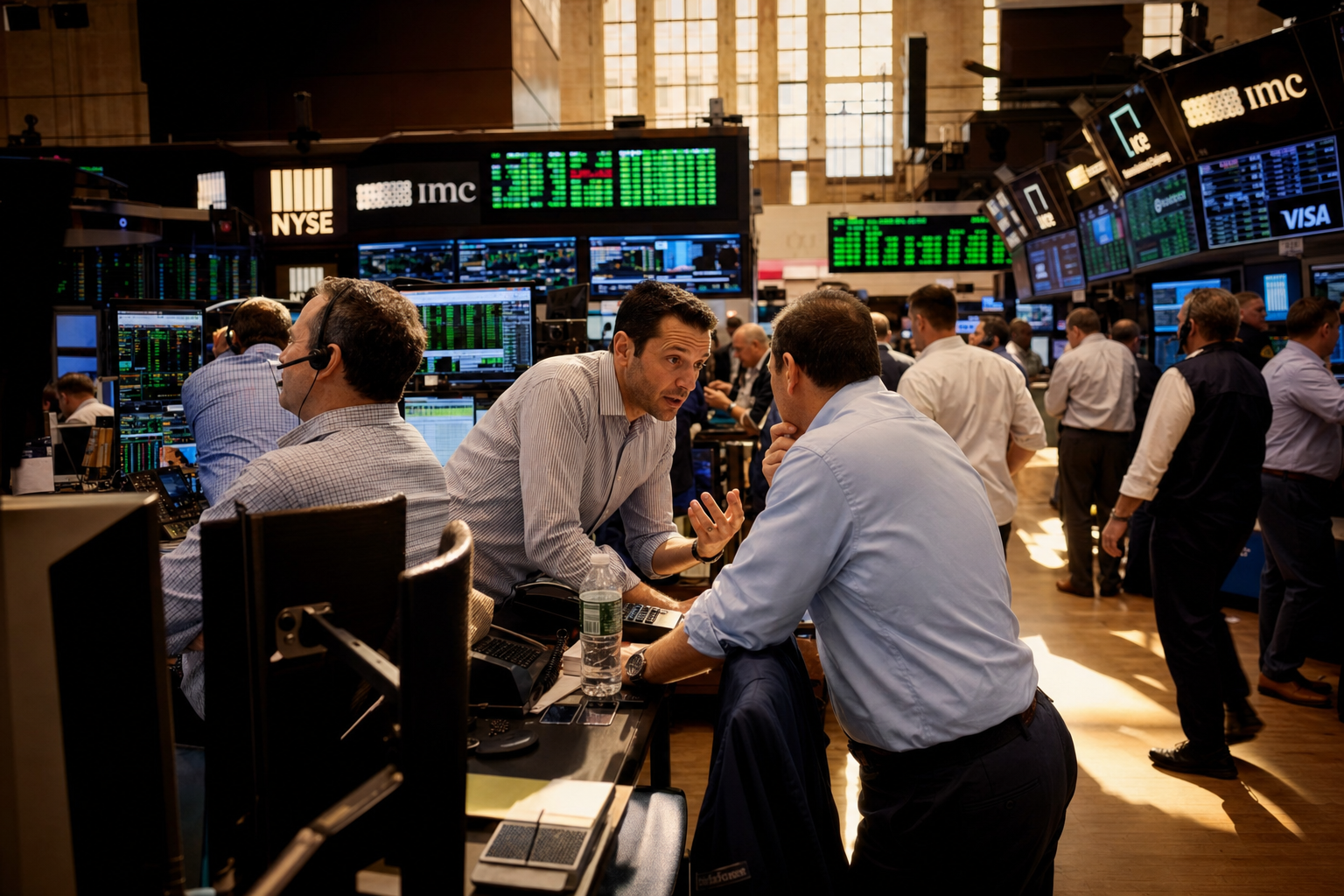
Morning Recap: Records Built on Solid Ground
The morning session delivered exactly what the setup suggested it would. The S&P 500 and Nasdaq both extended to fresh all-time highs through the first half of Thursday's session, carrying forward a three-week rally that has been steady rather than spectacular — gains accumulating in a way that has kept the move durable rather than speculative.
DDOG is the session's headline mover. Datadog's first-quarter revenue of $1.01 billion — a 32.2% year-on-year increase — crossed the $1 billion quarterly threshold for the first time, and the stock's 23.8% single-session gain is one of the largest post-earnings moves among major technology names this reporting cycle. Management's forward guidance came in above consensus as well, removing the concern that the beat might be a one-quarter anomaly. The result reinforces a pattern that has defined this earnings season: companies sitting in the infrastructure layer of the AI buildout — monitoring tools, cloud observability platforms, data pipelines — are capturing enterprise spending regardless of which AI model or application ultimately wins market share.
Semiconductor names including MU, STX, and ARM continued to contribute to the advance, consistent with the AI supply chain theme that has been the market's primary engine since mid-April.
What Confirmed and What Shifted
Two narratives from the morning brief have held firm. First, the Iran peace-deal optimism that helped push oil prices lower is providing a genuine macro tailwind — easing input cost pressures and reducing the geopolitical risk premium that had been embedded in equity valuations. That dynamic is intact through midday.
Second, SHEL's blowout quarter — $6.92 billion in adjusted net income for Q1, with a 5% dividend increase — remains a constructive data point for energy sector sentiment even as spot crude softens. The important nuance: Shell's results reflect Q1 conditions, when oil price volatility linked to the Iran conflict was at its peak. The trading division that drove the outperformance was essentially monetising price swings that no longer exist at the same intensity. Whether Q2 can replicate that performance depends heavily on whether geopolitical calm holds.
The one clear divergence from the broadly bullish session: SNAP is a drag on social media sentiment. The company's weak quarterly results have prompted analysts to revisit near-term growth assumptions, and the contrast with META's stronger advertising numbers this season is sharpening. Snap's struggles reflect a structural issue — smaller digital advertising platforms are finding it increasingly difficult to compete for budgets that continue consolidating around a handful of dominant players with superior targeting capabilities and scale.
The Afternoon Setup
With equities at record levels heading into the back half of the session, three things warrant close attention.
The bond market is the quiet variable. JPM CEO Jamie Dimon's warning about a potential bond crisis tied to government debt trajectories has not moved Treasuries in any dramatic way this session — yields have not spiked, and the equity rally is proceeding without apparent concern. But Dimon's comments are not noise. JPMorgan is the largest U.S. bank by assets, and its chief executive has flagged systemic risks accurately before. The juxtaposition of equity markets at all-time highs and a prominent institutional voice warning about fiscal fragility is a tension that does not resolve itself in a single session. Treasury auction dynamics in the coming weeks will be worth monitoring as a check on whether bond investors share the equity market's equanimity.
Oil price direction into the close matters for two reasons. A sustained move lower on Iran optimism is broadly constructive for equities — it reduces inflation pressure and supports consumer spending. But it also compresses the earnings tailwind that has been a net positive for energy majors like Shell. Energy sector performance in the afternoon session will reflect how traders are pricing the probability that a peace deal actually materialises versus a diplomatic pause that leaves underlying tensions unresolved.
Position sizing and options dynamics could amplify moves into the close. After a three-week rally that has brought both the S&P 500 and Nasdaq to record territory, some degree of profit-taking is a routine risk in afternoon trading — particularly on a Thursday, when institutional investors often adjust positioning ahead of the weekly close. The VIX level heading into the final hour will be a useful signal: a sustained low reading suggests the market is genuinely comfortable at these levels rather than simply drifting higher on thin volume.
The Broader Picture
The session's character is one of confirmation rather than surprise. The earnings data — Datadog's 32% revenue growth, Shell's trading windfall, the continued strength in semiconductor names — has validated the thesis that AI infrastructure spending and energy market volatility are producing real corporate profits, not just elevated multiples. That is a more durable foundation for a rally than sentiment alone.
The risk is not in today's session. It is in the gap between what equity markets are pricing and what Dimon and others are flagging in the bond market. Equities can remain at record highs while fiscal concerns build — they often do, for extended periods. But the bond market is where those concerns eventually surface, and the afternoon session offers no particular catalyst to resolve that tension either way. The record highs are real. So is the warning.