Nvidia's Record Quarter Meets a Market Unwilling to Celebrate
NVDA's blowout print is the headline, but bond yields, Fed pressure, and European weakness are doing the heavier lifting in Thursday's session.
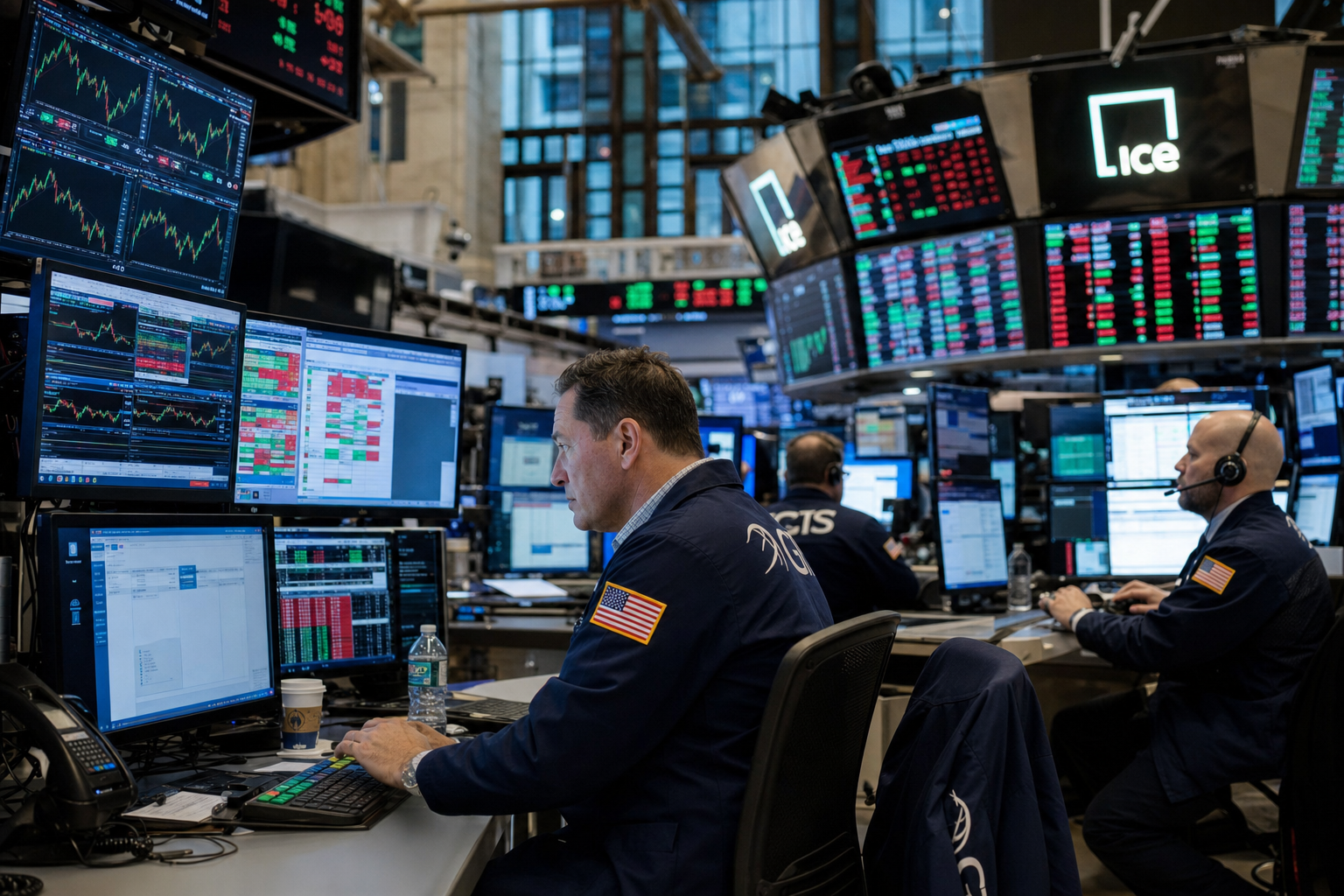
Morning Recap: The Beat That Couldn't Lift the Market
The morning session opened with one of the strongest earnings prints in recent memory sitting on the tape. Nvidia (NVDA) reported fiscal first-quarter 2027 revenue of $81.6 billion, well above Wall Street consensus, with Data Center revenues up 92% year-over-year. The company guided for $91 billion in second-quarter sales and announced an $80 billion share repurchase program — a buyback that signals management's conviction in the durability of AI hardware demand.
By any isolated reading, that is a session-defining catalyst. The Blackwell chip architecture is ramping faster than analysts modeled, and CFO Colette Kress pointed to the next-generation Vera Rubin platform as the pipeline behind the pipeline. The Magnificent Seven earnings cycle is now largely complete, and the AI spending thesis has held firm across every name in the cohort.
Yet NVDA's gains were muted at the open, and the broader indices failed to build on the news. The S&P 500, Dow, and Nasdaq all came under pressure as the session developed. The Nvidia print was the morning's loudest signal — but it was not the market's only input.
The Shift: Macro Is Doing the Heavy Lifting
The session's real driver is a confluence of macro pressures that were already in place before Nvidia reported and have not relented.
President Trump renewed public criticism of Federal Reserve Chair Jerome Powell, urging rate cuts. The intervention is not new — Trump has made similar comments before — but the persistence of the pressure raises a specific concern for bond investors: if the Fed's independence is perceived as eroding, the inflation-fighting credibility that anchors long-term yields comes into question. That dynamic, more than any single data point, explains why Treasury yields have been climbing even as growth fears mount.
Rising yields tighten financial conditions across the board. They push up mortgage rates, lift corporate borrowing costs, and compress the multiples that equity markets assign to future earnings. For a market trading at elevated valuations on the strength of AI growth expectations, that compression matters.
Europe compounded the pressure. Flash PMI readings — purchasing managers' index surveys that serve as a real-time gauge of business activity — came in weak across the euro area and the UK. Germany separately disclosed a €41 billion federal budget deficit, putting it at risk of triggering the EU's Excessive Deficit Procedure, a formal oversight mechanism that can require member states to reduce borrowing. Iran's hardened stance in nuclear talks added a geopolitical risk premium that European equities were quick to price in.
The net effect: a session where the single best earnings result of the AI cycle could not overcome the weight of the macro backdrop.
Deal Flow and Divergent Winners
Beyond Nvidia and the macro tape, Thursday delivered a dense deal calendar that is reshaping two capital-intensive sectors.
NextEra Energy (NEE) announced an all-stock agreement to acquire Dominion Energy (D) for $67 billion. The strategic logic is straightforward: AI data centers are straining U.S. grid capacity, and utilities with the scale to meet that demand are commanding acquisition premiums. In an all-stock deal, no cash changes hands at close — Dominion shareholders receive NextEra shares — meaning the transaction's success depends on regulatory approval and the combined company's ability to integrate two large power networks.
Separately, AvalonBay Communities and Equity Residential agreed to an all-stock residential REIT merger valued at over $50 billion, creating one of the largest publicly traded apartment landlords in the United States. Both deals are pending regulatory review.
The session's clearest individual winner was IBM. Shares climbed 6.4% after the White House announced a $1 billion investment in a new quantum chip manufacturing venture linked to the company. Government funding at this scale — following the CHIPS Act template for conventional semiconductors — represents a meaningful credibility signal for IBM's quantum hardware program, which has been building for years without a comparable federal endorsement.
Tesla (TSLA) and the broader Musk ecosystem also generated headlines. SpaceX filed for a U.S. IPO targeting a $2 trillion valuation and an $80 billion capital raise, with governance terms that would preserve founder Elon Musk's effective control through an unusually large voting share allocation. Tesla separately launched its Full Self-Driving service in China — a market it had been locked out of for years — following President Trump's diplomatic engagement with President Xi Jinping. SpaceX's disclosure that it purchased $890 million in Cybertrucks and batteries from Tesla adds a related-party dimension that governance observers are likely to scrutinize as the IPO process advances.
Afternoon Setup: Three Things to Watch
The afternoon session carries forward three unresolved threads.
First, bond yields. The direction of Treasuries in the afternoon will tell you whether the Trump-Powell friction is being priced as a one-day noise event or a durable concern about Fed independence. Watch the 10-year yield specifically — any further climb will continue to cap equity upside regardless of earnings quality.
Second, NVDA's close. The stock's ability to hold gains into the close matters for the broader AI trade narrative. A strong close would suggest the market is willing to reward fundamental performance even in a difficult macro tape. A fade would signal that macro headwinds are overwhelming even the best earnings in the sector.
Third, regulatory signals on the deal flow. The NEE-Dominion and AvalonBay-Equity Residential transactions are both large enough to attract immediate regulatory attention. Any early commentary from utility commissions or antitrust authorities — even informal — could move the acquirer and target stocks meaningfully in the afternoon session.
The session so far is a study in competing forces: AI fundamentals at their strongest, macro conditions at their most complicated. Neither side has won the argument yet.