Nvidia's Record Quarter Anchors a Busy Friday as Yields and Deals Compete for Attention
A historic semiconductor earnings print, dual Wall Street target upgrades, and a wave of cross-sector deal activity are all running simultaneously against a backdrop of rising Treasury yields.
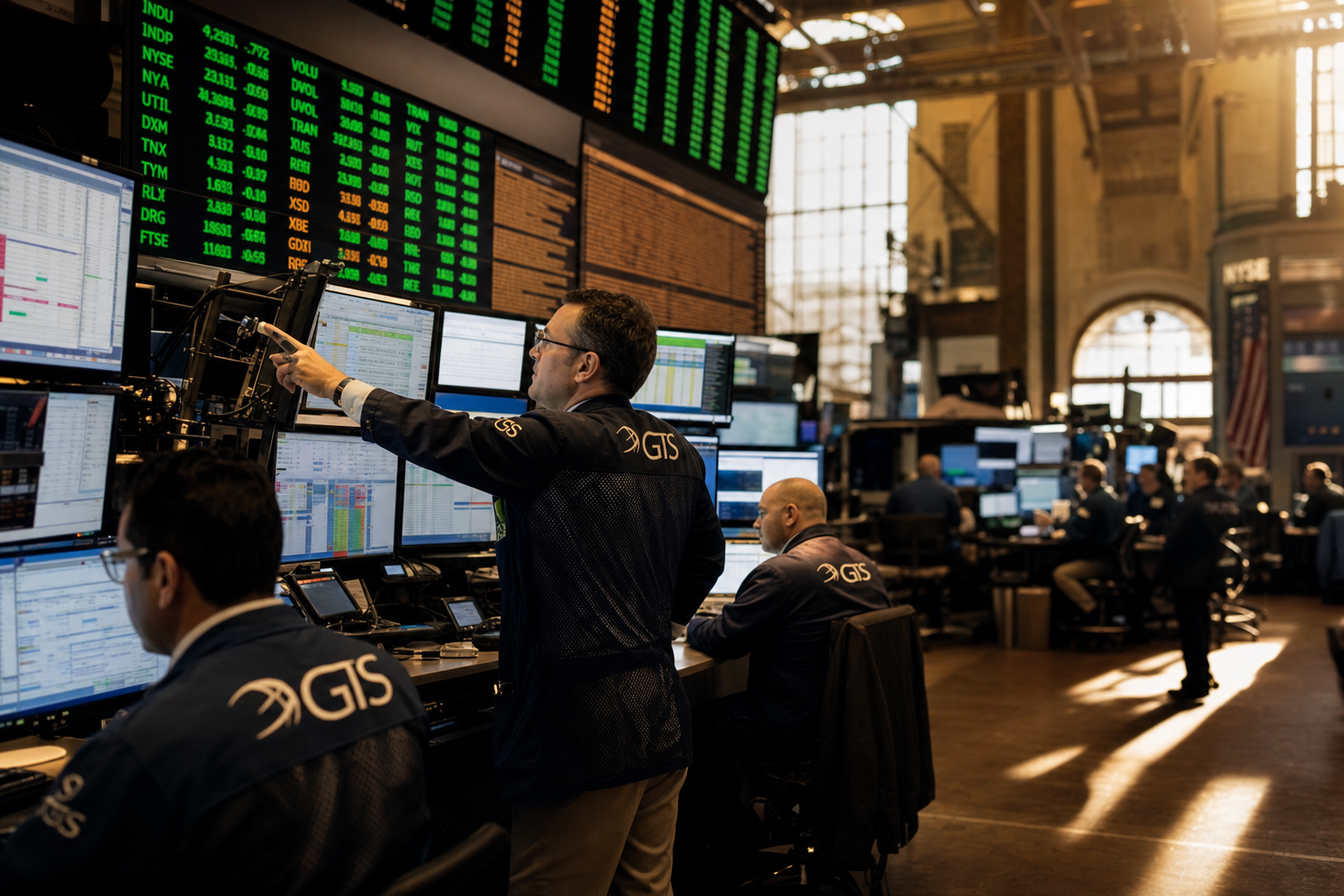
The Morning in Review
Friday's session opened with a clear hierarchy of catalysts, and Nvidia (NVDA) sat at the top of it. The company's fiscal Q1 2027 results — $81.6 billion in revenue, up 85.2% year-on-year — reported after Thursday's close, gave the market an unambiguous anchor heading into the weekend. The print exceeded analyst expectations and set a record as the largest single quarter any semiconductor company has ever produced. Data center demand, fueled by hyperscaler spending from Amazon, Microsoft, and Google, drove virtually all of the growth. Management's forward guidance was described by analysts as strong, suggesting the AI infrastructure buildout remains well short of its ceiling.
The immediate market reaction was constructive but not euphoric. Nvidia's market capitalisation has been approaching the $6 trillion threshold — a level no publicly listed company has previously reached — which means the stock carries a valuation that already prices in significant execution. The question traders were working through this morning was not whether the quarter was good (it clearly was), but whether it was good enough to sustain the stock at current multiples against a backdrop of rising Treasury yields that compress the present value of future earnings.
The Themes Competing for the Afternoon
Three distinct narratives are running in parallel, and they pull in different directions.
The first is the AI-driven bull case, now freshly reinforced. UBS raised its 2026 year-end S&P 500 (SPY) target to 7,900 this morning; Morgan Stanley went further to 8,000. Both banks cited resilient consumer spending and sustained data center capital expenditure. The dual upgrades, arriving on the same day as Nvidia's print, represent a coordinated reassessment of corporate earnings durability. Neither bank dismissed macro risks entirely — UBS specifically flagged that its revised view rests on an assumption of continued growth — but the directional signal is clear.
The second narrative is deal flow, which has been unusually active for a single Friday. Intel (INTC) climbed 5.4% on reports of a preliminary chip-manufacturing agreement with Apple (AAPL), a development that matters beyond the two companies involved. Intel's foundry strategy — its push to manufacture chips for external clients — has struggled to gain commercial traction; an Apple relationship, even a preliminary one, would represent a meaningful validation. Separately, Boeing (BA) received confirmation of a 200-aircraft order from China, a tangible commercial outcome from ongoing U.S.-China trade discussions that carries long-term production and revenue implications for a company that has spent years working through manufacturing and certification challenges. FedEx (FDX) and European parcel locker firm InPost confirmed their $9 billion buyout offer formally opens May 26, moving into its next procedural phase.
The third narrative is the one most likely to be underweighted in Friday's equity-focused coverage: commodity and rate pressure. Barclays maintained its 2026 Brent crude forecast at $100 per barrel while explicitly flagging that risks are skewed higher, citing declining global oil inventories and ongoing supply disruptions. A sustained move toward or above $100 would feed directly into inflation readings, complicate the Federal Reserve's rate path in the second half of 2026, and add another layer of pressure on equity valuations already sensitive to yield moves. Treasury yields have been elevated throughout the week, and that backdrop has not changed.
What Shifted Since the Open
The morning session has largely confirmed, rather than challenged, the setup that Nvidia's earnings created. The AI-infrastructure thesis has the most concrete evidence it has seen in a single earnings cycle. IBM's (IBM) 12.4% single-session gain on its $1 billion federal quantum computing grant adds a separate but complementary dimension — government capital is now flowing into advanced computing infrastructure alongside private hyperscaler spending, and IBM is the primary beneficiary of that public-sector channel.
What has not resolved is the tension between the bullish earnings narrative and the macro environment. Rising Treasury yields remain the principal counterweight to higher equity targets. The Barclays oil note is a reminder that the commodity complex is running its own story, one that could intersect uncomfortably with Fed policy if inventory draws continue. Neither development is new today, but neither has been defused.
The Meta (META) situation — a potential unwind of its $2 billion Manus AI acquisition amid cross-border regulatory scrutiny — remains in the background. The facts are still thin, but if that deal collapses under regulatory pressure, it would set a precedent for how AI-related cross-border acquisitions are reviewed. That story is worth tracking even without a confirmed outcome.
The Afternoon Watch List
Heading into the final hours of the session, four things are worth monitoring closely.
Nvidia's close will matter more than the intraday level. A stock that opens strong on blowout earnings and fades into the close signals that the print was priced in; one that holds or extends gains suggests institutional buyers are still adding exposure at current valuations.
Treasury yields deserve equal attention. The 10-year yield's direction this afternoon will tell you more about Monday's equity open than any single stock move. If yields push higher into the weekend, the UBS and Morgan Stanley target upgrades will face an immediate stress test.
Boeing's session close is worth watching in the context of the China order. Large sovereign orders are strategically significant, but they need to translate into firm contracts. Any commentary from Boeing management or Chinese aviation authorities about delivery schedules or financing terms would sharpen the picture considerably.
Finally, the FedEx-InPost deal opening on May 26 means next week begins with a live M&A event. European logistics valuations and any competing bid speculation will be in focus from Monday morning. The $9 billion figure makes this a transaction large enough to move sector sentiment, not just the individual stocks involved.