Nvidia's $81.6B Quarter Sets the Tone, But Bond Markets Steal the Session
A record Nvidia earnings beat collided with rising Treasury yields and a 12% Microsoft slide, leaving markets to weigh AI euphoria against a bond market that is sending a different signal.
The Session
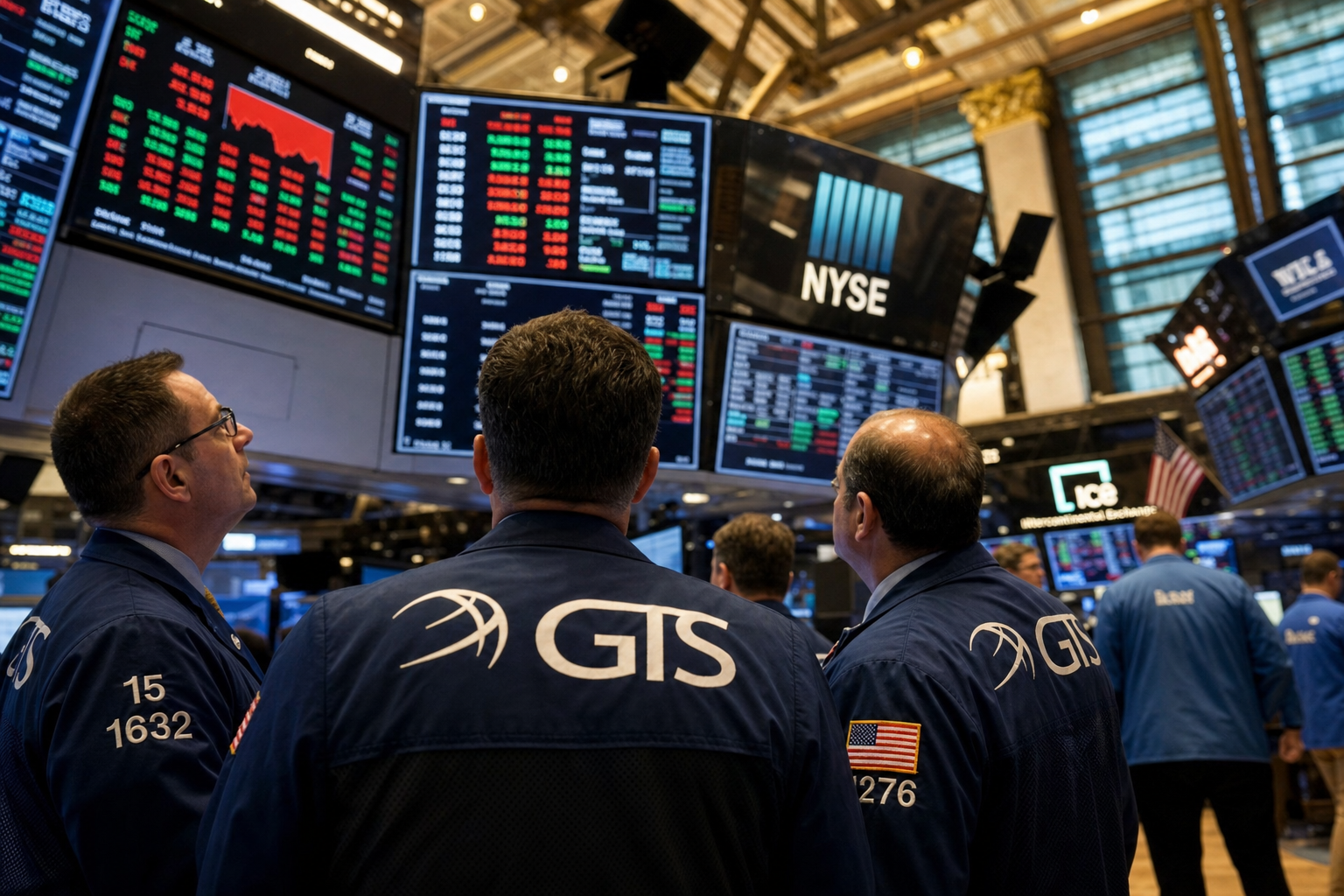
Thursday closed as a study in contradictions. Nvidia (NVDA) delivered one of the most impressive earnings prints in recent memory — $81.6 billion in fiscal first-quarter revenue, a 92% surge in Data Center sales, a 55.6% net income margin, and guidance for $91 billion next quarter. The company paired that with an $80 billion share repurchase authorization, a figure that signals extraordinary confidence in sustained cash generation from the AI infrastructure boom.
And yet the session did not feel like a celebration. Rising Treasury yields, a dramatic selloff in Microsoft (MSFT), and renewed White House pressure on the Federal Reserve created a macro undercurrent that kept broader indices in check. The result was a day where the biggest company in the AI supply chain reported its best-ever numbers, and the market's reaction was measured at best.
The gap between what Nvidia reported and how markets responded tells you something important about where expectations now sit for the chipmaker. The bar has risen so high that a $91 billion guidance print — which would have been unthinkable two years ago — landed as roughly in line with what the most aggressive analysts had penciled in.
Winners and Losers
Nvidia was the session's headline act, but MSFT was its most consequential mover. Microsoft fell 12%, becoming the single largest drag on the S&P 500 on the day. The selloff centered on the company's $190 billion capital expenditure outlook and questions about whether Azure cloud growth is keeping pace with that spending. The irony is sharp: the same AI infrastructure buildout that is generating Nvidia's record revenues is the cost center that rattled Microsoft investors.
This divergence is becoming the defining fault line of the AI trade. Nvidia sells the chips that fill the data centers; Microsoft, Amazon, and Google are the ones writing the checks to buy them. When capex guidance rises, chip suppliers benefit while the buyers face scrutiny over return timelines. Thursday made that dynamic explicit.
Boeing (BA) offered the session's most constructive macro signal. China confirmed a 200-aircraft order following a Trump-Xi meeting, tied to efforts to unwind $30 billion in reciprocal tariffs. For Boeing, which has navigated years of production and regulatory challenges, a large-scale Chinese order represents a meaningful demand signal. For the broader trade picture, it is a visible, commercially tangible sign that negotiations between the world's two largest economies are producing real outcomes.
IBM (IBM) surged 6.4% after the White House announced $2 billion in federal quantum computing grants across nine companies, with IBM set to receive $1 billion toward a new quantum chip manufacturing facility. The other recipients — IonQ, D-Wave Quantum, Rigetti Computing, and Infleqtion — span the range of hardware approaches in the field. Quantum computing remains largely pre-commercial, but government investment at this scale echoes the CHIPS Act framework and signals a strategic priority to build domestic capacity ahead of China.
SpaceX's IPO filing was the session's most structurally significant capital markets event. The company filed to raise $80 billion at a $2 trillion valuation, which would rank it among the largest public offerings in U.S. history. The filing preserves an unusually large voting share for founder Elon Musk — a governance structure that will draw scrutiny from institutional investors even as the headline valuation commands attention. A separate disclosure revealed that SpaceX purchased $890 million worth of Cybertrucks and batteries from Tesla (TSLA), a related-party transaction that is likely to feature prominently in IPO due diligence.
Under the Surface
The bond market was the session's most important non-equity story. Treasury yields climbed through the day, driven by a combination of fiscal uncertainty, trade-war concerns, and what analysts describe as eroding confidence in the U.S. fiscal trajectory. When yields rise on growth fears rather than growth strength, the signal is categorically different from the rate moves of 2022 — and more difficult for the Fed to navigate.
President Trump's public pressure on Federal Reserve Chair Jerome Powell to cut rates added a layer of institutional uncertainty. The Fed operates independently of the White House, and Powell has consistently resisted political pressure to adjust monetary policy. But markets do not need to believe the Fed will capitulate to be unsettled by the dynamic. The combination of rising yields and executive pressure on the central bank raises questions about policy credibility at exactly the moment when the bond market is asking for reassurance.
Higher yields compress the valuations of high-multiple technology stocks by raising the discount rate applied to future earnings. That mechanical relationship helps explain why a session with Nvidia's numbers at its center did not produce a uniform rally across the Nasdaq.
The VIX — the market's implied volatility gauge — remained elevated relative to the session's AI-driven optimism, a sign that options markets were pricing in continued uncertainty rather than treating Nvidia's results as an all-clear signal.
Friday's Setup
Nvidia's after-hours price reaction carries into Friday's open as the most immediate variable to watch. The stock's performance will be a real-time referendum on whether the $91 billion guidance print was enough to satisfy a market that has been conditioned to expect the extraordinary.
Bond yields remain the session's unresolved thread. If Treasury yields continue to climb, the pressure on growth equities will persist regardless of what individual earnings reports say. The Microsoft selloff demonstrated how quickly a single large-cap move can translate into index-level drag — and there are other mega-cap names that would face similar scrutiny if the yield backdrop deteriorates further.
The Boeing-China order and the SpaceX IPO filing both warrant follow-on attention. On trade, the 200-aircraft deal is a data point, not a resolution — the $30 billion tariff unwinding it is tied to will take time to confirm and implement. On SpaceX, the IPO registration will now move into a regulatory review period, with governance structure and the Tesla related-party transaction likely to be the focal points for institutional investors assessing the offering.
The ADNOC warning — that Persian Gulf oil flows could face severe disruption until at least mid-2027 — did not move crude markets dramatically on Thursday, but it sits in the background as a supply-side risk premium that could reprice quickly if regional tensions escalate. Energy traders watching Strait of Hormuz shipping data will have that warning as a reference point for the weeks ahead.