Microsoft Beats Earnings but Investors Punish Its AI Spending Ambition
A strong quarterly result wasn't enough for Microsoft. The market's reaction reveals a deepening divide between what Big Tech earns today and what it plans to spend tomorrow.
The Beat That Didn't Matter
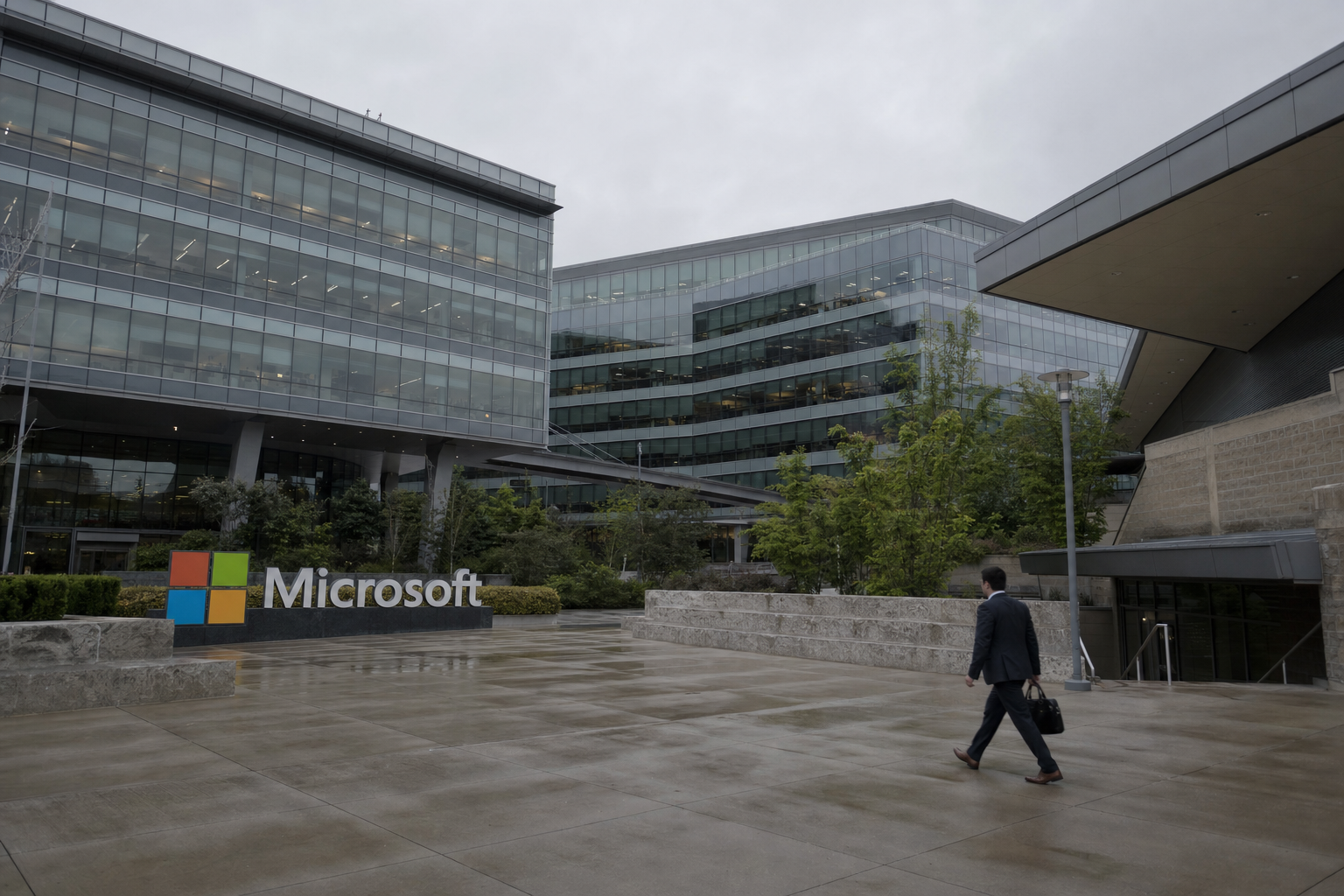
Microsoft (MSFT) did what it was supposed to do. The company delivered a quarterly earnings result that cleared analyst expectations on both revenue and profit — the kind of report that, in most market environments, would send a stock higher. Instead, shares fell approximately 4%.
The culprit wasn't the past. It was the future — specifically, the scale of capital spending Microsoft has committed to in pursuit of artificial intelligence infrastructure. Investors looked past the headline numbers and focused on what the company plans to spend building data centers, acquiring chips, and expanding the physical backbone of its AI ambitions. The message from the market was blunt: strong earnings are no longer sufficient if the spending trajectory that follows them is unsettling.
A Tale of Two Reactions
The contrast with Alphabet (GOOGL) is instructive. Alphabet also reported a strong quarter, driven by growth in its AI products and the Google Cloud division, and its stock surged 9.3%. Both companies beat expectations. Both are spending heavily on AI. Yet one was rewarded and the other punished.
The difference appears to lie in investor perception of spending discipline and near-term return visibility. Alphabet's Cloud growth gave analysts a concrete revenue line to attach to its AI investment. Microsoft's spending commitments, by contrast, appear to have arrived without sufficient accompanying evidence — at least in the market's judgment — that the returns will materialize on a timeline that justifies the outlay.
This dynamic is not unique to Microsoft. Meta (META) experienced a similar whipsaw earlier in the same earnings cycle, with shares falling roughly 8% after the company forecast a significant increase in overall capital expenditure, even though it posted what Bank of America called a double beat on revenue and earnings — a result strong enough to prompt the bank to raise its price target. Meta subsequently recovered, but the initial reaction underscored the same anxiety.
The Broader Tension in Big Tech
The Magnificent 7 — the cohort of mega-cap technology companies that dominate U.S. index weightings — are collectively projected to have grown earnings approximately 45.7% year-over-year this quarter, with revenues rising around 24.6%. Those are extraordinary numbers by any historical standard. Apple (AAPL) posted record Q2 results. Amazon (AMZN) and Alphabet both delivered beats. The aggregate scorecard is strong.
Yet the market's reaction to Microsoft and, briefly, to Meta signals that investors have entered a new phase of scrutiny. The first phase of the AI trade rewarded companies for announcing AI strategies and showing early revenue traction. The current phase demands something harder: a credible path from capital expenditure to durable profit.
Capital expenditure in this context means the physical infrastructure required to run AI at scale — data centers, networking equipment, and the specialized chips that power model training and inference. These are long-lived assets, and the spending required to build them is front-loaded. The revenues they generate arrive later, and with less certainty than the spending commitments themselves.
What the Microsoft Reaction Reveals
For Microsoft specifically, the AI spending story is inseparable from its partnership with OpenAI and its integration of AI capabilities across its Azure cloud platform and enterprise software suite. The investment thesis is coherent: if AI becomes the dominant interface for enterprise software, Microsoft's existing customer relationships and distribution give it a structural advantage.
But that thesis requires patience. And patience, in a market where Alphabet just demonstrated that AI investment can be rewarded immediately when paired with visible Cloud revenue growth, is in shorter supply than it was six months ago.
The 4% decline on a strong earnings beat is a specific signal. It tells Microsoft — and the broader market — that investors are now grading AI spending on a curve. Commitment to the buildout is assumed. What differentiates companies in this environment is whether that spending is visibly converting into revenue, and how quickly.
The AMD Read-Through
This dynamic has direct implications for AMD (AMD), which is next in the earnings queue and has been drawing increased investor attention based on its growing role in AI infrastructure. AMD has secured contracts with high-profile clients including OpenAI and Meta, and analysts have been pointing to strong projected growth in its data center and server processor segments as evidence that AI hardware demand is broadening beyond Nvidia (NVDA).
If Microsoft's spending commitments are as large as investors fear, that is, in a narrow sense, good news for AMD — more data center buildout means more chip demand. But AMD's results will also be read as a proxy for whether hyperscaler spending is actually accelerating or beginning to moderate. Hyperscalers are the large cloud providers — Amazon, Google, Microsoft — whose infrastructure budgets drive the bulk of demand for advanced server chips.
Nvidia, which has already reclaimed a market capitalization above $5 trillion and has analysts projecting a potential $6 trillion valuation before the end of 2026, remains the dominant hardware beneficiary of the AI buildout. AMD's quarter will test whether the rising tide is broad enough to lift a credible second player.
What to Watch
The Microsoft situation introduces a template that will shape how the rest of earnings season — and the next several quarters — is interpreted. Companies that pair AI spending with concrete, growing revenue lines will be rewarded. Companies that front-load spending without equivalent revenue visibility will be penalized, regardless of how strong their headline numbers look.
For MSFT specifically, the next inflection point will be Azure's growth rate in subsequent quarters. If AI-driven cloud revenue accelerates measurably, the market's current skepticism will look like an overreaction. If Azure growth plateaus while capital expenditure continues to climb, the 4% decline may prove to have been the opening move in a longer reassessment.
The fault line is clear. Big Tech has spent two years telling investors that AI investment will generate extraordinary returns. The market believed it. Now it wants to see the receipts.