Meta Drops on Youth-Safety Trial, Nvidia Earnings Set to Define AI Trade
Three converging stories — a landmark Meta trial, Nvidia's looming earnings, and Samsung's chip price hikes — are shaping how markets price the AI infrastructure trade this Wednesday.
The Overnight Picture
Asian markets carried forward the bruising tone of recent sessions into Wednesday. Japan's Topix posted its steepest single-day decline since March, dragged lower by AI-related names as rising bond yields continued to compress growth stock valuations. South Korea's KOSPI briefly triggered a circuit breaker earlier this week — a regulatory pause mechanism activated when an index falls too sharply, too fast — before stabilizing. U.S. equity futures offered little relief, stalling after three consecutive sessions of S&P 500 declines.
The tariff pause the Trump administration announced on Canada failed to shift sentiment in any meaningful way. Markets are focused elsewhere: on the rates environment, on legal risk repricing in mega-cap tech, and on the single most anticipated earnings report of the AI cycle.
Theme One: Meta's Legal Reckoning
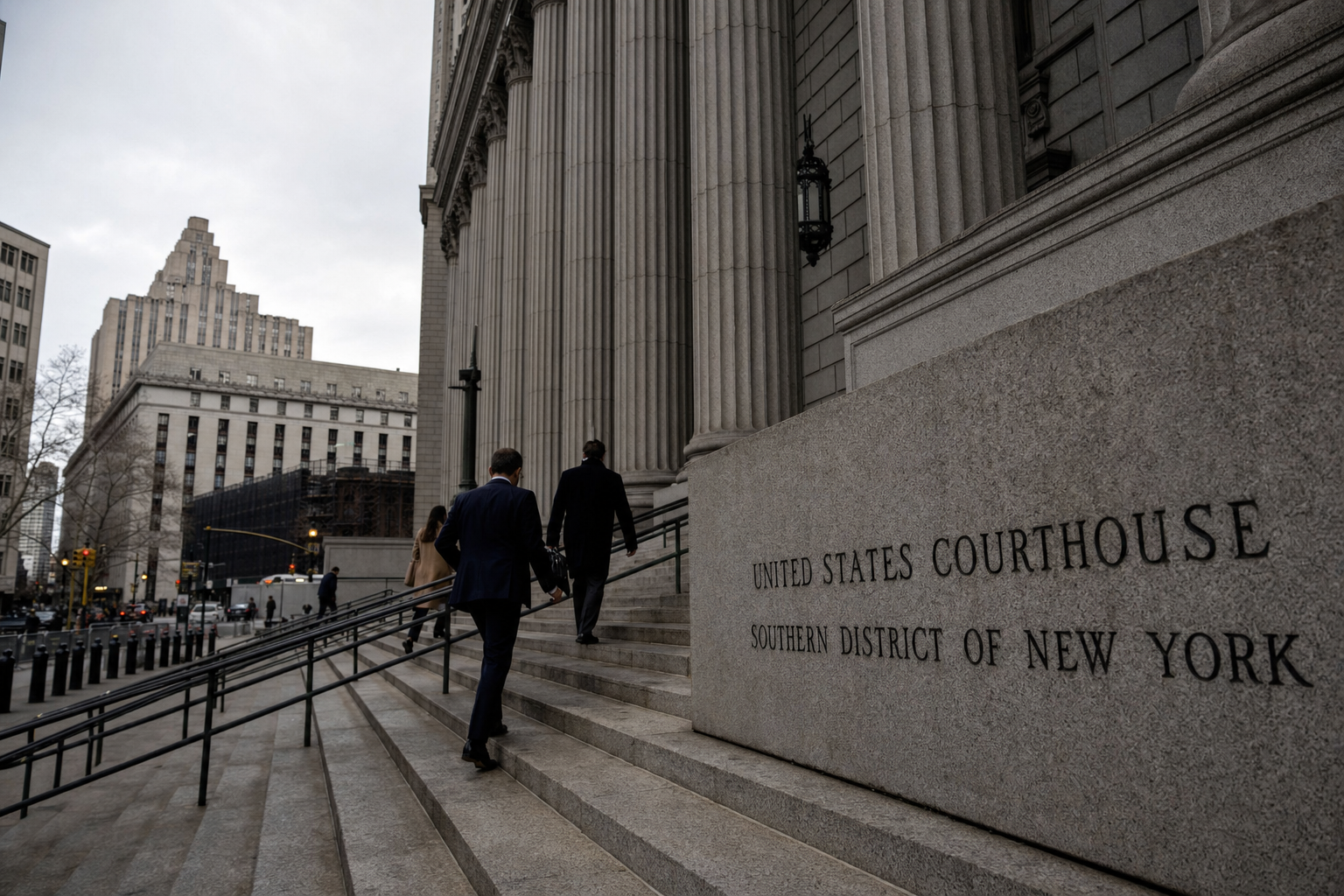
Meta Platforms (META) fell 4.45% as a landmark trial over its platforms' alleged harms to young users got underway. The case centers on claims that Meta's products caused measurable harm to younger users — allegations the company has contested. The figures being cited in connection with potential liability are striking: coverage has referenced numbers as large as $1.4 trillion, though any actual damages would depend entirely on trial outcomes and subsequent appeals, which could stretch for years.
The single-session decline reflects investor uncertainty about an outcome that is genuinely unknowable at this stage. What is already clear is that regulatory and legal pressure on social media platforms over content moderation and user safety has intensified substantially, and a significant ruling here would set precedents affecting the broader communication services sector. For traders, the relevant question is not whether Meta loses — it is whether the market has priced enough of the tail risk. A 4.45% drop on a company of Meta's scale represents billions of dollars in erased market capitalization, suggesting investors are treating this as a material, not marginal, risk.
Theme Two: Nvidia and the AI Spending Barometer
No single earnings report carries more weight for AI-exposed markets right now than Nvidia's (NVDA) upcoming results. Nvidia's data center revenue has become the closest thing markets have to a real-time gauge of how much the hyperscalers — the large cloud infrastructure operators — are actually spending on AI compute, as opposed to what they say they plan to spend.
The setup heading into the print is reinforced by Samsung Electronics' decision to raise prices for advanced contract chipmaking services by as much as 15%. The move is attributed to surging AI chip demand, with Chinese customers cited as a notable driver. Samsung is also managing capacity allocation between its U.S. and other clients.
In contract chipmaking — where a foundry manufactures chips designed by other companies — price increases of this magnitude typically reflect genuine demand pressure rather than opportunistic moves. When a foundry with Samsung's scale raises prices, it signals that available capacity is being absorbed faster than new capacity can come online. For investors tracking the AI infrastructure trade, that is a confirmatory data point: compute demand is still outrunning supply, and pricing power remains with the manufacturers.
Cerebras Systems (CBRS) added another dimension to the AI hardware story, unveiling its CS-4 inference chip alongside partnerships with OpenAI, Advanced Micro Devices (AMD), and Arista Networks. The CS-4 targets AI inference — running a trained model to generate outputs — a segment growing rapidly as large language models shift from development into deployment at scale. Cerebras, which has filed for a U.S. IPO, is positioning itself as a credible alternative to Nvidia in inference workloads. The OpenAI partnership provides both credibility and a potential high-volume customer at a critical moment.
Theme Three: Apple's Transition and What Comes Next
Apple (AAPL) crossed a $5 trillion market capitalization during Tim Cook's final earnings call as chief executive — a figure that encapsulates the scale of value creation over his tenure. Cook oversaw Apple's expansion into services, wearables, and in-house silicon, transforming what was primarily a hardware company into one with diversified, high-margin revenue streams.
With a successor now in place, the questions investors are asking are structural. Does Apple's services growth trajectory hold? How does the company compete in an AI landscape where rivals are moving faster on consumer-facing features? Does the capital return program — one of the largest in corporate history — remain intact? At a $5 trillion valuation, even modest shifts in growth expectations can move enormous sums. The market's verdict on the new leadership will take quarters to form, but the transition is already one of the most closely watched executive handovers in recent corporate history.
The Calendar
Walmart (WMT) is the other major earnings catalyst on the radar. The retailer has maintained an unbroken dividend streak for 54 consecutive years — a record that reflects consistent profitability through multiple economic cycles. Beyond the dividend, Walmart's results serve as a real-time read on American consumer spending, particularly among middle- and lower-income households most sensitive to inflation and employment conditions. Any sign of weakening basket sizes, trade-down behavior, or margin pressure from tariffs would be closely scrutinized.
Goldman Sachs completed its acquisition of LCN Capital Partners for up to $410 million, expanding its footprint in net-lease commercial real estate — properties where tenants pay most operating costs directly, providing predictable, long-duration income streams. The deal fits Goldman's broader push to grow its asset management division and reduce reliance on the more volatile revenues from trading and investment banking.
Watch List
Four things deserve close attention through the session and into the close.
First, META's intraday behavior. The 4.45% drop at the open of the trial is a sentiment signal, but watch whether the stock stabilizes or continues to drift lower as trial proceedings develop. Communication services names with similar regulatory exposure — platforms with large youth user bases — are worth monitoring for sympathy moves.
Second, semiconductor supply chain pricing. Samsung's 15% foundry price hike is a data point that cuts both ways: it validates AI demand, but it also raises cost pressures for fabless chip designers — companies that design chips but outsource manufacturing — who rely on foundry partners. Watch AMD and smaller AI chip names for any reaction to the Samsung news as it filters through analyst models.
Third, bond yields. The primary driver of the Asian selloff and the recent three-session S&P 500 losing streak has been elevated long-term yields, not trade policy or earnings disappointments. If Treasury yields tick higher again during the U.S. session, expect renewed pressure on high-multiple growth names regardless of any positive corporate news flow.
Fourth, Walmart's print as a consumer health signal. The retailer's results will either reinforce or complicate the view that U.S. consumer spending remains resilient. In an environment where markets are already navigating elevated yields and legal uncertainty in mega-cap tech, a weak consumer read would add a third pressure vector to an already stressed tape.