Markets Recover From Geopolitical Shock as M&A Wave Dominates Monday Session
A morning selloff triggered by Israel-Iran tensions gave way to a broad recovery, while a historic Italian banking bid, an Intel surge, and an Amazon fiber deal reshaped the corporate landscape.
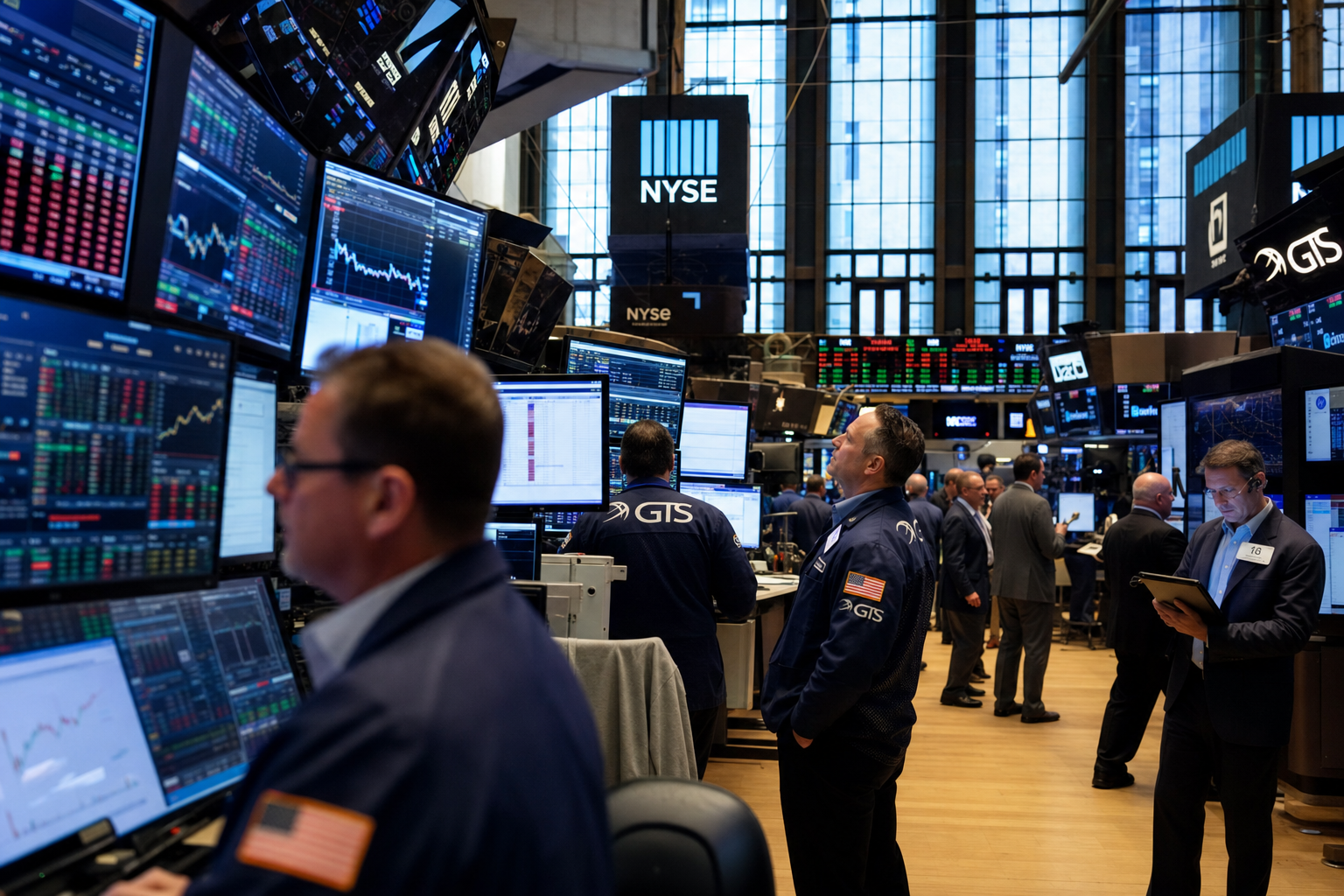
Morning Selloff, Afternoon Recovery
Monday's session played out in two distinct acts. The opening hours brought a classic risk-off move: oil prices surged on fears of renewed conflict between Israel and Iran, global equities retreated, and technology stocks — already carrying stretched valuations — bore the heaviest selling pressure. SoftBank fell roughly 6% at its session low, and Broadcom (AVGO) led declines among U.S. chip names as investors rotated out of AI-linked positions.
The narrative shifted materially after reports emerged that Israel had halted preparations for new strikes on Iran, following direct discussions between Prime Minister Netanyahu and President Trump. No formal ceasefire or diplomatic agreement has been confirmed — the pause in strike preparations is the extent of what sources disclosed — but it was enough to take the edge off crude prices and give equity markets room to recover.
Semiconductor stocks, which had led the decline, led the rebound. NVIDIA (NVDA), AMD, Micron (MU), and Broadcom all recovered meaningful ground from their session lows. Oil prices, which spiked sharply in the morning, remain elevated relative to Friday's close and will stay a key variable as long as the Middle East situation remains unresolved.
Intel's 12% Surge and the Semiconductor Policy Story
The session's most dramatic individual mover was Intel (INTC), which jumped 12% on a combination of confirmed and reported catalysts. The concrete development was a strategic collaboration with Hitachi. Circulating alongside it were reports — not yet formally announced — of potential foundry partnerships with Alphabet's Google (GOOGL) and NVIDIA for AI chip supply.
Adding a policy dimension that separates this from a typical partnership announcement: the U.S. government has acquired an ownership stake in Intel as part of a broader strategy to support domestic AI and semiconductor manufacturing. Washington is now a direct financial stakeholder in Intel's turnaround, a shift that reframes the company's recovery not purely as a commercial story but as an industrial-policy one.
Intel has spent the better part of three years losing ground to rivals in advanced chip manufacturing. Monday's move suggests investors are beginning to price in a scenario where government backing, combined with potential hyperscaler partnerships, could accelerate a genuine reversal. Whether the reported Google and NVIDIA deals materialize will be the test.
Marvell Technology (MRVL) added more than 7% on a separate but related semiconductor story: the company's confirmed addition to the S&P 500. Index inclusion mechanically triggers buying from funds that track the benchmark. Marvell also disclosed a forecast of surpassing $10 billion in revenue for its custom-chip business by fiscal 2029, providing fundamental support beneath the index-inclusion rally.
Amazon Locks In Corning for Data Center Buildout
Amazon (AMZN) and Corning (GLW) announced a multiyear, multibillion-dollar supply agreement under which Corning will provide optical fiber and connectivity products for Amazon's U.S. data centers. Corning shares rose as much as 10% on the news.
The deal matters beyond the headline move in GLW. It illustrates how hyperscale cloud providers are increasingly moving to lock in long-term supply relationships with hardware manufacturers rather than relying on spot procurement. For Amazon, the agreement secures a critical physical input — optical fiber carries data as pulses of light inside and between data centers — as its cloud and AI infrastructure buildout accelerates. For Corning, it provides multi-year revenue visibility in a market expanding alongside AI workloads.
The domestic manufacturing angle is also notable. The agreement is structured to boost U.S.-based fiber optic production, consistent with the broader policy emphasis on onshoring critical technology supply chains that has characterized Washington's industrial strategy over the past several years.
Intesa's $35 Billion Bid Triggers Italian Banking Contest
Across the Atlantic, Intesa Sanpaolo launched an unsolicited bid valued at approximately $35 billion for Monte dei Paschi di Siena — founded in 1472 and widely regarded as the world's oldest bank. The offer would be a record transaction for the Italian financial sector and, according to reports, would position Intesa as Europe's second-largest bank by market capitalization.
The move effectively gatecrashes an existing offer from Banca Popolare di Milano for Monte dei Paschi, setting up what analysts are characterizing as a bidding war. The Italian government, which holds a stake in Monte dei Paschi following prior state interventions to stabilize the lender, is expected to be a decisive stakeholder in any outcome.
The bid reflects the consolidation pressure building across European banking. Institutions are seeking scale to spread the costs of technology investment and regulatory compliance across larger balance sheets. Monte dei Paschi has long symbolized Italy's fragmented, state-entangled banking sector; a deal of this magnitude would mark a structural turning point for the country's financial industry.
J&J Adds Oncology Platform; Broader Deal Context
Johnson & Johnson (JNJ) agreed to acquire Firefly Bio for $1 billion, adding a degrader antibody conjugate platform to its cancer drug pipeline. The technology uses antibodies to direct protein-degrading molecules to tumor cells — a next-generation approach relative to conventional antibody-drug conjugates, which deliver a toxic payload rather than triggering protein degradation. The $1 billion price reflects the early-stage nature of the platform.
Zooming out, Monday's deal volume is striking in both its breadth and its geographic spread. Italian banking consolidation, a French telecom consortium bid of approximately €20 billion for SFR, an Amazon-Corning fiber pact, a U.K. food ingredients takeover — Ingredion's £2.7 billion all-cash offer for Tate & Lyle sent the latter's shares up 12% — and the Intel-Hitachi collaboration all crossed within the same session. Corporate confidence in deal execution, despite elevated financing costs, appears intact.
Afternoon Setup: Oil and Diplomacy Remain the Swing Variables
The session's recovery hinged on a diplomatic signal that has not hardened into a formal agreement. The Israel-Iran situation remains fluid, and any resumption of strike activity would likely reprice oil quickly and put renewed pressure on risk assets. Crude prices, even after partially retracing their morning spike, remain above Friday's close.
For equities, the key question heading into the afternoon is whether the recovery in semiconductor names can hold without a further geopolitical catalyst. The Intel story has legs regardless of the macro backdrop — the foundry partnership reports and the government stake are structural developments — but the broader tech complex remains sensitive to any deterioration in the Middle East picture.
The SFR telecom deal and the Ingredion-Tate & Lyle offer are both pending further detail and could generate additional headlines before the close. Options positioning around index-level moves, given the morning's volatility, is also worth monitoring as the session approaches its final hours.