M&A Wave and Iran Deal Reshape Monday's Market Narrative at Midday
Two distinct forces — a geopolitical breakthrough on oil and the busiest M&A session in months — are driving cross-asset moves that go well beyond any single sector.
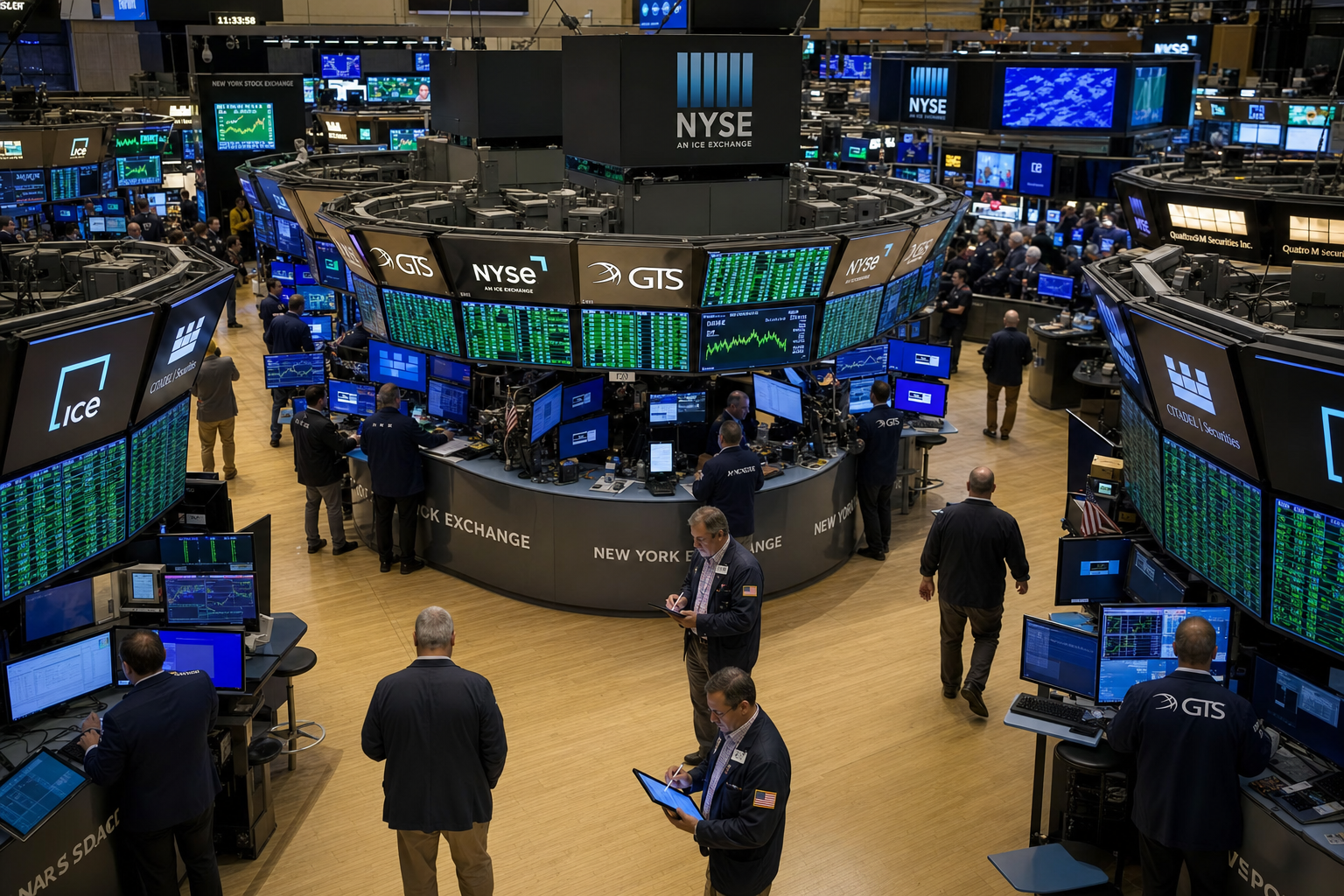
Morning Recap: Two Catalysts, One Direction
Monday's session opened with two stories competing for the market's attention — and both are pulling in the same direction. The U.S.-Iran peace agreement, which includes the reopening of the Strait of Hormuz, sent crude prices tumbling toward $80 a barrel, stripping out the geopolitical risk premium that had kept energy costs elevated. At the same time, corporate boardrooms announced a cluster of deals that, taken together, represent one of the more active M&A sessions in recent memory.
The result has been a broadly constructive tape. Equities are higher across the board, with semiconductor stocks leading the charge. The Iran agreement removed a supply-disruption fear that had weighed on global markets, and lower oil prices — if sustained — carry meaningful downstream implications for inflation and central bank policy.
The Oil Move: What It Changes
The Strait of Hormuz is not an abstraction. A significant share of the world's seaborne crude exports passes through this narrow waterway between Iran and Oman, and its closure — or the credible threat of it — had been baked into energy prices for weeks. Monday's agreement between Washington and Tehran to end the Middle East conflict and reopen that chokepoint is a material change in the supply picture.
Crude moving toward $80 a barrel is the immediate read-through. But the more consequential question is whether the agreement holds. Analysts noted that durable peace would ease inflationary pressure on energy costs globally, potentially giving central banks — including the Federal Reserve — more room to maneuver on interest rates. Bond markets will be watching the trajectory of oil closely over the coming sessions.
Airline and cruise stocks gained on the fuel-cost implications. NVDA, MU, and AMD also rallied — chip stocks are sensitive to geopolitical developments given their global supply chains and export-control exposure, and a reduction in Middle East tension eases one layer of that risk.
The Deal Landscape: Breadth Is the Story
The Fox-Roku transaction is the headline, but the breadth of Monday's M&A activity is what stands out. FOX agreed to acquire ROKU in a cash-and-stock deal worth approximately $22 billion, positioning the combined entity as the third-largest player in U.S. television by share of viewing. Fox shares fell on the announcement — the classic acquirer's discount, where investors price in integration risk and the possibility of overpayment. Roku shares rose, reflecting the premium embedded in the offer.
The strategic logic is straightforward: Fox is buying Roku's connected-TV platform, its installed base, and critically, its advertising and viewer data infrastructure. Linear TV audiences have been migrating to streaming for years; this deal is Fox's most aggressive move yet to follow them.
Beyond Fox-Roku, CRM agreed to pay $3.6 billion for Fin, an AI-powered customer service company, deepening Salesforce's push into autonomous AI agents. PAYO shares rose roughly 4% after payments processor Nuvei announced an all-cash acquisition of Payoneer Global for $2.75 billion — all-cash deals typically signal strong buyer conviction. AXP separately agreed to purchase Tripadvisor's restaurant booking unit for $700 million, extending American Express's footprint in dining rewards.
Four deals announced in a single session, spanning media, enterprise software, and fintech. The cluster is hard to dismiss as coincidence — it suggests corporate confidence in the macro environment is building.
AMD Crosses $900 Billion; Microsoft Faces Legal Headwind
AMD crossed the $900 billion market capitalization threshold for the first time Monday, buoyed by both the broader chip rally and the launch of its Ryzen AI Halo developer platform, priced at $3,999 — approximately $700 below a comparable Nvidia product. The pricing gap is a deliberate competitive signal, positioning AMD as the more accessible option for developers building and testing AI models locally. KKR added institutional weight to the AI infrastructure theme, announcing Helix Digital Infrastructure, a new $10 billion data center venture oriented around AI workloads.
MSFT, by contrast, is navigating a new legal complication. Shareholders filed a securities class action alleging the company made misleading statements about its Azure cloud business and the scale of its AI spending. The suit claims investors suffered material losses when the full picture diverged from those representations. Microsoft has not publicly responded in detail. These cases typically take years to resolve and rarely move a stock significantly on their own — but the suit adds scrutiny at a moment when Azure's growth trajectory is already a central metric for investors assessing whether Microsoft's heavy AI capital expenditure is translating into revenue.
Afternoon Setup: What to Watch
The session's two dominant themes — the Iran agreement and the M&A wave — each carry their own follow-on risks. On the geopolitical side, the durability of the U.S.-Iran deal is the key variable. Oil prices near $80 reflect an initial relief trade; whether crude holds at these levels or drifts lower depends on whether the Strait of Hormuz reopening is implemented and sustained. A reversal in the agreement would snap energy prices back and unwind the afternoon's risk-on positioning quickly.
On the deal front, the Fox-Roku transaction will face regulatory scrutiny before it closes. Media mergers of this scale draw attention from antitrust authorities, and the timeline to approval will shape how Roku shares trade in the near term. The Salesforce-Fin and Nuvei-Payoneer deals are smaller and less likely to face significant regulatory friction, but integration execution will be the longer-term test.
AMD's $900 billion milestone is worth monitoring as a sentiment indicator for the broader chip sector. If the Iran-driven rally holds into the close, semiconductor names could finish the session as the day's clear sector leaders. Watch whether the move has legs or fades as the afternoon progresses.