Jensen Huang in Beijing Puts Nvidia's China Chip Trade Back on the Table
The semiconductor sector is driving Wednesday's market narrative, from Nvidia's H200 export restrictions to Apple-Intel foundry talks and a $1 trillion chip sales forecast.
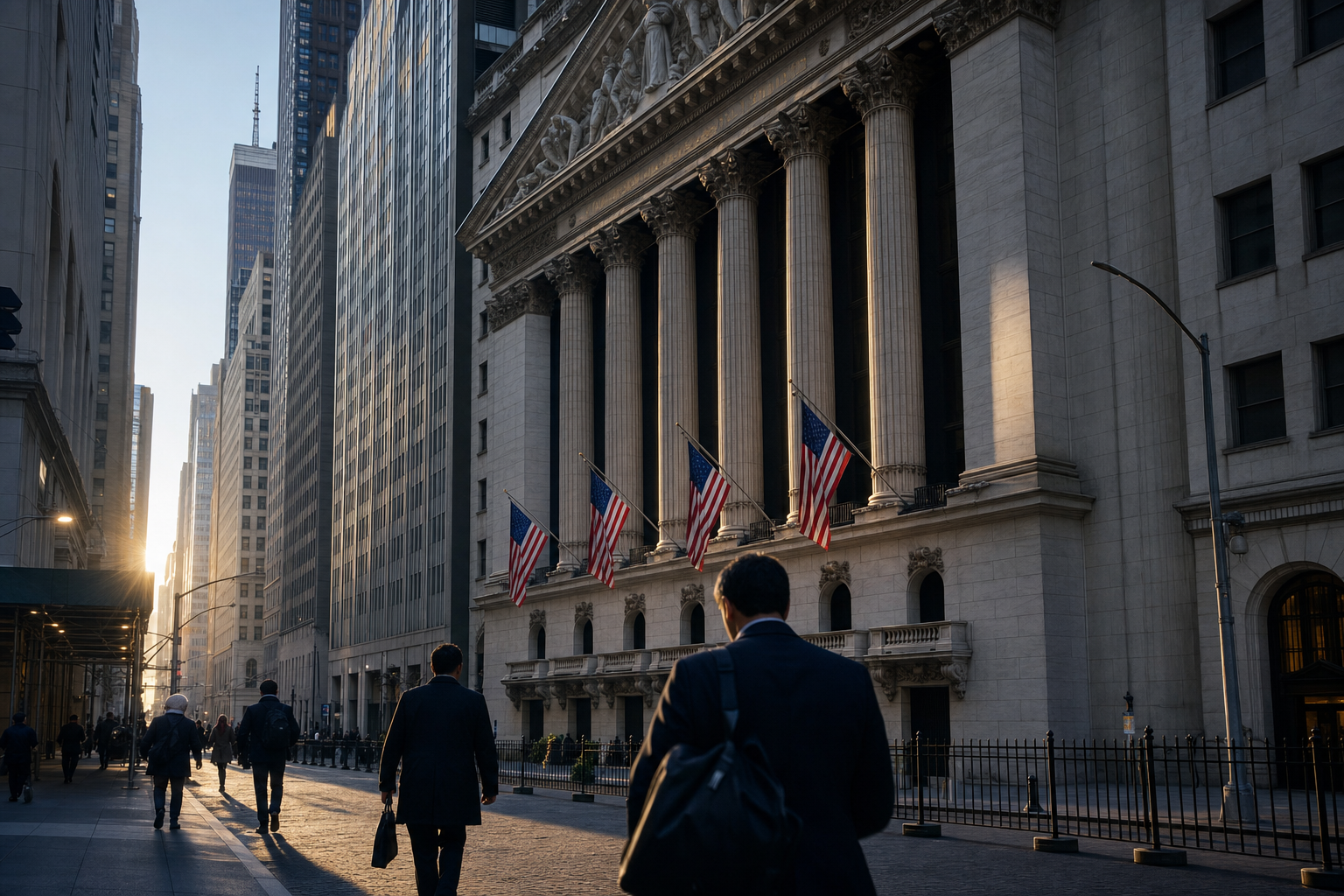
The Overnight Picture
Wednesday opened with semiconductors at the center of the market conversation. Nvidia CEO Jensen Huang is traveling to Beijing as part of President Trump's diplomatic delegation, a detail that markets read as a meaningful signal: U.S. AI chip export policy toward China could be moving toward a thaw. NVDA lifted on the news, pulling AI-linked names higher in pre-market.
The backdrop from Tuesday's close was mixed. The S&P 500 ended down 0.16% and the Nasdaq retreated on tech weakness, while the Dow eked out a 0.11% gain — a split session that reflected ongoing tension between inflation pressures and resilient corporate earnings. That tension has not resolved overnight. German wholesale prices printed sharply higher for April, and Commonwealth Bank of Australia (CBA) dropped 10% on bad-loan provisions, a reminder that not every corner of global finance is buoyed by AI optimism.
U.S. equity futures are pointing higher, with semiconductor stocks leading the pre-market advance.
Theme 1: The Beijing Trip and the H200 Question
The most consequential development for markets this morning is Huang's presence alongside Trump in Beijing. Nvidia's H200 — a high-performance chip used to train and run large AI models — has been subject to U.S. export controls that have blocked sales to Chinese customers. China represents a significant untapped opportunity for Nvidia's data center business, and any relaxation of those restrictions would be material to the company's revenue outlook.
Apple and Tesla executives are also reportedly part of the broader delegation, suggesting this is a wider effort to reset U.S.-China commercial relations rather than a narrow chip-policy discussion. No deal has been confirmed, and the outcome of diplomatic trips is inherently uncertain. But the optics of Huang sitting at the table with the president have been enough to lift sentiment across AI-linked names.
This story has been building across multiple sessions. Earlier this week, markets were already pricing in the possibility of a Boeing aircraft order exceeding 500 planes from Chinese buyers — the largest such deal since 2017 — as a product of the same summit. The chip angle adds a second, potentially more structurally significant dimension to the Beijing talks.
Theme 2: Apple, Intel, and the ASML Ripple Effect
A separate semiconductor story is drawing its own attention. Apple and Intel are reportedly in negotiations over a chip manufacturing agreement — foundry talks that would see Intel produce chips designed by Apple. If those discussions advance, Intel would likely need to expand its equipment base to meet Apple's specifications, and that means a large order for ASML, the Dutch maker of extreme ultraviolet lithography machines that any serious advanced-chip manufacturer must use.
ASML's machines are already in high demand globally. A large Apple-driven order would reinforce its position as an indispensable node in the semiconductor supply chain, and the stock is in focus in European trading this morning.
The Apple-Intel dynamic is worth watching for a second reason. Apple has relied heavily on TSMC for its most advanced chips, and Intel has been rebuilding its foundry business after years of manufacturing setbacks. A deal of this kind would validate Intel's foundry ambitions and potentially reshape competitive dynamics in contract chip manufacturing. Earlier this week, Intel had fallen 10% as the semiconductor rally cooled sharply — foundry partnership news offers a partial counterweight to that pressure.
Broader semiconductor sentiment is also supported by an industry forecast suggesting global chip sales could exceed $1 trillion in 2026, driven by AI-related demand. AMD and KLA Corporation both rallied on that projection.
Theme 3: Credit Stress and European Inflation
While the chip trade dominates headlines, two macro signals deserve attention from investors looking beyond U.S. tech.
Commonwealth Bank of Australia fell 10% after raising provisions for bad loans — funds set aside to cover expected credit losses. CBA is one of Australia's largest banks and a bellwether for domestic credit conditions. Provisions of this scale signal that a lender is seeing early signs of borrower stress, whether from elevated interest rates, slowing economic activity, or sector-specific pressures. The selloff dragged the broader Australian lending sector lower.
In Europe, Germany's wholesale prices rose 2.0% month-over-month and 6.3% year-over-year in April, with energy costs — tied to ongoing Middle East conflict — cited as the primary driver. Germany is Europe's largest economy and a major industrial energy consumer, making it particularly sensitive to energy price swings. Elevated wholesale prices can feed through into producer costs and, eventually, consumer inflation — a dynamic the European Central Bank will be watching as it calibrates its rate path. The ECB has been gradually easing rates, and persistent energy-driven inflation could complicate that trajectory.
These two developments sit in contrast to the AI-driven optimism dominating U.S. pre-market trading. Credit stress in Australian banking and energy inflation in Germany are slow-moving forces, but they shape the macro environment in which corporate earnings must be delivered.
The Calendar
Markets will be watching for any concrete announcements from the Trump-Beijing delegation throughout the day, particularly on chip export policy and the Boeing aircraft order. There are no major U.S. economic data releases scheduled for Wednesday morning, though any Fed speaker appearances will draw scrutiny given that April CPI came in at 3.8% year-over-year earlier this week — hotter than expected and enough to push rate-cut expectations further out.
The Meta Platforms (META) lawsuit filed by Santa Clara County alleging the company enabled fraudulent advertising via its AI tools remains an open legal overhang. Meta has not yet publicly responded. Any statement from the company today could move the stock, given that advertising is the core of its business model.
Watch List
NVDA is the primary focus. Watch for any formal statement from the Beijing delegation on H200 export policy. Even a vague signal of progress would likely push the stock higher; a breakdown in talks or an explicit reaffirmation of restrictions would reverse the pre-market gains quickly.
ASML deserves attention in European hours and at the U.S. open. The Apple-Intel foundry story is unconfirmed, but the market will be pricing in optionality on a large equipment order.
INTC sits at an interesting inflection point — foundry partnership speculation is constructive, but the stock is still recovering from its 10% drop earlier this week. How it opens relative to that move will indicate whether the foundry narrative is gaining traction.
META is a quieter watch. The Santa Clara lawsuit is not an immediate financial event, but any public response from the company — or silence that invites further legal speculation — could pressure the stock in a session where the broader tape is likely to be dominated by semiconductor optimism.
Finally, keep an eye on European banking names and energy-linked equities. The CBA selloff and German wholesale price data both point to pressure building in sectors that have been overshadowed by the AI trade. If either story develops further — additional bad-loan disclosures from regional banks, or an escalation in Middle East tensions — the macro backdrop could shift faster than the pre-market chip rally suggests.