Iran Strikes Push Oil to $114, Stocks Slide as Geopolitical Risk Reprices Markets
A missile strike on the UAE and attacks in the Strait of Hormuz reshaped the trading session, compounding existing inflation fears and delivering the day's sharpest single-story market impact in years.
The Session
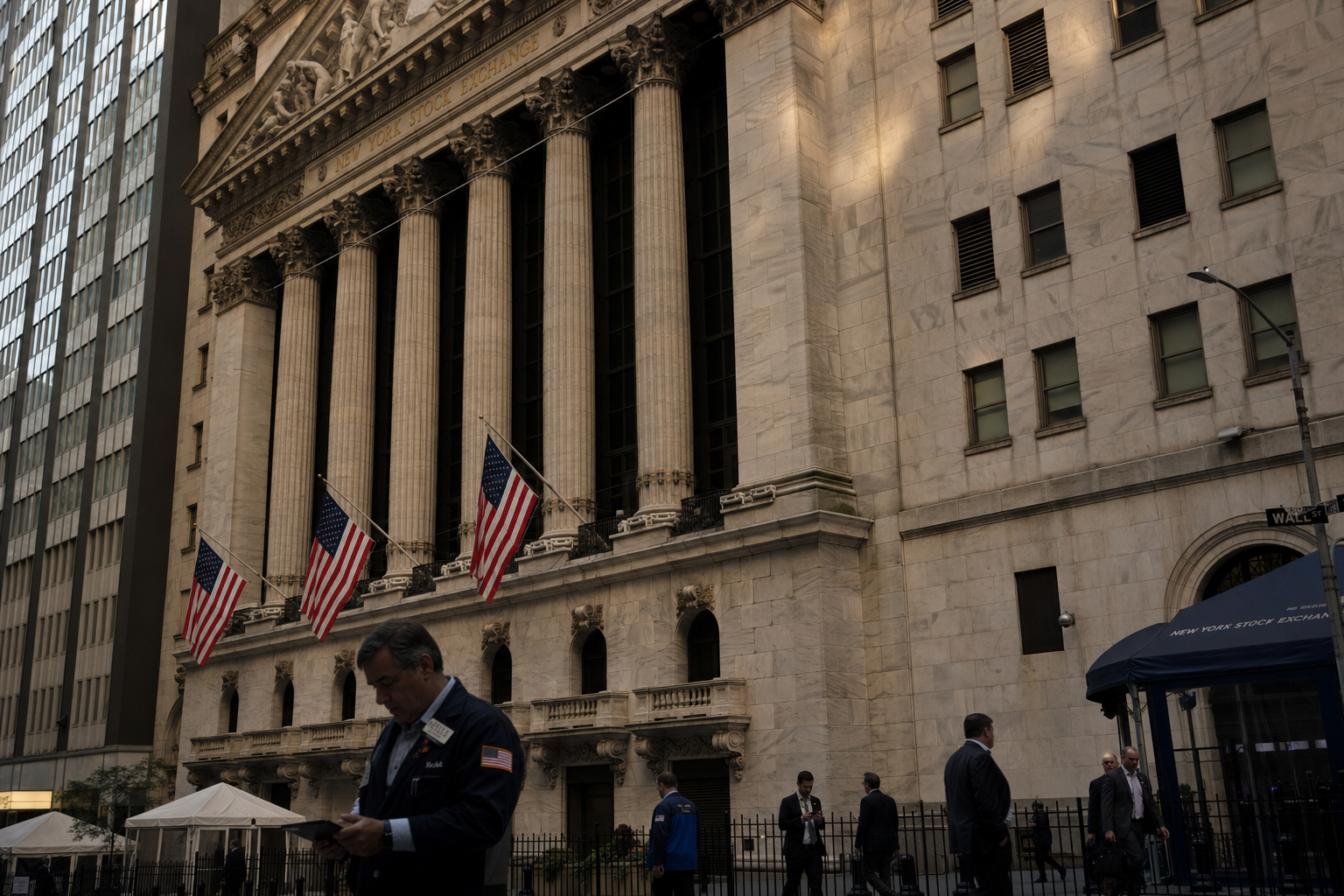
Monday's close was not a surprise so much as a confirmation of how quickly a single geopolitical event can reprice an entire market. The S&P 500, Dow Jones Industrial Average, and Nasdaq all finished lower after Iran launched missile strikes on the United Arab Emirates and attacked vessels transiting the Strait of Hormuz — the narrow waterway through which a significant share of global seaborne oil flows.
Oil settled above $114 a barrel, a gain of roughly 5% in a single session and the highest price in four years. That number matters beyond energy markets: at $114, crude becomes a direct input into the inflation calculus that the Federal Reserve is already navigating carefully. The session ended with equities down, energy up, and a bond market that had already been flashing rate-hike warnings now facing fresh pressure.
Winners and Losers
Energy was the session's clearest beneficiary in price terms, though the gains were shadowed by operational concern. Chevron (CVX) publicly flagged worry about its ability to safely move oil through the Strait of Hormuz — an unusual statement for a major integrated producer, and one that signals the conflict has moved beyond abstract geopolitical risk into concrete supply-chain territory.
The session's most dramatic single-stock damage landed in logistics. Amazon (AMZN) formally opened its Supply Chain Services network to outside businesses — including brands such as Procter & Gamble, 3M, and American Eagle Outfitters — transforming what was built as an internal cost center into a direct competitor to established carriers. FedEx (FDX) fell 9%. UPS (UPS) dropped 10%. Amazon's stock rose. The moves reflect a straightforward investor read: Amazon's network, built at a scale that dwarfs traditional carriers, now competes for the same enterprise shipping contracts that FedEx and UPS depend on. The threat is structural, not cyclical, and a single quarter of volume data won't resolve it.
On the earnings front, Meta Platforms (META) delivered revenue growth of 33.08%, powered by AI-driven ad pricing tools that allow advertisers to target users more precisely and pay more per impression. Snap (SNAP) posted a quarterly profit of $45.21 million — a meaningful milestone for a company that has spent years burning cash — by leaning into subscription revenue and smaller advertisers rather than competing directly with Meta for large brand budgets. The contrast illustrates how AI is concentrating premium ad spending at the largest platforms while smaller players carve out viable but narrower positions.
GameStop (GME) and eBay (EBAY) both saw their shares rise after GameStop CEO Ryan Cohen announced a $56 billion takeover offer for eBay — a bid that is striking given GameStop's own market capitalization of roughly $11 billion. The financing path for a deal of this scale is far from clear, and eBay has not yet publicly responded. Shares moved on the announcement, but the market's enthusiasm should be read cautiously: deals where the acquirer is attempting to finance a target worth several times its own value face a high bar for completion.
Under the Surface
The bond market's behavior deserves attention beyond the day's equity moves. Before Iran's strikes landed, fixed-income traders were already pricing in a meaningful probability that the Federal Open Market Committee — the Fed's rate-setting body — would resume interest-rate increases before year-end. The FOMC has held rates steady in recent meetings, but persistent inflation expectations had already opened a divergence between bond market signals and the more optimistic posture embedded in equity valuations near record highs.
An oil shock at $114 a barrel does not simplify that picture. Energy prices feed directly into headline inflation data, and a sustained move higher in crude would give the Fed less room to hold. The risk is not just that rates stay higher for longer — it is that the next move is a hike rather than a cut, a scenario that equity markets trading at elevated multiples have not fully priced.
The VIX — the market's implied volatility gauge, sometimes called the fear index — would be expected to have risen in a session of this character. Geopolitical shocks with direct commodity implications tend to push volatility higher even when the equity decline itself is orderly. Safe-haven flows into U.S. Treasuries and gold are the typical accompaniment to this kind of event.
Tomorrow's Setup
The dominant variable heading into Tuesday is the Strait of Hormuz. If Iran's attacks represent an isolated escalation, oil markets may give back some of Monday's gains as traders reassess actual supply disruption risk. If the conflict widens — or if Chevron or other operators announce operational changes to their transit plans — the $114 level could prove a floor rather than a ceiling.
For the Fed, the timing is uncomfortable. Any scheduled Fed speakers this week will face questions about whether a sustained energy-driven inflation spike changes their rate outlook. Bond markets will be listening closely for any shift in language.
FedEx and UPS management teams have not yet issued formal guidance responses to Amazon's logistics expansion. Any commentary from either company — whether on pricing strategy, volume trends, or competitive positioning — will be closely watched by investors trying to size the long-term impact of Monday's structural shift.
The GameStop-eBay situation remains unresolved. eBay's board response, when it comes, will determine whether this becomes a prolonged public negotiation or a quick rejection. Either outcome will move both stocks.
Meta's strong quarter and Snap's profitability milestone provide a constructive data point for digital advertising broadly, but both results will trade against the macro backdrop rather than in isolation. If oil stays elevated and rate-hike fears intensify, even strong earnings may struggle to drive sustained upside in growth-oriented names.