Iran Strikes and Hot CPI Collide, Keeping Markets in Defensive Mode
Two simultaneous shocks — U.S. military action against Iran and a 0.5% May CPI print — have locked markets into a risk-off posture through midday, with no obvious catalyst for relief in the afternoon session.
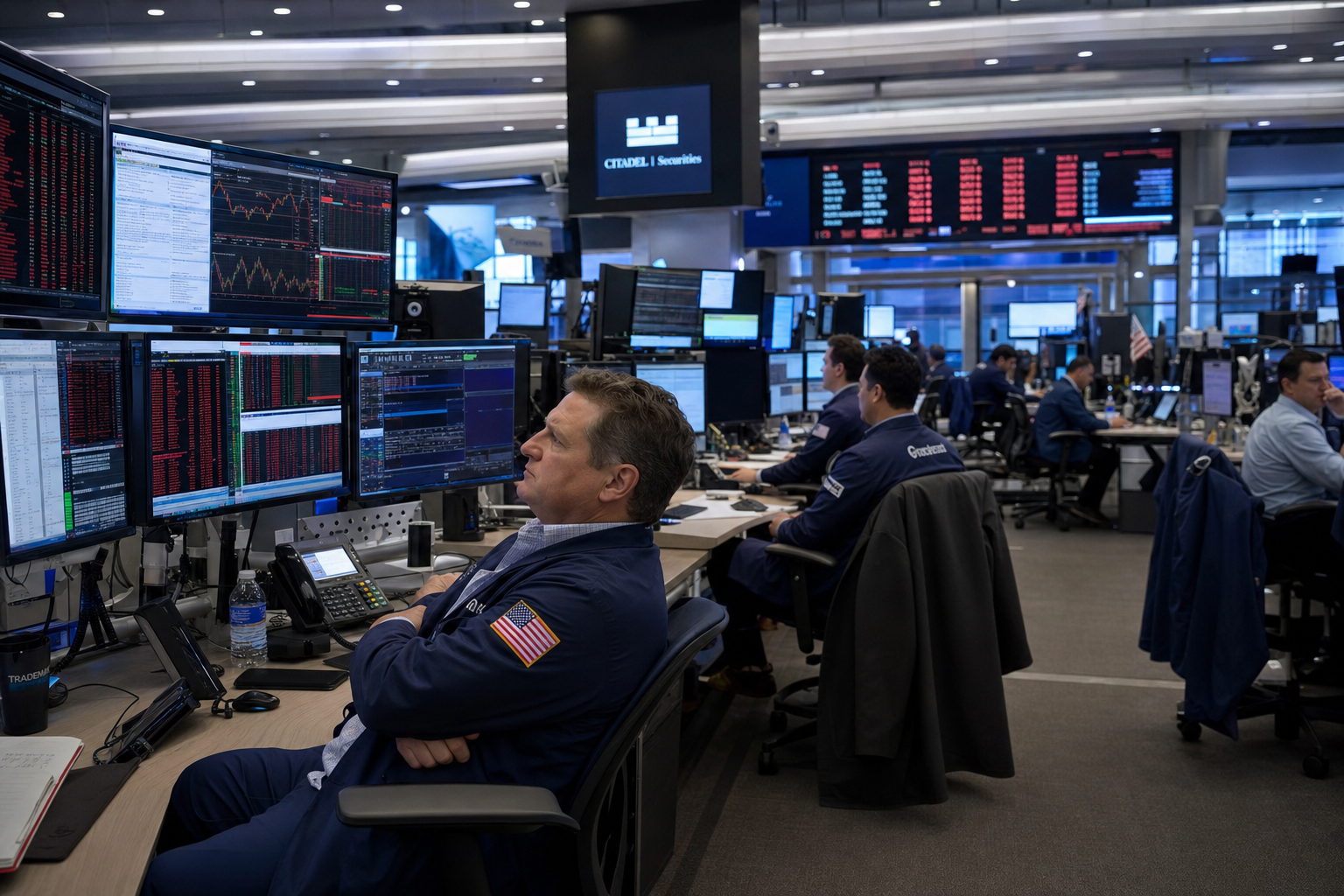
The Morning the Two Shocks Landed Together
Wednesday's session opened under the weight of two independent market-moving events that arrived in quick succession and reinforced each other's bearish logic. U.S. forces struck Iranian military targets following the downing of a U.S. Army Apache helicopter, sending oil prices sharply higher on fears of supply disruption through the Middle East. Minutes later — or nearly simultaneously for many traders — the Bureau of Labor Statistics reported that the Consumer Price Index rose 0.5% month-over-month in May, a reading that exceeded expectations and reignited inflation concerns that markets had been hoping were fading.
The result was a pre-market selloff that extended into the open. Futures on the S&P 500 (^GSPC), Nasdaq (^IXIC), and Dow (^DJI) all declined following the CPI release, compounding losses that had already begun on the geopolitical news. Technology and AI-linked stocks bore the sharpest pressure, as high-valuation growth names are particularly sensitive to the combination of rising rates expectations and elevated risk aversion.
By midday, that narrative has not meaningfully shifted.
What Has and Hasn't Changed Since the Open
The morning brief flagged the dual shock as the dominant story, and the session has confirmed it. Neither the geopolitical situation nor the inflation picture has offered any softening signal since the open. The Iran situation remains fluid — further escalation or signs of Iranian retaliation would amplify pressure on energy prices and risk assets alike. President Trump had previously threatened action against Iran, which means the strikes were not entirely without warning, but the market reaction suggests traders had not fully priced in the timing or scale.
On inflation, the 0.5% monthly CPI gain puts the Federal Reserve in an uncomfortable position. Policymakers had been watching for sustained disinflation before moving on interest rates, and a print of this magnitude pushes in the opposite direction. Treasury yields — which move inversely to bond prices and reflect rate expectations — were in focus throughout the morning. No Fed officials have publicly responded to the print as of midday, and any commentary in the afternoon session would likely move markets.
The one piece of data running against the bearish grain is TSMC (TSM), which reported a 30% surge in sales driven by strong orders from Nvidia (NVDA) and Apple (AAPL). The result is a direct read on AI hardware demand — TSMC manufactures the advanced chips that power AI data centers — and the number was unambiguously strong. It offers a reminder that the underlying demand story for AI infrastructure remains intact even as macro and geopolitical headwinds weigh on valuations. The market, however, is not in a mood to reward that distinction today.
The AI Spending Data Point That Got Overshadowed
Also arriving this morning, and largely absorbed without fanfare given the macro noise: Alphabet (GOOG) disclosed the terms of a large-scale AI compute arrangement involving 110,000 Nvidia GPUs at a cost of approximately $920 million per month, with the deal running to mid-2029. The per-GPU cost is reported to be roughly 2.2 times what Anthropic pays SpaceX for comparable compute — a figure that illustrates how aggressively Alphabet is moving to secure AI infrastructure at scale.
On any other day, a $920 million monthly commitment to a single compute arrangement would dominate the conversation about AI capital expenditure. Today it is a footnote. For Nvidia, it reinforces the durability of its revenue outlook. For Alphabet, it signals strategic conviction — and a willingness to pay a premium to stay competitive at the frontier of large language model development. The market will return to this data point once the macro fog clears.
The Afternoon Setup
The afternoon session offers limited scheduled catalysts that could shift the current narrative. The primary variables remain the same ones that opened the day: any further developments in U.S.-Iran tensions, and whether Fed officials choose to address the CPI print publicly. A hawkish response from any Fed speaker — or silence interpreted as tacit acceptance of a higher-for-longer posture — would likely extend pressure on equities and keep Treasury yields elevated.
Energy markets deserve close attention. Oil's move higher on the Iran news reflects the market's assessment of supply risk through the Middle East corridor, and that risk does not resolve quickly. Defense-sector names may continue to attract flows as a partial hedge against further escalation.
The next significant scheduled test for the AI trade is Oracle (ORCL) fiscal fourth-quarter earnings, which are on the horizon after today's close. Given the TSMC result and the Alphabet compute disclosure, Oracle's cloud and AI infrastructure revenue will be scrutinized for additional confirmation that enterprise AI spending is holding up despite the broader market turbulence.
For now, the session's defining characteristic is the absence of any counterweight to the morning's twin shocks. The bears hold the narrative, the macro data supports their case, and the geopolitical situation provides no near-term resolution. The afternoon will most likely be a continuation rather than a reversal — unless something changes in Tehran or at the Fed.