Hot CPI and Boeing's China Megadeal Reshape the Tuesday Session
A three-year inflation high and a potential 500-plane Boeing order are pulling markets in opposite directions, testing whether equities can hold their recent gains.
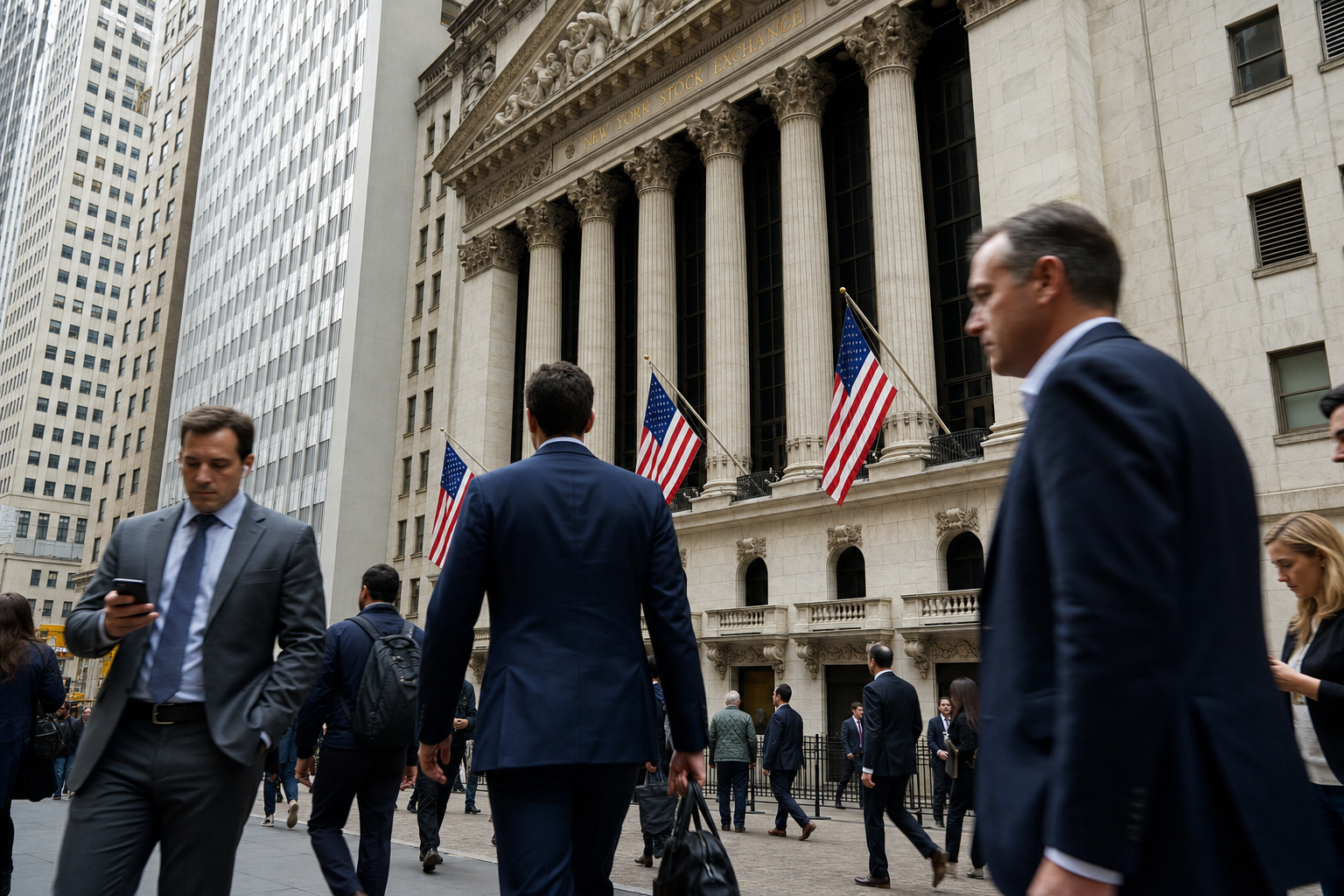
Morning Recap: Two Headlines, Two Directions
Tuesday's session opened with a collision of signals that would test any market's resolve. April's Consumer Price Index came in at a three-year high — driven by energy, housing, and food costs — and the immediate reaction was exactly what the playbook would predict: Treasury yields moved higher, and Nasdaq-heavy tech names led the early retreat. Rate-sensitive growth stocks, whose valuations depend on discounting future earnings at current rates, are structurally the most exposed when inflation data surprises to the upside.
At the same time, reports tied to President Trump's diplomatic visit to China indicated that Boeing (BA) is expected to secure an order for more than 500 aircraft from Chinese buyers — the largest such deal since 2017. That news injected a countervailing current of optimism, particularly in industrials, and gave the broader market a reason to pause before committing to a directional move.
The result through the morning session was a market in genuine tension: the CPI print arguing for rates-higher-for-longer, the Boeing deal arguing that trade diplomacy is producing tangible commercial results.
The Shift: What's Confirmed, What's Still Moving
The CPI narrative has hardened since the open. The Federal Reserve's path to rate cuts — already uncertain — now looks even more constrained. Markets had been pricing in some probability of easing later this year; a three-year inflation high does not eliminate that possibility, but it compresses it. Fed speakers have not yet formally responded to today's data, and any commentary in the afternoon session will be closely parsed.
Nvidia (NVDA) remains the most watched single equity in the session. Wells Fargo's raised price target of $315, with an Overweight rating citing roughly 20 times forward price-to-earnings as attractive, provided a pre-market anchor. But Goldman Sachs data showing NVDA is carrying a disproportionate share of the S&P 500's recent advance cuts both ways on a day when macro headwinds are real. The stock's behavior through the afternoon will signal whether the AI trade is durable enough to absorb an inflation shock, or whether concentration becomes a liability.
The South Korean proposal to tax AI profits added a separate layer of pressure on semiconductors earlier in the session, briefly erasing an estimated $300 billion in sector market value before partial recovery. The proposal remains unenacted policy, but it introduced a regulatory risk premium that hadn't been priced into chipmaker valuations as recently as Monday.
Amazon (AMZN) provided a quieter fixed-income data point: the company raised 2.82 billion Swiss francs — roughly $3.6 billion — in a record six-tranche debut Swiss franc bond offering. The deal is a signal that investment-grade corporate appetite for non-dollar funding remains strong, even as dollar rates stay elevated. It won't move AMZN's equity meaningfully, but it reflects a broader corporate treasury calculus worth noting.
Currencies and Diplomacy: The Yen in the Room
Japan's Finance Minister Satsuki Katayama and U.S. Treasury Secretary Scott Bessent wrapped a two-hour meeting covering forex markets, critical minerals, and AI supply chains. No specific policy announcements emerged, but the forex component matters. The yen has been a pressure point in G7 diplomacy for several quarters, and any bilateral language — even reaffirmed cooperation — carries weight for FX traders watching for signals about intervention tolerance.
The inclusion of critical minerals and AI supply chains in what is nominally a finance ministers' meeting reflects how completely economic security has merged with traditional monetary diplomacy. Both governments have overlapping interests in reducing exposure to Chinese-controlled mineral supply chains that feed semiconductor and battery manufacturing. The meeting's breadth is itself the signal.
Afternoon Setup: Three Things That Matter
The afternoon session has three specific pressure points worth watching.
First, BA and the Boeing-China deal. No final terms have been confirmed as of midday, and diplomatic announcements can slip or shift in scope. If a formal order announcement arrives during U.S. afternoon hours, expect a sharp move in BA and likely a lift in the broader industrials sector. If it doesn't, the stock will have to hold on anticipation alone — a more fragile position.
Second, NVDA and the AI trade's resilience. The stock is functioning as a real-time referendum on whether investors believe the AI infrastructure buildout justifies current valuations despite a higher-for-longer rate environment. A close near or above morning levels would be a meaningful statement. A rollover would confirm that the CPI print is doing structural damage to growth-stock positioning.
Third, the bond market. Treasury yields are the transmission mechanism between today's CPI print and equity valuations. If the long end of the curve continues to move higher through the afternoon, the pressure on rate-sensitive sectors — tech, real estate, utilities — will compound. Watch the 10-year yield as the session's most honest scorecard.
Nvidia's first-quarter earnings are scheduled for May 20, and that date is now the dominant forward catalyst on the near-term calendar. Today's session is, in part, a positioning exercise for that report — and the CPI data has just made that positioning more complicated.