Hormuz Stays Shut, Chips Hit Records, and AI Capital Keeps Flowing
A closed strait, record semiconductor highs, and a $4.8 billion AI chipmaker IPO define a session where geopolitics and technology are pulling markets in the same bullish direction.
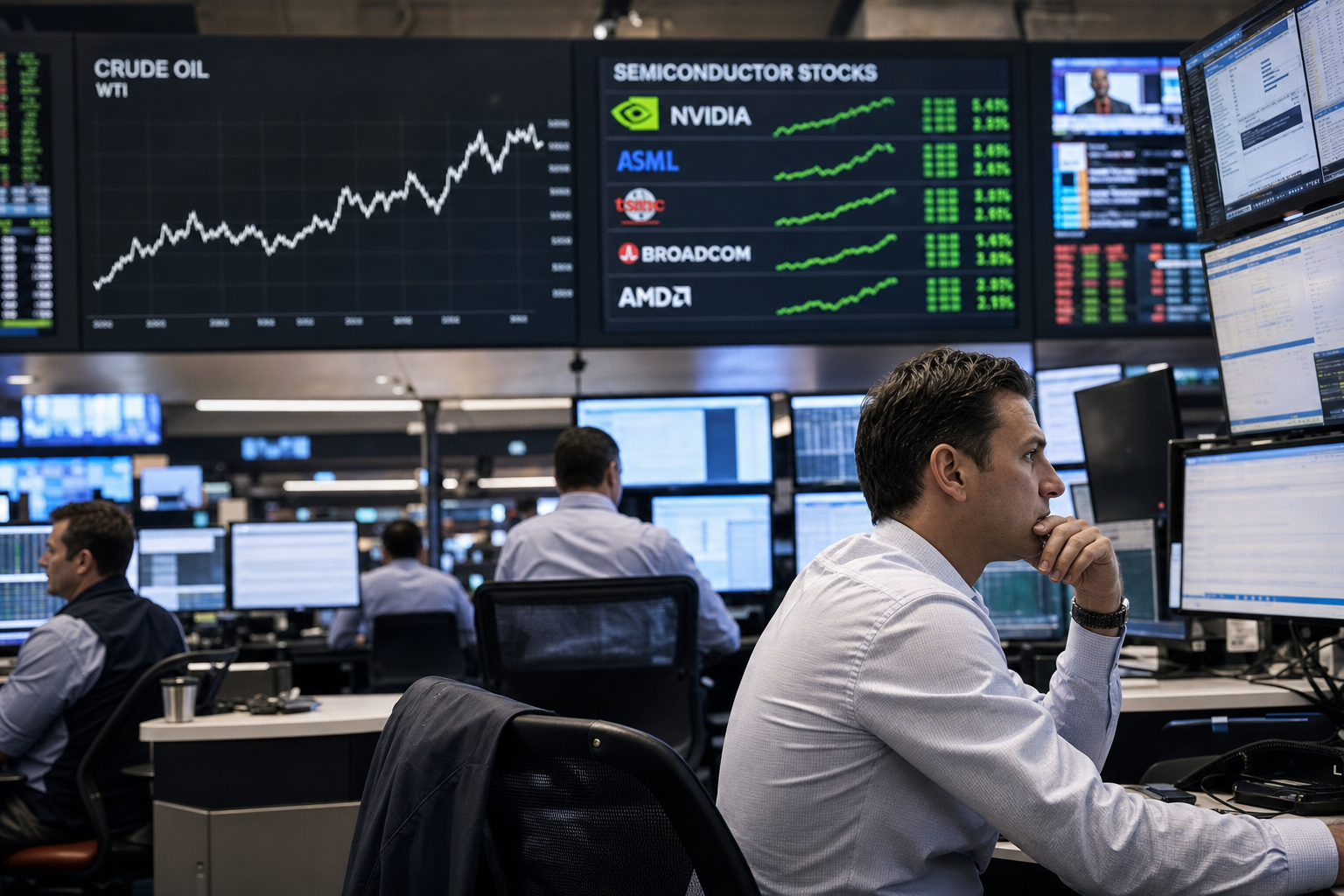
Morning Recap: Two Engines Running at Once
The session opened with two distinct forces driving markets, and through the morning both held their footing. Crude oil stayed elevated after the White House confirmed it had rejected Iran's peace proposal, keeping the Strait of Hormuz — the narrow waterway through which roughly a fifth of global seaborne oil passes — closed to traffic. At the same time, semiconductor stocks pushed to fresh records, with the AI infrastructure trade showing no sign of fatigue.
The combination produced a session that is broadly constructive across risk assets, though the energy bid is being driven by supply disruption rather than demand optimism — a meaningful distinction for how long the rally can sustain itself.
European oil majors BP (BP), Shell (SHEL), and TotalEnergies (TOTF) entered the session having already reported the windfall from earlier volatility: their trading desks collectively booked an estimated $4.75 billion increase in first-quarter profits as war-driven price swings created outsized opportunities. That figure framed the morning's energy trading — the disruption is not just a risk premium story, it is already generating realized profits for the firms best positioned to trade around it.
The Shift: Chips Accelerate, Targets Rise
If the energy story was the macro anchor, semiconductors were the session's momentum engine. Micron Technology (MU), Intel (INTC), and Qualcomm (QCOM) all reached record highs during the morning session, extending a run tied to improving supply-demand dynamics in the memory market and sustained AI infrastructure spending.
Nvidia (NVDA) is tracking toward a record close as well, though it has lagged peers on a year-to-date basis despite a roughly 15% gain. The more striking market-cap story is developing between Alphabet (GOOG) and Nvidia: Alphabet has closed the gap sufficiently that analysts are openly discussing whether it could displace Nvidia as the world's most valuable publicly traded company.
The Apple-Intel story added a specific catalyst to the semiconductor complex. Apple (AAPL) and Intel reached a preliminary chipmaking agreement — Wedbush analysts characterized it as a positive development for Intel, while flagging that it leaves open questions about which fabrication facilities would be involved and how the deal fits Intel's longer-term foundry strategy. For Intel, any incremental revenue from a marquee customer matters as it works to establish its foundry business as a credible alternative to TSMC.
On the target-revision front, two prominent voices moved in the same direction. Strategist Ed Yardeni raised his S&P 500 year-end price target to 8,250, citing upward earnings revisions and continued AI-driven productivity gains. HSBC separately lifted its own year-end forecast, also anchored in earnings optimism. Apple's own trajectory illustrates the earnings-driven argument: the stock has gained roughly 5% over the past week and 13% over the past month, supported by strong second-quarter results and a new $100 billion share repurchase program.
BTIG analysts offered the session's clearest note of caution, flagging that technology and semiconductor stocks have been the primary engine keeping the broader S&P 500 (SPY) elevated, and that a rotation into other sectors could emerge if tech valuations become stretched.
AI Capital: The IPO and the Private Credit Record
Two large financing moves reinforced just how much capital is chasing AI infrastructure exposure right now. Cerebras Systems upsized its planned U.S. initial public offering to seek up to $4.8 billion, citing strong investor demand. The upsize is a meaningful signal: in a crowded technology IPO pipeline, Cerebras was able to increase the deal size rather than negotiate it down, suggesting genuine institutional appetite rather than forced placement.
Broadcom (AVGO), meanwhile, is in advanced discussions to secure a private credit financing package — debt arranged directly with institutional lenders including Apollo Global Management and Blackstone, outside public bond markets — reportedly ranging from $35 billion to $55 billion. If completed, it would rank among the largest private credit transactions on record. The funds are earmarked for AI chip development and supply agreements with Google, Meta, and Anthropic. A deal of that scale would set a new benchmark for the private credit asset class and underline how capital-intensive the competition for custom AI silicon has become.
Afternoon Setup: What Carries Into the Close
The afternoon session inherits a relatively clean narrative: oil elevated on geopolitical risk, semiconductors at record levels, and analyst sentiment trending constructively. The variables that could disturb that picture are mostly binary.
Any diplomatic signal from Washington or Tehran — even an informal one — could move crude sharply in either direction. The Hormuz closure has been the session's clearest macro risk premium, and it would unwind quickly if de-escalation returned to the table. Traders should watch energy-sector credit spreads alongside spot crude; if the risk premium is genuine, both should be moving together.
In semiconductors, the afternoon will test whether the morning's record highs attract follow-through buying or profit-taking. Nvidia's positioning is the most watched: a record close would validate the AI trade's momentum heading into its next major earnings catalyst. Alphabet's market-cap trajectory relative to Nvidia is worth monitoring as well — that gap has been closing steadily, and the afternoon session could narrow it further.
The Cerebras IPO upsizing and Broadcom's private credit talks are not intraday trading catalysts, but they reinforce the session's broader theme: capital is moving into AI infrastructure at scale, through both public and private channels. That flow has been the durable underpinning of the semiconductor rally, and nothing in Monday's session has challenged it.