Hormuz Shock Drives Oil Past $97 as Nvidia Rewrites the PC Chip Map
A geopolitical supply rupture and a landmark product launch are pulling markets in opposite directions Monday afternoon, with energy and semiconductors at the center of both stories.
The Morning Narrative Holds — and Intensifies
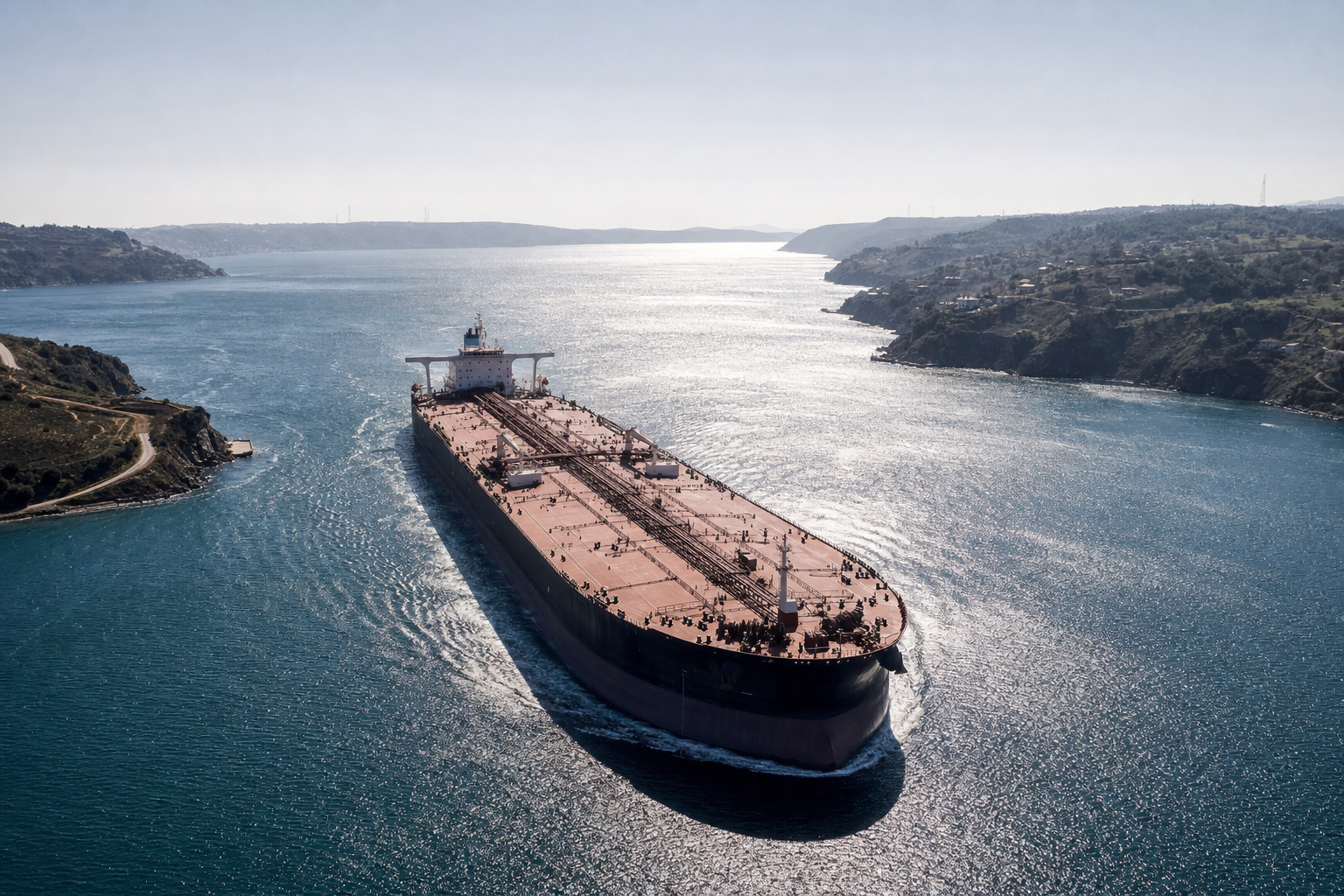
Monday's session opened with two seismic stories, and by midday neither had faded. If anything, both have deepened. Crude oil has climbed further from its initial 5% surge, with prices now trading above $97 a barrel after Iran's reported closure of the Strait of Hormuz — the narrow Persian Gulf chokepoint through which roughly a fifth of the world's seaborne oil transits. The earlier brief flagged $95 as the opening shock level; the move to $97 reflects continued buying as traders price in a sustained disruption rather than a brief tactical closure.
On the technology side, Nvidia's (NVDA) RTX Spark announcement at the Computex trade show in Taipei has not lost momentum. Shares of Intel (INTC), AMD (AMD), and Qualcomm (QCOM) remain under pressure as the market digests what a credible Nvidia entry into mainstream personal computing means for their revenue bases over the next two to three years.
These are not related stories. But together they define the session's character: one driven by geopolitical supply risk, the other by competitive disruption. Investors are navigating both simultaneously.
Energy: The Hormuz Premium Is Real
The Hormuz closure is not a rumor that markets have dismissed. The move from $95 to $97 since the initial reports suggests traders are treating this as a durable supply threat, not a one-day headline.
The strait is the exit route for oil exports from Saudi Arabia, Iraq, the UAE, Kuwait, and Iran itself. A sustained closure — even a partial one — would force rerouting around the Cape of Good Hope, adding weeks to delivery times and significant cost. The immediate supply impact is less about barrels disappearing than about the risk premium markets must now assign to every barrel that was expected to flow through that route.
The inflationary implications are direct. Energy feeds into transportation, manufacturing, and consumer price indices. With the Federal Reserve already navigating a cautious inflation outlook, a sustained oil shock complicates the path to rate cuts. No official U.S. diplomatic response had been confirmed in available reports as of this writing, and that absence of a resolution signal is itself keeping the risk premium elevated.
Energy-sensitive sectors — airlines, shipping, petrochemicals — are likely absorbing the pressure. Commodity-linked currencies will also be in focus for the remainder of the session.
Semiconductors: Nvidia Extends Its Reach
The RTX Spark chip, unveiled at Computex, is Nvidia's first serious push into the mainstream PC processor market — a segment it has historically left to Intel and AMD. The chip integrates AI capabilities directly into laptops and desktops, with Dell and Lenovo expected to ship devices powered by it starting in fall 2026.
The market reaction to the announcement has been sharp and directional. Intel and AMD derive substantial revenue from PC processors; Qualcomm has been building its own AI-capable PC chip business. All three now face a competitor with Nvidia's brand recognition, software ecosystem, and manufacturing relationships.
For Nvidia, the strategic logic is clear: AI hardware dominance in data centers has been enormously profitable, and the consumer PC market — worth hundreds of billions of dollars annually — represents a logical adjacency. The RTX Spark is not a data-center chip adapted for laptops. It is a purpose-built product for the consumer segment, which signals genuine commitment rather than a speculative probe.
Intel separately announced a $3.3 billion semiconductor substrate facility in Odisha, India, in partnership with 3DGS Inc. — a manufacturing investment that underscores the company is playing a long game on supply chain capacity even as competitive pressure intensifies from Nvidia's announcement today.
The Deal Flow: Berkshire, Diller, SpaceX
Beyond energy and semiconductors, Monday has delivered a dense M&A backdrop. Berkshire Hathaway (BRK-A, BRK-B) agreed to acquire homebuilder Taylor Morrison (TMHC) for $6.8 billion in cash — one of the most significant acquisitions under CEO Greg Abel and a meaningful expansion into residential construction for the conglomerate.
Barry Diller's People Inc. made an unsolicited bid for MGM Resorts (MGM) at $48.30 per share, valuing the casino and hospitality operator at over $18 billion. MGM's board has not publicly responded. Unsolicited bids of this scale typically prompt a formal review process, and the absence of a counter-narrative from MGM keeps the situation fluid.
SpaceX disclosed plans for a U.S. public listing, with the ticker SPCX cited in early reports. No exchange, timeline, or pricing details were confirmed in available source material. The announcement matters for institutional investors who have tracked SpaceX's valuation through secondary markets — a public listing would dramatically broaden access.
Afternoon Setup: What to Watch
The dominant variable for the remainder of the session is the Hormuz situation. Any signal of diplomatic engagement — a statement from Washington, a response from Tehran, or movement from Gulf allies — could move crude sharply in either direction. The absence of resolution keeps the risk premium bid.
In semiconductors, watch whether the pressure on INTC, AMD, and QCOM holds into the close or whether buyers step in on the view that the competitive threat from Nvidia's PC push is a multi-year story rather than an immediate revenue event. Nvidia's own positioning in the session will be telling.
Looking further ahead, Broadcom (AVGO) reports quarterly results on June 3. Analysts have flagged the print as the most consequential AI-sector data point of the current earnings season — more informative than Magnificent Seven results because Broadcom sits directly in the AI infrastructure supply chain, supplying custom accelerator chips to hyperscale cloud customers. Its guidance on chip demand and customer spending commitments will land against a macro backdrop now complicated by an oil shock.
The session is not over, but its character is clear: geopolitical risk has reasserted itself as a primary market driver, and the semiconductor competitive map shifted in a single morning. Both developments have legs beyond today.