Geopolitical Risk Holds Markets Hostage as Oil Fears Dominate Monday Session
Iran tensions, rising crude, and a $190 billion utility merger are defining Monday's trading as Nvidia's earnings loom and macro headwinds build across asset classes.
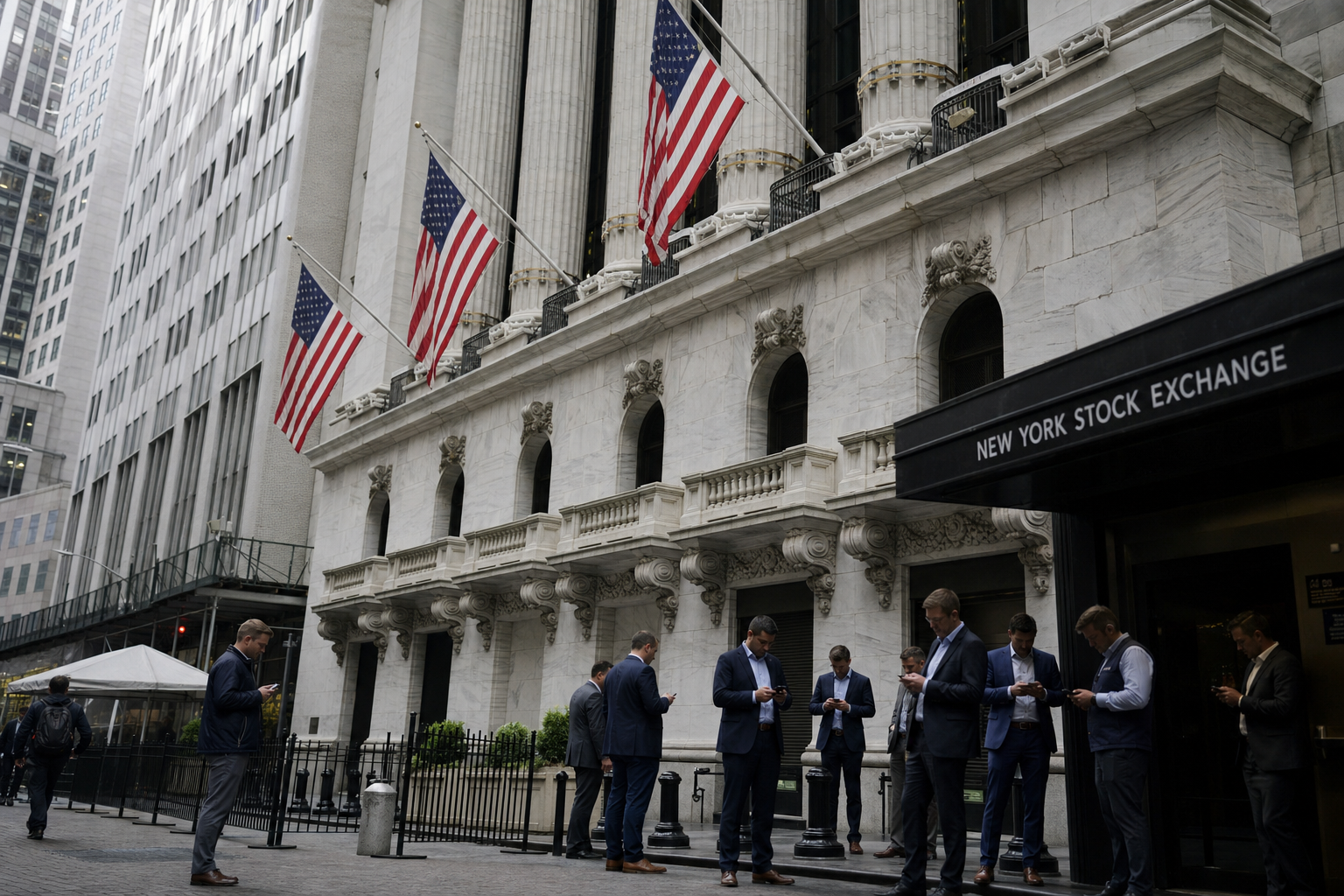
The Morning Played Out as Warned
The bearish setup flagged in pre-market has held through the morning session. U.S. equities opened under pressure as the Iran geopolitical risk premium — flagged by Goldman Sachs as the single most obvious downside threat to financial markets — continued to price into crude and risk assets simultaneously. The combination of elevated bond yields and rising oil has proven difficult for equity bulls to absorb, particularly after a strong earnings season that had given stocks meaningful tailwinds heading into May.
There has been no material shift in the diplomatic picture. Washington-Tehran talks remain stalled, and no new signals have emerged from either side to suggest a near-term resolution. That absence of progress is itself a market input: with no catalyst to reduce the risk premium, energy traders have little reason to sell the geopolitical bid in crude.
Oil Remains the Dominant Variable
The energy complex is the session's clearest story. Chevron (CVX) CEO Mike Wirth's warning that commercial oil inventories have been drained — delivered against a backdrop of reduced Middle Eastern output — is not a theoretical risk. Strategists are now citing potential European oil shortages materializing within weeks, with global inventory levels expected to remain depressed through 2027.
Goldman Sachs's framing of a prolonged Strait of Hormuz closure as the market's primary tail risk is significant because it quantifies a scenario that energy markets have historically been slow to price until it becomes acute. The Strait handles a substantial share of global seaborne crude exports. A sustained closure would not merely spike prices — it would create physical allocation problems for refiners in Europe and Asia that cannot be solved quickly by rerouting supply.
The read-through to inflation is direct. Higher energy costs feed into producer prices, then consumer prices, then complicate the Federal Reserve's rate path. That chain is already visible in bond markets, where elevated yields are reflecting expectations that the Fed has less room to cut than equity valuations had assumed.
The Utility Mega-Deal Lands in a Complicated Market
NextEra Energy (NEE) and Dominion Energy (D) confirmed their $190 billion all-stock merger this morning, with the equity component valued at $67 billion. The deal creates the world's largest regulated electric utility and arrives at a moment when the power sector's structural story — surging electricity demand from AI data centers and electrification — is more compelling than ever.
The irony is that the deal is landing in a session defined by energy insecurity, which simultaneously strengthens and complicates the utility investment thesis. On one hand, the Iran-driven oil squeeze accelerates the case for grid buildout and energy diversification. On the other, elevated bond yields — a direct product of the geopolitical inflation risk — increase the cost of financing the long-duration infrastructure projects that large regulated utilities depend on.
Regulatory approval will be a lengthy process given the scale of the combined entity and the number of states involved. The all-stock structure means Dominion shareholders are now exposed to NEE's performance through the approval period, which adds its own uncertainty.
Semiconductors Hold a Counter-Narrative
Not everything in Monday's session is pointing lower. The semiconductor complex is trading with a degree of resilience, supported by the U.S.-China summit in Beijing that addressed export restrictions and supply chain stability. Lam Research (LRCX) was among the gainers following the meeting, alongside Intel (INTC), AMD, and Broadcom (AVGO).
The chip sector's relative strength reflects a specific catalyst — the possibility of a partial thaw in U.S.-China technology trade tensions — rather than broad risk appetite. Export controls have been a persistent overhang for companies with significant China revenue exposure, and even incremental diplomatic progress on that front carries real earnings implications.
Nvidia (NVDA) remains the week's primary event for technology investors, with its earnings report expected to provide the clearest read yet on whether AI chip demand is sustaining at the pace that has driven the stock's valuation. The setup heading into that report is complicated: macro headwinds are building, but the semiconductor-specific diplomatic news is constructive.
Berkshire's Abel Signals a New Investment Posture
The afternoon session will continue to digest Berkshire Hathaway's portfolio disclosure. Greg Abel's decision to trim 16 positions — including Visa (V), Mastercard (MA), Amazon (AMZN), and UnitedHealth Group (UNH) — while nearly tripling the firm's stake in Alphabet (GOOGL) to close to 58 million shares is the most visible signal yet of how Abel intends to manage the world's most-watched equity portfolio.
The exit from UNH is particularly noted given that stock's recent turbulence. The concentration into Alphabet aligns Berkshire more explicitly with the AI-driven large-cap technology narrative, a meaningful philosophical shift from the financial and consumer franchises that defined the Buffett era.
Afternoon Setup: Macro Dominates, China Adds Complexity
Heading into the afternoon session, the dominant variable remains the Iran-oil-yield nexus. No scheduled economic releases are expected to shift that calculus significantly today. China's macro slowdown — which has revived stimulus discussions in Beijing — adds a second layer of uncertainty, particularly for commodities and multinationals with heavy Asia exposure.
HSBC's commitment of $4 billion to a Chinese clean energy investment vehicle is a notable counterpoint: institutional capital is still flowing toward China's energy transition assets even as the near-term cyclical picture weakens. That divergence between structural opportunity and cyclical risk is a tension that will run through markets well beyond today's session.
The session's closing levels will matter for how the week sets up ahead of Nvidia's report. A significant further deterioration in equities would raise the stakes on that earnings release considerably — both as a potential stabilizer if results are strong, and as an additional pressure point if they disappoint.