Fed's Warsh Era Begins: What Markets Face This Week
Kevin Warsh's inaugural FOMC press conference, S&P 500 technical crossroads, and uranium sector volatility define a pivotal week for equity investors.
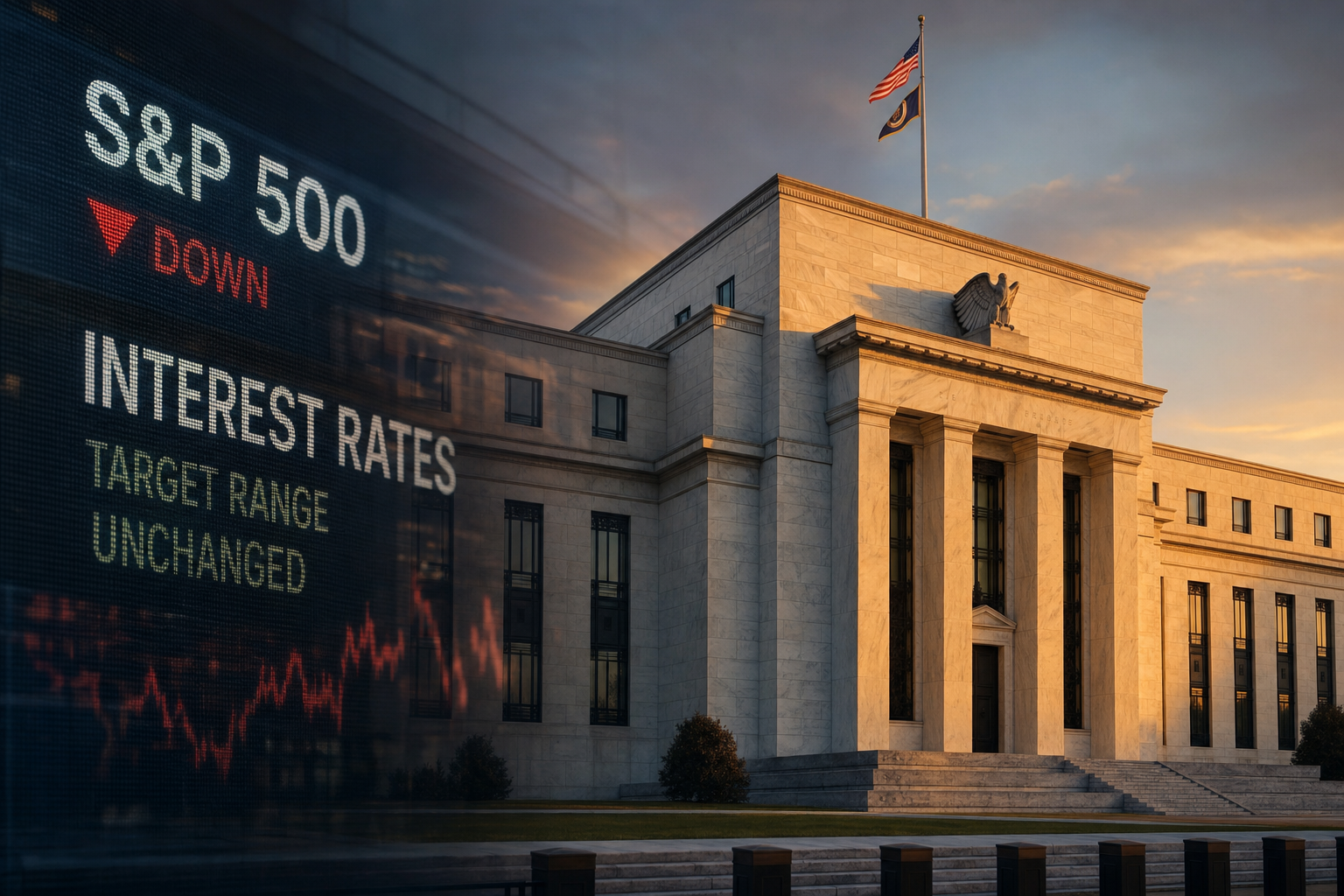
A Defining Moment for Monetary Policy Credibility
Markets rarely get clean inflection points, but the week of June 15, 2026 offers something close to one. Kevin Warsh, now presiding over his first rate-setting meeting as Federal Reserve Chairman, steps to the podium at a moment when inflation expectations remain unsettled and equity valuations leave little margin for policy error. How Warsh frames the Fed's reaction function — and whether he signals any meaningful departure from his predecessor's posture — will set the tone for risk assets through the summer.
The stakes are straightforward: investors have spent months pricing in a relatively benign path for rates, and any hawkish recalibration from a chairman widely regarded as inflation-sensitive could reprice that assumption quickly.
Warsh's Inflation Lens Under the Microscope
Warsh has long been associated with a more structurally hawkish view of inflation — one that emphasizes credibility and pre-emption over reactive easing. His academic and policy record suggests a chairman who will be reluctant to declare victory on inflation prematurely. For equity investors, the critical variable is not whether the Fed holds rates this week — that outcome is near-certain — but rather how Warsh characterizes the inflation trajectory and what conditions he sets for future cuts.
A press conference that leans into persistent services inflation or flags renewed goods price pressures could push the 2-year Treasury yield higher, compressing equity multiples at a moment when the S&P 500 (SPY) and Nasdaq Composite (QQQ) are navigating technically sensitive territory around key moving averages. Conversely, a balanced tone that acknowledges disinflation progress would likely provide a relief bid for growth and rate-sensitive sectors.
S&P 500 and Nasdaq at Technical Crossroads
Beyond the Fed, the broader equity market enters this week in a technically ambiguous position. The S&P 500 has been oscillating near its 50-day and 200-day moving averages — a zone that historically attracts both momentum-driven buying and mean-reversion selling. A decisive break in either direction, catalyzed by the Fed's messaging, could establish the trend for the next quarter.
Breadth remains the key underlying concern. Large-cap technology names have carried index performance, but participation from financials, industrials, and small-caps has been inconsistent. A hawkish Fed surprise would likely hit the Russell 2000 (IWM) disproportionately given small-cap sensitivity to floating-rate debt costs.
Investors should also monitor credit spreads this week. Investment-grade and high-yield spreads have been remarkably contained, but any Fed-induced volatility in rates could expose pockets of leverage that have been masked by the calm.
Uranium Energy's Sharp Decline: Sector Signal or Noise?
Away from the macro narrative, Uranium Energy (UEC) closed the prior week down double digits — a jarring move for a sector that had attracted significant speculative and thematic interest around the AI-driven power demand thesis. While UEC did recover partially by week's end, the drawdown raises questions about whether uranium equities have gotten ahead of the underlying commodity and project fundamentals.
The nuclear power thesis remains structurally intact: data center electricity demand is real, grid reliability concerns are mounting, and several governments have recommitted to nuclear capacity expansion. However, uranium equities carry significant execution and timeline risk that spot price optimism can obscure. Investors in names like UEC should distinguish between the long-term thesis and near-term catalysts — the former is durable, the latter are sparse.
Forward-Looking Perspective
This week functions as a stress test for the consensus view that the Fed is done tightening and that equities can sustain current valuations. Warsh's tone will either validate or challenge that consensus.
For professional investors, the playbook is nuanced: maintain exposure to quality growth but hedge duration risk ahead of the press conference; treat uranium volatility as a sector-specific recalibration rather than a macro warning signal; and watch the S&P 500's behavior around moving averages as a real-time gauge of institutional conviction.
The Warsh era begins not with a dramatic policy shift, but with a communications test. How he passes it will matter more than any single rate decision this cycle.