Fed Rate-Hike Fears Drag Stocks Lower as AI Deals Reshape Semiconductor Landscape
Thursday's session exposed the fault line running through 2026 markets: AI infrastructure spending accelerates while monetary policy anxiety pulls in the opposite direction.
The Session
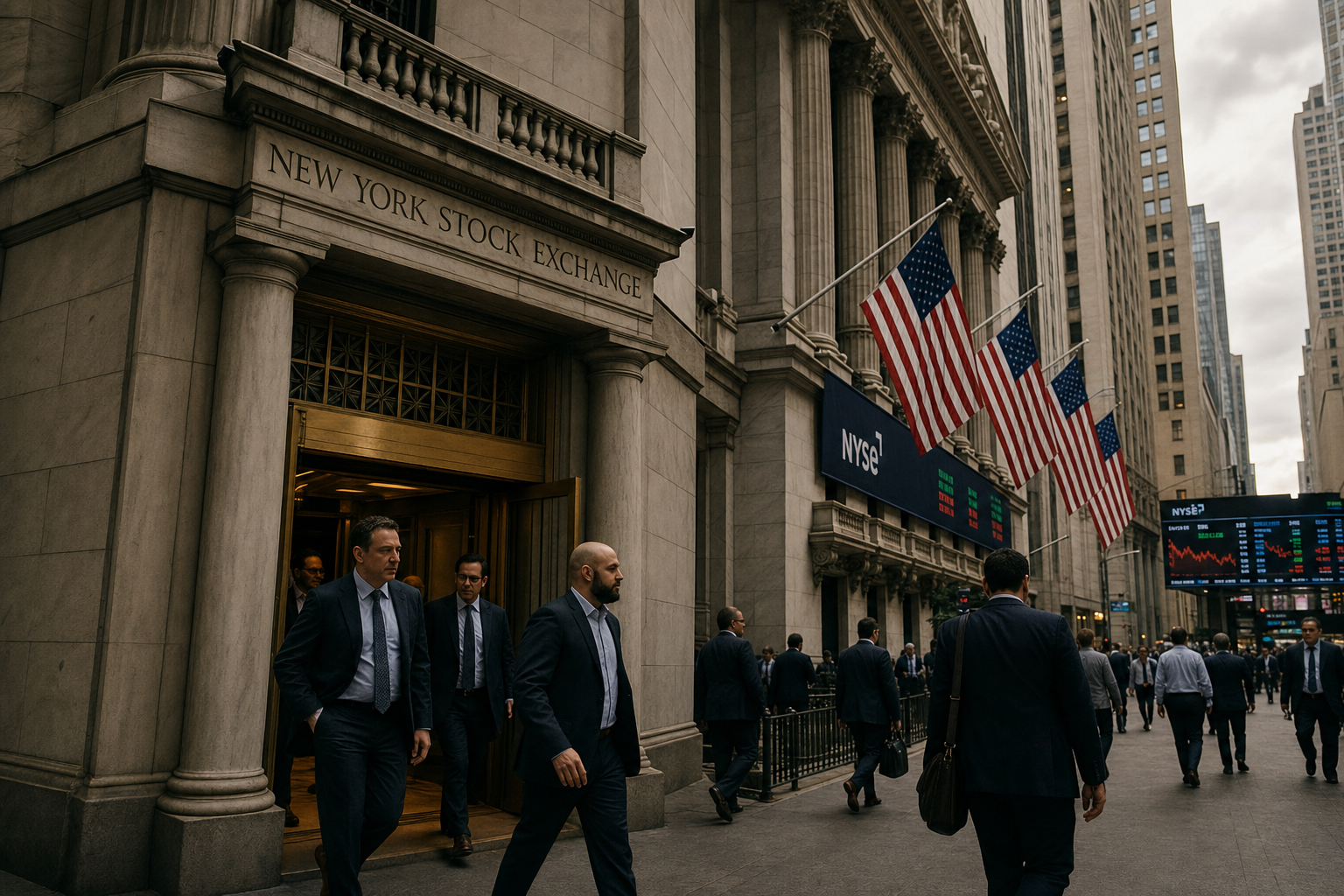
Thursday closed on a discordant note. The headline deal flow was among the most active of the year for semiconductors and enterprise software, yet U.S. equities finished broadly lower. The culprit was familiar: the Federal Reserve. Comments from Fed Chair Kevin Warsh struck a hawkish tone — signaling a preference for keeping borrowing costs elevated rather than cutting them — and the market's reaction was swift and indiscriminate. The selloff was broad-based, not concentrated in a single sector, which is the tell of a macro-driven move rather than a stock-specific one.
The divergence between individual AI winners and the broader tape captured the session's essential tension. A handful of semiconductor names posted double-digit gains. The indices did not follow.
Winners and Losers
Intel (INTC) was the session's standout, surging nearly 12% after President Trump announced that Apple (AAPL) would collaborate with Intel to design and manufacture chips on U.S. soil. The announcement carries strategic weight well beyond a single supply agreement. Intel has spent years trying to rebuild its foundry business — contract chip manufacturing for outside clients — after ceding ground to Taiwan's TSMC. An Apple relationship, if it materializes as described, would represent the most prominent customer win in that effort. Related names rode the wave: Power Integrations, Lattice Semiconductor, and onsemi all traded higher on the news.
Micron Technology (MU) climbed 17% on two catalysts. The company was named as an HBM4 supplier for Nvidia's (NVDA) AI platform — HBM4, or High Bandwidth Memory 4, is the latest generation of stacked memory designed to feed data to AI accelerators at the speeds modern models demand. Separately, Dr. Alexis Black Björlin joined Micron's board of directors. The combination of a confirmed Nvidia supply role and a board addition read by investors as a signal of deepening AI focus drove one of the day's largest single-stock moves.
Advanced Micro Devices (AMD) agreed to acquire MEXT, an AI-native memory optimization startup, targeting one of the most persistent constraints in data center performance: memory bandwidth. The deal adds hardware-level capability to AMD's AI accelerator stack as it competes directly with Nvidia. Financial terms were not disclosed.
On the software side, Salesforce (CRM) agreed to acquire customer-agent platform Fin for approximately $3.6 billion, deepening its push into autonomous enterprise AI. The deal adds agentic AI capabilities — software that handles customer interactions without human intervention — to Salesforce's existing CRM platform.
Not every AI-adjacent name benefited. Rate-sensitive growth stocks were caught in the broader selloff, a reminder that even the strongest thematic tailwind struggles against a repricing of the discount rate.
Under the Surface
The macro picture deserves more attention than the deal headlines might suggest. Warsh's hawkish debut as Fed Chair has now rattled markets across multiple sessions this week. Treasury yields moved higher across the 5-year, 10-year, and 30-year maturities in response to his comments, reflecting a genuine repricing of the Fed's rate path. Persistent inflation data had already kept a potential hike on the table; Warsh's tone removed any ambiguity about where his own instincts lie.
The bond market's reaction matters for equities in a specific way: higher yields compress the present value of future earnings, which hits growth stocks disproportionately. That the Nasdaq and S&P 500 closed lower on a day packed with bullish AI headlines is itself a data point about how much rate anxiety is embedded in current valuations.
The Berkshire Hathaway (BRK.B) / Alphabet (GOOGL) story added a different kind of texture. Berkshire's Q1 2026 13F filing — the quarterly regulatory disclosure showing large institutional holdings — revealed Warren Buffett's firm nearly tripled its stake in Alphabet. Bill Ackman's Pershing Square reportedly moved in the opposite direction, liquidating its entire position. Alphabet's cloud backlog stands at $460 billion and its most recent earnings beat analyst expectations by 94%, yet two of the market's most closely watched allocators reached opposite conclusions about what that's worth at current prices. The divergence is a useful encapsulation of where big-tech valuation debates stand right now.
Nvidia itself closed the session having completed a record $25 billion bond sale earlier this week — a debt offering that reflects strong investor confidence in the company's long-term earnings power and funds continued AI infrastructure expansion, including new manufacturing operations in Europe through partnerships with Bull and Foxconn.
Tomorrow's Setup
The primary carry-over is the Fed. Warsh's hawkish signals have now moved markets on multiple occasions without a formal policy change to anchor them. Any follow-on Fed commentary — or economic data that bears on inflation or labor market conditions — will be read through that lens. Treasury yields remain the real-time gauge to watch: a continued move higher would put additional pressure on rate-sensitive equities and test whether AI-driven names can hold their gains in isolation.
The Apple-Intel chip partnership still lacks formal terms, a production timeline, or a corporate filing. Trump announced the deal; neither company has provided specifics. Until those details emerge, the 12% move in INTC reflects sentiment rather than verified commercial reality.
Micron's next earnings report will be the first meaningful test of whether the Nvidia HBM4 supply win translates into revised revenue guidance. AMD's MEXT integration will take longer to show up in results, but investors will be listening for any commentary on memory architecture strategy on the next conference call.
The session's final verdict: AI infrastructure spending is real, accelerating, and creating genuine winners. But it is not, on its own, enough to offset the gravitational pull of a central bank that may be moving in the wrong direction for equity multiples.