Fed Hawks vs. AI Bulls: Markets Open H2 With a Defining Tension
Higher-for-longer rate signals from Federal Reserve officials collide with a relentless AI chip rally, setting the tone for the second half of 2026.
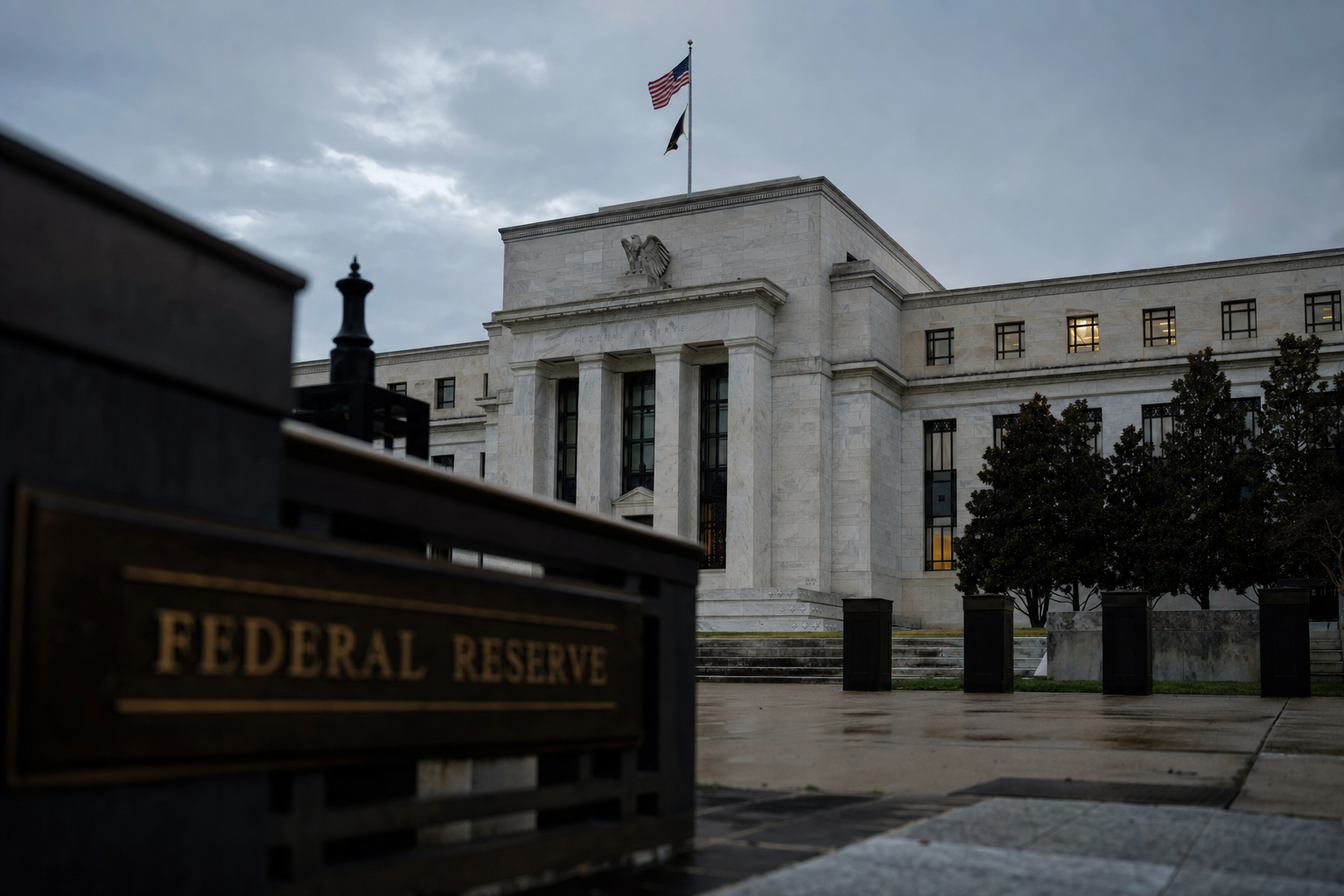
The Overnight Picture
U.S. equities opened the second half of 2026 on the back foot. Federal Reserve officials signaled Wednesday that further interest rate increases remain on the table to bring inflation to the central bank's 2% target — a message that revived the kind of rate anxiety that gutted portfolios in 2022. Broad indices declined, with rate-sensitive sectors including real estate and utilities bearing the sharpest pressure.
The selloff arrived even as the prior session had delivered genuine strength. The S&P 500 (^GSPC) closed Tuesday up 0.79%, led by chipmakers. That momentum stalled overnight as investors repriced the probability of second-half rate cuts — cuts that many had treated as near-certain heading into July.
Asian markets traded in mixed fashion ahead of U.S. labor data, and European futures reflected similar caution. The Eurozone Flash CPI — a key early read on inflation — also landed on Wednesday's calendar, adding another layer of macro noise as traders assessed whether central bank tightening cycles on both sides of the Atlantic have truly run their course.
Today's Key Themes
Theme 1: The Fed's credibility problem. The core concern is not that the Fed will definitely hike — it's that it might have to. If inflation proves stickier than the consensus assumes, policymakers have little room to stand pat. That uncertainty is enough to compress valuations in rate-sensitive corners of the market, where the math on discounted future earnings changes quickly when the risk-free rate moves. Analysts have pointed to historical patterns suggesting meaningful drawdowns follow when the Fed turns hawkish mid-cycle, and Wednesday's price action suggests that playbook is being dusted off.
The look-ahead is clear: U.S. nonfarm payrolls data due later this week is the single most important near-term catalyst. A strong print would harden the case for additional tightening and likely extend the equity pullback. A softer number could offer relief. Until that data lands, the rate debate will hang over every sector rotation decision.
Theme 2: The AI trade ignores the macro. While rate-sensitive names retreated, the AI complex did the opposite. AMD (AMD) surged 7.7% to a record closing price, pushing its market capitalization within striking distance of $1 trillion — a milestone that carries particular resonance given that Nvidia (NVDA) CEO Jensen Huang had previously expressed doubt about AMD's ability to compete at that scale in the AI accelerator market.
Alphabet (GOOGL) has more than doubled over the past year, adding roughly $2 trillion in market value as its cloud and AI businesses attract sustained institutional flows. The iShares Semiconductor ETF (SOXX) has gained 96% year to date, though it pulled back nearly 8% after Broadcom issued a softer AI chip sales forecast — a reminder that the sector's gains remain concentrated and sensitive to individual company guidance. The divergence between AI-linked names and the broader market is not new, but it is sharpening.
Theme 3: Capital flowing into the AI supply chain. Two deal-flow stories reinforce the depth of AI investment conviction. SK Hynix (SKHNY), South Korea's largest memory chipmaker and a critical supplier of high-bandwidth memory chips used in AI training hardware, announced plans for a U.S. exchange listing targeting nearly $30 billion in proceeds. That would rank among the largest foreign listings on a U.S. exchange in recent memory, and the timing is deliberate — the company is positioning directly into investor appetite for AI infrastructure exposure.
Meanwhile, Anthropic — the AI safety company backed by Amazon and Google — received U.S. government clearance to allow foreign users access to its latest AI models. The removal of export-control restrictions materially strengthens Anthropic's international revenue story ahead of a closely watched IPO. The decision may also signal a broader easing of frontier AI export policy, though the regulatory landscape remains fluid.
The Calendar
Several items on Wednesday's schedule warrant attention. Eurozone Flash CPI is the key European data point — any upside surprise would complicate the European Central Bank's rate path and could ripple into U.S. Treasuries as a global rates read. Fed officials are scheduled to speak, and any language that either reinforces or walks back the higher-for-longer signal will move markets. Investors should treat each appearance as a potential volatility catalyst given how sensitive positioning has become to rate path revisions.
On the corporate side, FedEx (FDX) is in focus after the Financial Times reported that CMA CGM, the French container shipping giant, is nearing a $1.4 billion agreement to acquire FedEx's logistics unit. The deal has not been formally confirmed, but it represents one of the larger logistics M&A transactions of the year and reflects the broader trend of shipping conglomerates acquiring warehousing and last-mile assets to build integrated supply chains. For FDX, a completed divestiture would allow management to concentrate capital on its core express and ground delivery businesses — a strategic priority that has been signaled for several quarters.
Watch List
Rate-sensitive sectors — real estate and utilities in particular — are the clearest expression of the Fed anxiety trade. Watch whether selling in these areas accelerates or stabilizes as the session progresses; stabilization would suggest the rate repricing is largely priced in.
AMD deserves close attention at the $1 trillion market cap threshold. Psychological levels of this kind can attract both momentum buyers and profit-takers simultaneously. How AMD trades around that level through the session will say something about whether the AI rally has genuine follow-through or is running on fumes.
SOXX is the semiconductor sector's real-time referendum on AI capital allocation. The ETF's 96% year-to-date gain is extraordinary, but the 8% pullback following Broadcom's guidance miss shows how quickly sentiment can shift on individual earnings signals. Any additional company-specific guidance — positive or negative — from AI chip suppliers this week could move the entire complex.
FDX on the CMA CGM deal headline. Logistics M&A of this scale tends to prompt analysts to reassess sum-of-the-parts valuations. Watch for price target revisions and whether the stock moves on volume that suggests institutional repositioning.
SKHNY and the broader memory chip complex following the U.S. listing announcement. The $30 billion figure is large enough to raise questions about dilution, pricing, and what a successful listing would signal for the valuation of other AI-adjacent semiconductor names seeking U.S. market access.
The central question for the session is whether the macro headwind is severe enough to break the AI trade's momentum, or whether the technology cycle continues to attract capital regardless of what the Fed signals. Wednesday's price action will offer the first real answer to that question for H2 2026.