Earnings Carry the Rally as GameStop's eBay Bid Reshapes the Session
A morning defined by geopolitical fear has given way to a session driven by corporate fundamentals — and one of the strangest M&A proposals in recent memory.
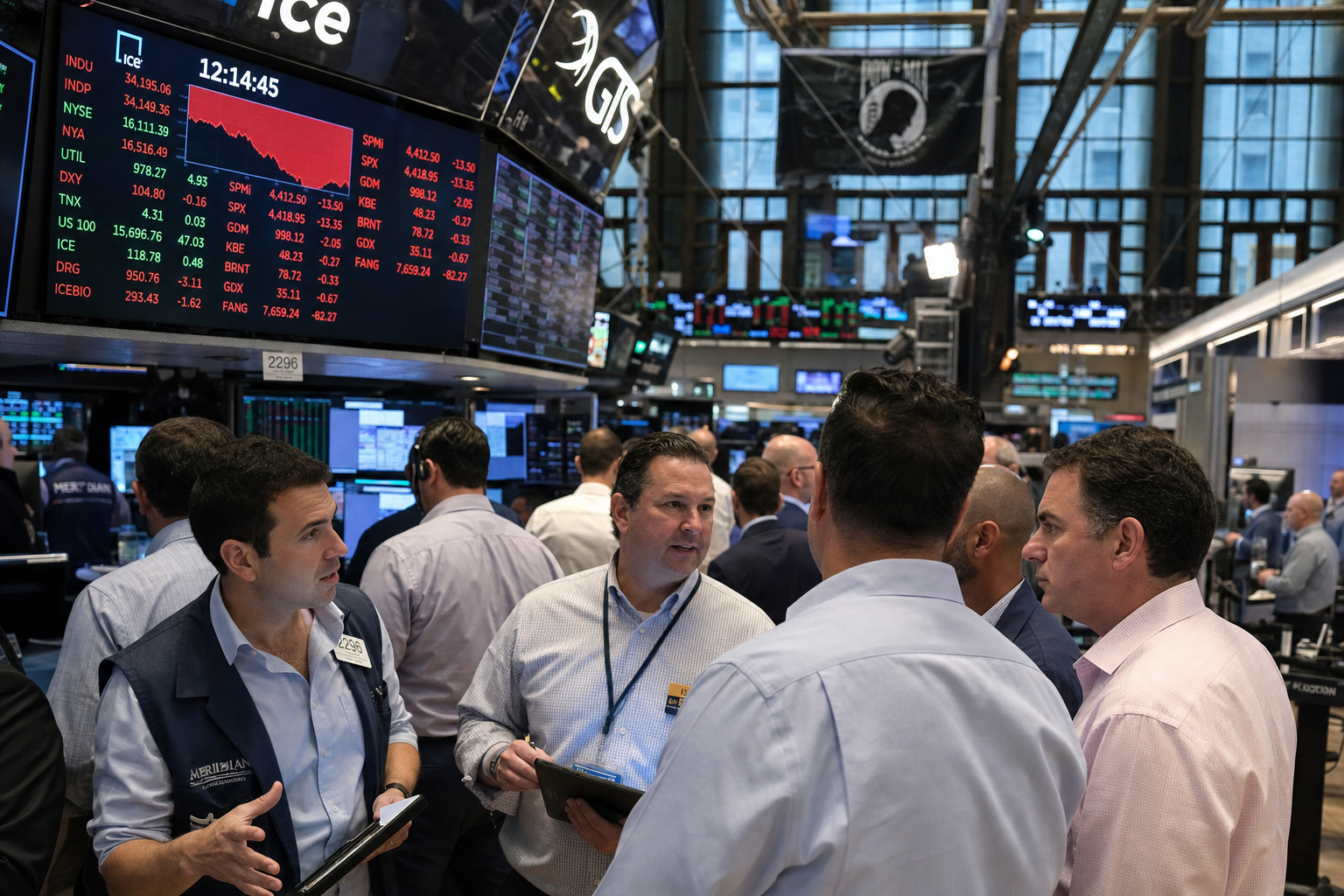
Morning Recap: Fear Fades, Fundamentals Take Over
The session opened under a cloud. Earlier briefs flagged reports of an Iranian missile attack on a U.S. warship, which sent stock futures lower and briefly threatened to define the day as a risk-off retreat. That geopolitical shock has not escalated — at least not yet — and markets have largely moved past it. The broader indices have stabilized, with the earnings backdrop doing the heavy lifting.
Goldman Sachs's characterization of Q1 2026 results as "exceptionally strong" is proving to be more than analyst boilerplate. The data supports it. ExxonMobil (XOM) posted adjusted earnings per share of $1.16 on revenue of $85.1 billion, beating consensus estimates by more than 15%. Alphabet (GOOGL) drew bullish commentary from analysts who set a consensus price target of $377.29, implying roughly 10% upside from current levels. Meta Platforms (META) delivered a strong quarter as well, though its shares sold off on the results — the market had already priced in much of the good news.
The pattern is consistent: companies are beating, but the beats are being absorbed differently depending on how much expectation was already embedded in share prices.
The Shift: GameStop-eBay Becomes the Session's Center of Gravity
If the morning belonged to geopolitics, the midday session belongs to GameStop (GME) and eBay (EBAY). Ryan Cohen's $55.5 billion unsolicited bid — structured as a reverse takeover at $125 per share — has not lost momentum since it broke. EBAY shares remain sharply elevated. GME is trading with the kind of volatility that has become its signature.
The bid is extraordinary on its face. GameStop's own market capitalization is a fraction of the $55.5 billion offer price, making this one of the most leveraged strategic proposals of the current corporate cycle. Cohen has framed the deal as a platform to build a credible Amazon rival in e-commerce. GameStop has warned it will pursue a hostile path — going directly to eBay shareholders — if the board declines to engage.
No response from eBay's board had been reported as of midday. That silence is itself informative: boards facing unsolicited bids typically convene quickly, and the absence of a public rejection suggests either deliberation is ongoing or advisors are being assembled. Either way, the next move belongs to eBay.
For investors trying to trade around this, the key question is financing. GameStop offering nearly four times its own market cap raises an immediate structural question: how does this get funded? No details on debt arrangements, equity raises, or third-party financing have emerged in the source reporting. Until that picture clarifies, the bid exists somewhere between credible strategic vision and audacious opening gambit.
Intel and Apple Add Texture to the Tech Narrative
Intel (INTC) is generating its own momentum. The company has secured foundry manufacturing deals with both Apple (AAPL) and Google (GOOGL), and the U.S. government has reportedly taken a 10% stake in the company as part of a broader push to build domestic semiconductor capacity. Intel is also investing in SambaNova, an AI systems company, signaling that its ambitions extend beyond pure manufacturing.
These are meaningful developments for a company that has spent several years under competitive pressure from TSMC and others. Anchor customers in Apple and Google, combined with government backing, give Intel a more durable foundation than it has had in some time.
Apple itself is navigating a leadership transition of historic proportions. John Ternus is set to become CEO on September 1, succeeding Tim Cook. The company reported a record March quarter and announced a significant share buyback. Analysts are watching closely for details on a reported AI partnership that could define Ternus's early tenure.
Amazon Quietly Expands Its Competitive Footprint
Amazon (AMZN) announced it will open its logistics and supply chain network to outside businesses — a move that puts it in direct competition with UPS and FedEx in third-party fulfillment. The announcement drew less attention than the day's louder stories, but it carries strategic weight. Amazon's logistics buildout over the past decade has been enormous; monetizing that infrastructure through external clients follows the same playbook that turned its internal cloud infrastructure into AWS, now one of its most profitable divisions.
For UPS and FedEx, this is a well-capitalized competitor entering their core market with existing merchant relationships and scale advantages. The implications will take time to materialize, but the direction is clear.
Afternoon Setup: Board Room and Bond Market
Two things will shape the afternoon session. First, any statement from eBay's board — even a brief acknowledgment of receipt — would move both EBAY and GME sharply and clarify whether this becomes a protracted hostile process or a negotiated conversation. Second, watch the bond market. The earlier geopolitical scare drove a brief flight-to-safety bid in Treasuries; if that unwinds further as equities hold, it would confirm that the morning's fear was a spike rather than a trend.
The broader earnings narrative remains intact and continues to underpin the rally. With Goldman's macro endorsement, beats from XOM, GOOGL, and META, and Intel's foundry deals adding a structural semiconductor story, the fundamental picture heading into the afternoon is constructively bullish — provided the Iran situation remains contained and eBay's board doesn't ignite a fresh wave of M&A uncertainty with a combative response.