Boeing's China Megadeal, Hot CPI, and Chip Selloff Define Tuesday's Session
Three forces collided on Tuesday: a potential Boeing order that could reshape its backlog, inflation data that complicated the Fed's path, and a sharp reversal in semiconductor stocks after a parabolic run.
The Session
Tuesday delivered the kind of session where no single narrative held the floor for long. A landmark aviation deal, a hotter-than-expected inflation print, and a sharp reversal in one of the market's most crowded trades all competed for attention — and each left a mark.
The S&P 500, Nasdaq, and Dow all faced headwinds from the April CPI data, which came in at a three-year high and reset expectations for near-term Federal Reserve rate cuts. Tech-heavy Nasdaq names bore the brunt of the selling, consistent with the pattern that emerges when inflation data forces investors to reprice the discount rate on long-duration growth stocks. Against that backdrop, the day's most consequential headline — a potential Boeing order of more than 500 aircraft from China — offered a sharp counterpoint: a single industrial story large enough to reframe how analysts think about one company's next several years.
Winners and Losers
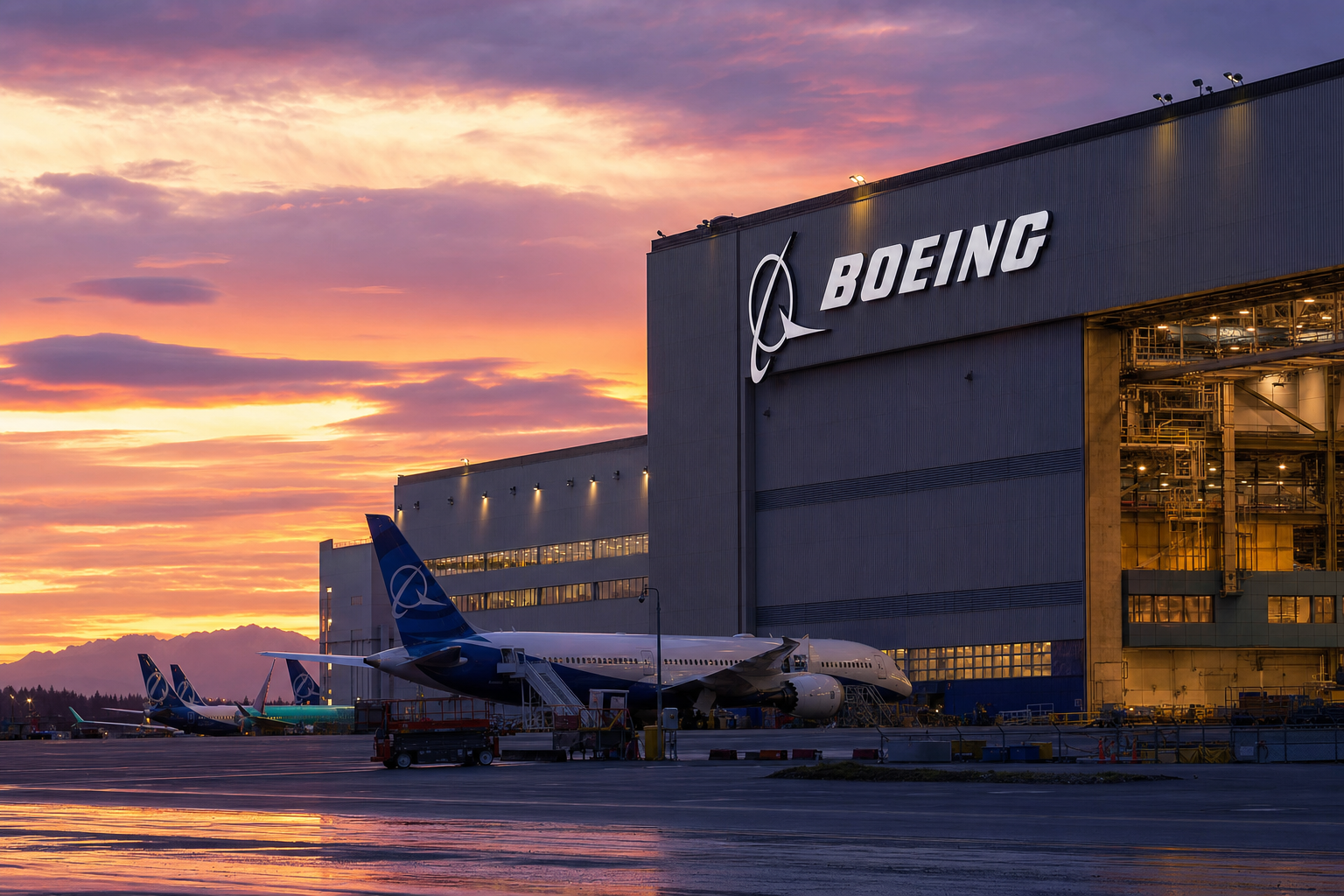
Boeing (BA) dominated the conversation. Reports indicated the company is on the verge of securing its largest Chinese aircraft order since 2017, with an announcement potentially tied to President Trump's diplomatic visit to the region. The scale matters: an order of this size would materially extend Boeing's production backlog — the queue of unfilled orders that determines future revenue visibility — while also strengthening the services business that generates recurring revenue from maintenance and parts over the life of each aircraft. For a company that has spent recent years managing production quality concerns and strained international relationships, a deal of this magnitude is strategically significant well beyond the headline unit count.
Uber (UBER) was the session's clearest earnings winner, climbing more than 8% after reporting gross bookings of $53.72 billion — up 25% year-over-year — and issuing second-quarter guidance above analyst consensus. The result reinforced the view that consumer spending on mobility and delivery remains resilient, even as the CPI data elsewhere pointed to household cost pressures.
In streaming, Netflix (NFLX) and Disney (DIS) told contrasting stories. Netflix delivered a revenue beat but missed on earnings per share. Disney reached a streaming profitability milestone — its direct-to-consumer segment turned profitable — while also reporting record revenue from its theme parks. The divergence underscores the different stages each company occupies in the same structural transition.
The session's most notable loser was Intel (INTC), which fell 10% in a reversal that had been building for weeks. The stock had surged dramatically over the prior six weeks — a gain that had drawn significant short-seller attention — fueled in part by speculation around foundry partnerships with Apple (AAPL) and SK hynix. Tuesday's move looks like a classic momentum unwind: once a trade becomes crowded and valuations stretch, even the absence of a negative catalyst can be enough to trigger profit-taking at scale. AMD (AMD) slid 5% in sympathy, reflecting sector-wide rotation rather than company-specific news.
GameStop (GME) fell after eBay (EBAY) rejected the video game retailer's $56 billion takeover bid — a rejection that removed a near-term catalyst and left the company's strategic direction uncertain.
Under the Surface
The April CPI print is the session's most consequential data point for fixed income and rate expectations. A broad-based acceleration in consumer prices — driven by energy, housing, and food — reduces the probability of near-term Fed cuts and puts upward pressure on bond yields. That dynamic weighs most heavily on high-valuation growth stocks, which explains why Nasdaq names led the retreat.
The inflation read also arrived at a sensitive moment for the semiconductor trade. NVIDIA (NVDA) held relatively separate from the Intel and AMD selloff — Wells Fargo raised its price target on NVDA to $315, maintaining an Overweight rating ahead of the chipmaker's earnings — but a sustained inflation overshoot that dampens risk appetite would eventually test even the AI-driven demand narrative that has underpinned the sector's run.
HSBC's decision to raise its S&P 500 price target to 7,650 — citing stronger corporate earnings expectations through the rest of 2026 — offered a constructive institutional counterweight to the day's macro headwinds. Analyst target revisions are not market forecasts, but they reflect shifting fund positioning and can influence institutional flows. The upgrade arrived on the same day inflation data complicated the near-term outlook, illustrating the tension between solid earnings fundamentals and persistent price pressures that markets are currently navigating.
Tomorrow's Setup
Two items carry forward with the most weight. The Boeing-China deal remains unconfirmed, and any official announcement tied to the Trump diplomatic visit would be a significant event for BA shares, the broader industrials sector, and aerospace supply chains. Watch for clarity on whether the order is firm or includes options, and how delivery timelines interact with Boeing's current production ramp.
NVIDIA's earnings report is the semiconductor sector's next major catalyst. Wells Fargo's raised price target sets a high bar, and the stock enters its report period as the AI trade's most visible benchmark. A miss on guidance — or any softening in data-center demand commentary — would land in a market already unsettled by the chip sector's Tuesday reversal.
Fed commentary on the April CPI print will also be closely watched. The three-year high in consumer prices arrived without a clear policy response from policymakers, and any shift in tone from Fed speakers could move rate expectations and, by extension, the growth stocks that have driven the equity rally in recent months.