Boeing Jets, Trade Deals, and Nvidia's AI Test Define Wednesday's Session
A cascade of trade breakthroughs from Beijing to Brussels is rewriting the global macro backdrop — with Nvidia's earnings after the close serving as the day's final verdict.
The overnight picture
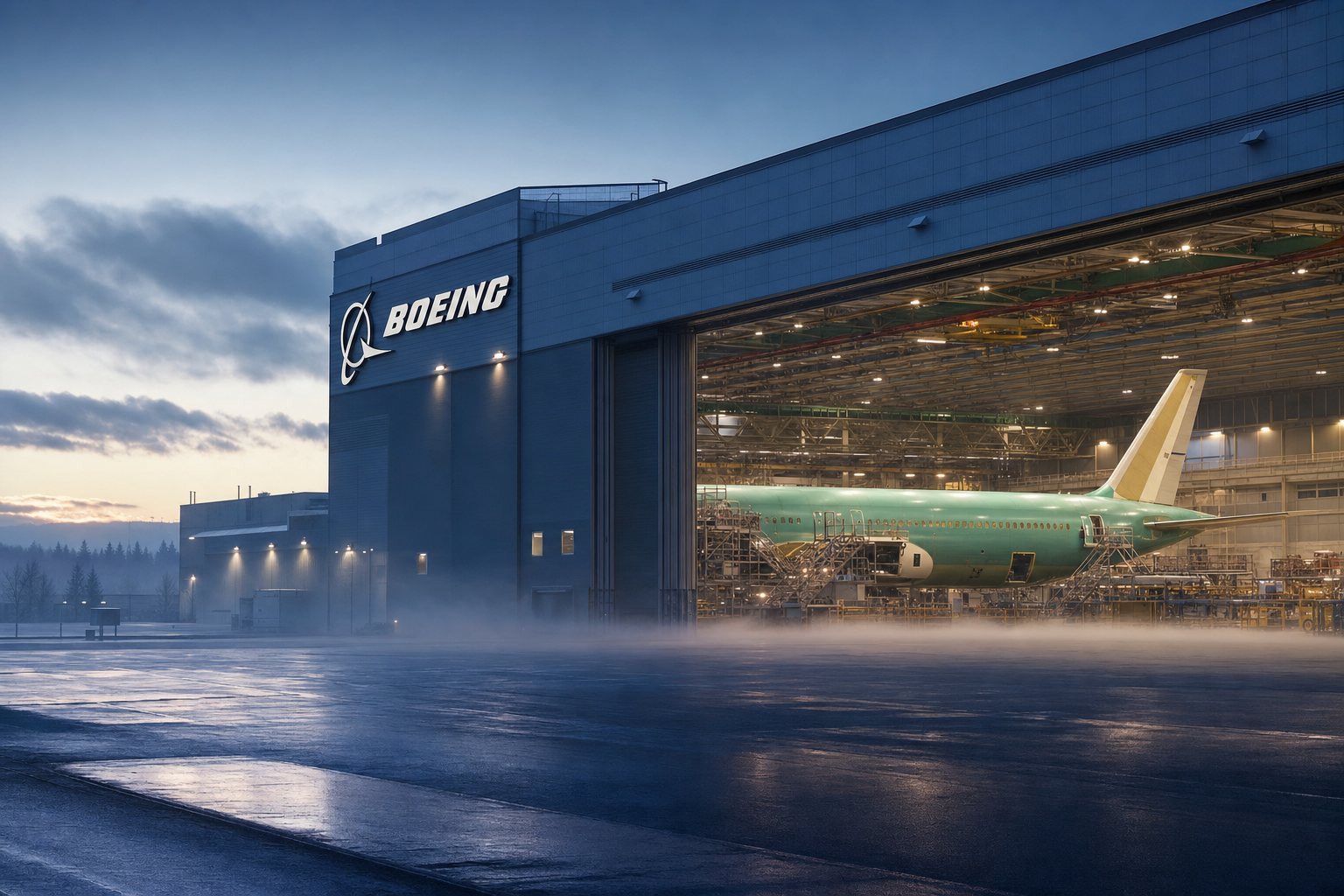
Wednesday opened with a macro backdrop that would have seemed improbable six months ago. Two major trade agreements landed in quick succession: a US-China deal anchored by a 200-jet Boeing (BA) order and rare earth concessions, and a provisional EU-US tariff agreement reached ahead of President Trump's July 4 deadline. Futures pointed to a positive open, with risk sentiment supported across equities and currencies.
The Boeing order — described by President Trump as China's first major commercial aviation commitment in nearly a decade — is the most tangible deliverable yet from the Trump-Xi summit. Beijing will purchase 200 jets and ease restrictions on rare earth exports, the minerals underpinning semiconductors, electric vehicle batteries, and defense systems. Both sides agreed to reciprocal tariff cuts on $30 billion of goods each. For BA, which has endured years of production turbulence and strained relations with Chinese carriers, the order represents a meaningful demand signal and a significant addition to its commercial backlog.
The EU deal, while provisional and light on published specifics, adds a transatlantic dimension to what is shaping up as a broader diplomatic push to reduce trade friction before summer. The agreement includes compliance safeguards — language that reflects both sides' awareness that such arrangements can unravel — and still requires formal ratification. Coming alongside the US-China breakthrough, it contributed to a broad easing of risk premiums in European equity and currency markets overnight.
Today's key themes
Theme 1: Trade de-escalation goes global. The simultaneous movement on two of the world's most consequential bilateral trade relationships — US-China and EU-US — is a structural shift in the macro environment, not just a sentiment catalyst. Rare earth relief, if sustained, addresses a specific supply-chain vulnerability that has weighed on technology and defense manufacturers for months. Markets will be watching for whether the tariff cuts are codified in formal agreements or remain informal understandings, and whether implementation details emerge in the days ahead. The durability question is the one that separates a lasting re-rating from a one-day trade.
Theme 2: Nvidia's earnings as AI cycle referendum. Nvidia (NVDA) reports first-quarter results after the close, and the framing from analysts is consistent: beating consensus estimates is the floor, not the ceiling. The real question is whether CEO Jensen Huang can make a credible case that AI infrastructure spending — the buildout of data centers, accelerators, and the software stacks running on them — has years of structural demand ahead rather than approaching a plateau. Three specific areas are drawing attention: forward revenue guidance, the transition to the next-generation Vera Rubin chip architecture, and commentary on China, where US export restrictions have constrained sales of the most advanced chips. Huang also signaled plans to ramp H200 accelerator manufacturing for Chinese customers, a move that reads as an attempt to recapture market access in the world's second-largest economy. Taiwan Semiconductor (TSM) results are being treated as a leading indicator for what Nvidia may report.
Adding competitive texture to the day, Alibaba unveiled a new AI chip just hours before Nvidia's print. The timing drew immediate attention. Whether Alibaba's offering represents a near-term threat to Nvidia's dominance or a longer-run signal of China's domestic AI hardware ambitions is a question Huang will likely address directly on the earnings call.
Theme 3: Goldman and the SpaceX IPO. Goldman Sachs has reportedly been selected to lead the underwriting of SpaceX's anticipated IPO — a deal that, given SpaceX's scale as a private aerospace and satellite company, could rank among the largest public offerings ever recorded. No pricing, timeline, or exchange listing details were available as of this writing. The mandate is a significant one for Goldman, and the IPO — if it proceeds — would be a landmark event for both Wall Street and the technology sector. For now, it functions as a sentiment story: a reminder that private market valuations remain elevated and that appetite for large-scale equity issuance is intact.
The calendar
The session's primary scheduled catalyst is Nvidia's post-close earnings report. No specific consensus EPS figure has been confirmed in available reporting, but analyst expectations for significant year-over-year earnings growth are widely cited. The earnings call — and specifically Huang's guidance language — is where the real market reaction will be shaped.
On the macro side, UK inflation data released earlier this week showed the headline rate falling to its lowest level in over a year, prompting traders to scale back Bank of England rate-hike expectations. Analysts cautioned that price pressures are expected to return, keeping the BoE's path uncertain. In Indonesia, Bank Indonesia delivered a larger-than-expected rate hike to defend the rupiah — a reminder that monetary policy divergence across emerging markets remains a live theme in global fixed income.
No major US economic releases are confirmed for today's session in available reporting. The trade deal developments and Nvidia's print are the dominant scheduled catalysts.
Watch list
BA is the most direct equity beneficiary of the China order, but the stock's reaction will depend on whether markets treat the 200-jet commitment as a firm order or a letter of intent — a distinction that matters enormously for Boeing's production planning and cash flow outlook. Watch for any clarity on delivery timelines.
NVDA after the close is the session's defining event. The options market has been pricing in a significant move. Pay attention to three things in the earnings call: the magnitude of forward revenue guidance relative to current consensus, any quantification of China-related demand recovery, and the timeline language around Vera Rubin architecture adoption. Vague or hedged guidance on any of these will likely disappoint a market that has priced in confidence.
TSM trades as a proxy for Nvidia's supply-chain health. If Nvidia's results confirm strong accelerator demand, TSM is a secondary beneficiary worth watching in after-hours and in Thursday's Asian session.
INTC remains in focus given ongoing acquisition talks with AI chip startup Tenstorrent. The Intel story is a slower-moving one, but in a session dominated by AI hardware themes, any deal confirmation or denial would draw outsized attention.
On the macro side, watch the US dollar and European equity futures for any additional detail on the EU-US tariff framework. The provisional nature of that deal means headline risk in both directions remains elevated. Any commentary from EU trade officials on ratification timelines or product-category specifics could move currency markets before equity traders fully price the agreement.
The SpaceX IPO mandate for Goldman is a story to monitor for follow-on detail — particularly any indication of a timeline or valuation anchor — but it is unlikely to be a market-moving catalyst today absent new information.
The session closes with Nvidia. Everything else is prelude.