Asian Markets Crater as Fed Rate Fears and OpenAI IPO Doubts Collide
A brutal Friday session in Asia-Pacific equities is converging with rising U.S. rate-hike expectations to test the durability of the AI trade that has driven global markets higher.
The Overnight Picture
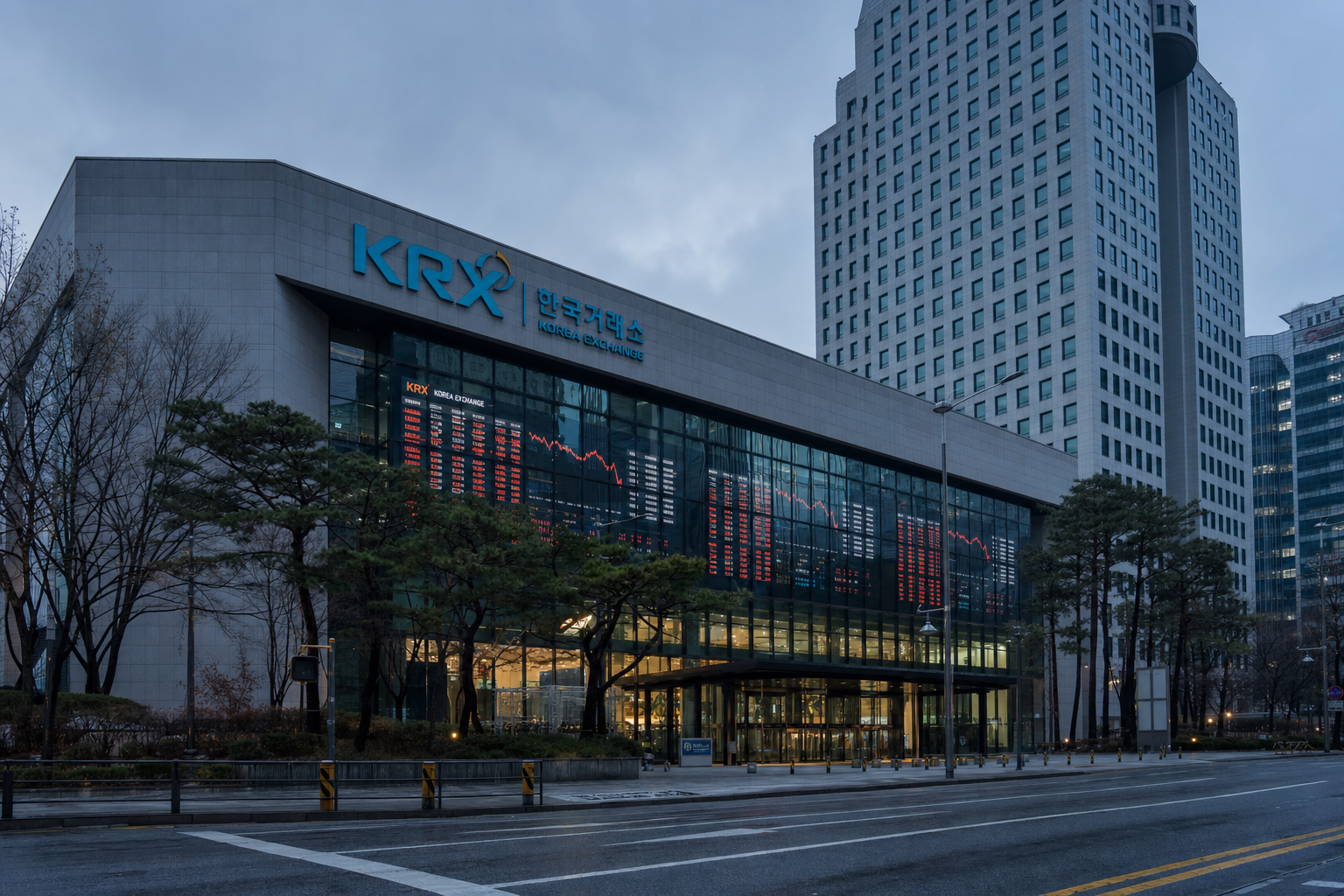
Friday's session opened with a stark reminder of how quickly AI-driven optimism can unwind. South Korea's KOSPI suffered one of its sharpest single-session declines in recent memory, falling as much as 8% — a move severe enough to trigger automatic circuit breakers on the Korea Exchange. Japan's Nikkei dropped around 4.5% in parallel, with technology-linked names bearing the brunt of the selling. Kioxia, the Japanese memory chipmaker, slumped 12% in sympathy.
The proximate trigger was a report that OpenAI is considering delaying its highly anticipated IPO. That single headline was enough to deflate sentiment across the AI supply chain that has underpinned much of the region's equity rally this year. SoftBank Group, which holds a significant stake in OpenAI, faced immediate selling pressure. Samsung Electronics, a dominant player in the DRAM and NAND memory markets and a major KOSPI constituent, was also caught in the downdraft.
U.S. futures tracked the weakness. Dow, S&P 500, and Nasdaq contracts all pointed lower ahead of the open, framing a difficult setup for Wall Street heading into a Friday that already carried elevated macro risk.
Theme 1: The Fed Returns as the Dominant Macro Force
The Asia-Pacific rout did not arrive in isolation. Compounding the damage is a meaningful shift in how markets are pricing Federal Reserve policy. The probability of a Fed rate hike — an increase to the benchmark federal funds rate that raises borrowing costs across the economy — has risen sharply, according to multiple reports this week.
The concern is particularly acute for growth and technology stocks. Higher rates compress valuations by reducing the present value of future earnings, a dynamic that punishes the elevated multiples carried by AI-adjacent names. The shift in rate expectations comes without a specific Fed communication as the trigger, suggesting markets are responding to inflation persistence and an accumulation of stronger-than-expected economic data rather than any single catalyst.
For equity investors, this creates a compounding problem: the AI narrative is wobbling at exactly the moment that the monetary policy backdrop is becoming less accommodating. Alphabet (GOOGL) illustrates the pressure — shares have dropped around 15% from recent record highs, weighed down by high-profile executive departures and a significant equity raise, even after the company joined the Dow Jones Industrial Average.
Theme 2: Micron's Record High Cuts Against the Narrative
Not every AI-linked name is suffering. Micron Technology (MU) reached a new all-time high following an earnings report that underscored the scale of demand for AI memory chips. The results were strong enough to push Micron's market capitalization past that of Meta Platforms (META) — a notable reshuffling in the technology sector's pecking order that has analysts asking whether Nvidia (NVDA) could be the next benchmark Micron closes in on.
The divergence is instructive. While Asian memory peers sold off on OpenAI IPO delay fears, Micron — positioned as a direct hardware enabler of the AI infrastructure buildout — was rewarded. The results carry a secondary implication that is already rippling through consumer markets: Microsoft (MSFT) and Apple (AAPL) are raising prices on Xbox consoles, Macs, and iPads, citing rising memory chip costs tied to AI demand. The AI buildout is not an abstract investment theme — it is now showing up in the price of consumer electronics.
Theme 3: M&A Activity Signals Strategic Conviction Despite Volatility
Two deal announcements stand out against the turbulent backdrop. Eli Lilly (LLY) acquired Centessa Pharmaceuticals to accelerate development of orexin receptor 2 agonists — compounds targeting a brain receptor involved in regulating wakefulness, with applications in narcolepsy and other sleep-wake disorders. The acquisition extends Lilly's pipeline beyond its high-profile weight-loss and diabetes franchises, signaling continued strategic investment in high-growth therapeutic areas.
Separately, Advanced Micro Devices (AMD) agreed to acquire MEXT, a company focused on predictive memory technology, to address AI memory bottlenecks in data centers. As AI workloads grow more complex, the speed at which processors can access memory has become a critical constraint on system performance. AMD is moving to solve that problem through acquisition, competing with Nvidia on architecture and software as well as silicon. Both deals reflect management teams willing to commit capital even as broader markets sell off — a signal worth tracking.
The Calendar
No major Federal Reserve speakers are confirmed on the schedule for today, but any unscheduled commentary from Fed officials would carry outsized weight given the sensitivity around rate expectations. Markets will also be watching for any official statement from OpenAI or its backers clarifying the IPO timeline — that single data point could be the largest near-term catalyst for global tech sentiment.
JPMorgan Chase (JPM) has already provided one positive signal from the financial sector this week, announcing a 10% dividend increase and a new $50 billion share repurchase program after clearing the Federal Reserve's annual stress test. The $50 billion buyback is among the largest authorized by a U.S. bank in recent years and signals confidence in the bank's capital position even as the macro environment grows more uncertain.
Oil markets add a further layer of complexity. Crude prices fell nearly 2% earlier this week as traders focused on the broader supply outlook rather than geopolitical tensions. The Strait of Hormuz remains a source of uncertainty despite a reported uptick in ship traffic following a U.S.-Iran accord — Iran retains effective control over the waterway, and any disruption to flows would immediately affect global energy prices and inflation expectations.
Watch List
Four things deserve close attention through the session and into the weekend.
First, watch whether the KOSPI stabilizes or continues to deteriorate. A second consecutive session of sharp losses in Korea would signal that the AI supply-chain repricing has further to run, with direct implications for Samsung, memory chip pricing, and the broader semiconductor complex.
Second, monitor the rate market. Movement in two-year Treasury yields — the part of the curve most sensitive to Fed expectations — will telegraph whether the rate-hike probability is continuing to rise or has found a near-term ceiling. A sustained move higher in the two-year would put additional pressure on QQQ and growth-heavy names.
Third, track GOOGL's price action. Alphabet's 15% pullback from highs makes it a useful real-time gauge of AI sentiment. If it stabilizes, that suggests the selloff is finding support. If it accelerates, it raises broader questions about the durability of the AI trade across Mag7 names.
Fourth, any OpenAI communication — official or leaked — about its IPO timeline would immediately move SoftBank, Micron, AMD, and the broader AI supply chain. The absence of a statement carries its own signal: uncertainty tends to favor sellers on a Friday heading into a weekend with unresolved macro questions.