Apple Leads Big Tech Earnings Surge as Fed Holds Rates Higher for Longer
A record-breaking earnings week for Big Tech collides with a Federal Reserve in no hurry to ease, leaving markets to weigh exceptional corporate profits against a persistently restrictive monetary backdrop.
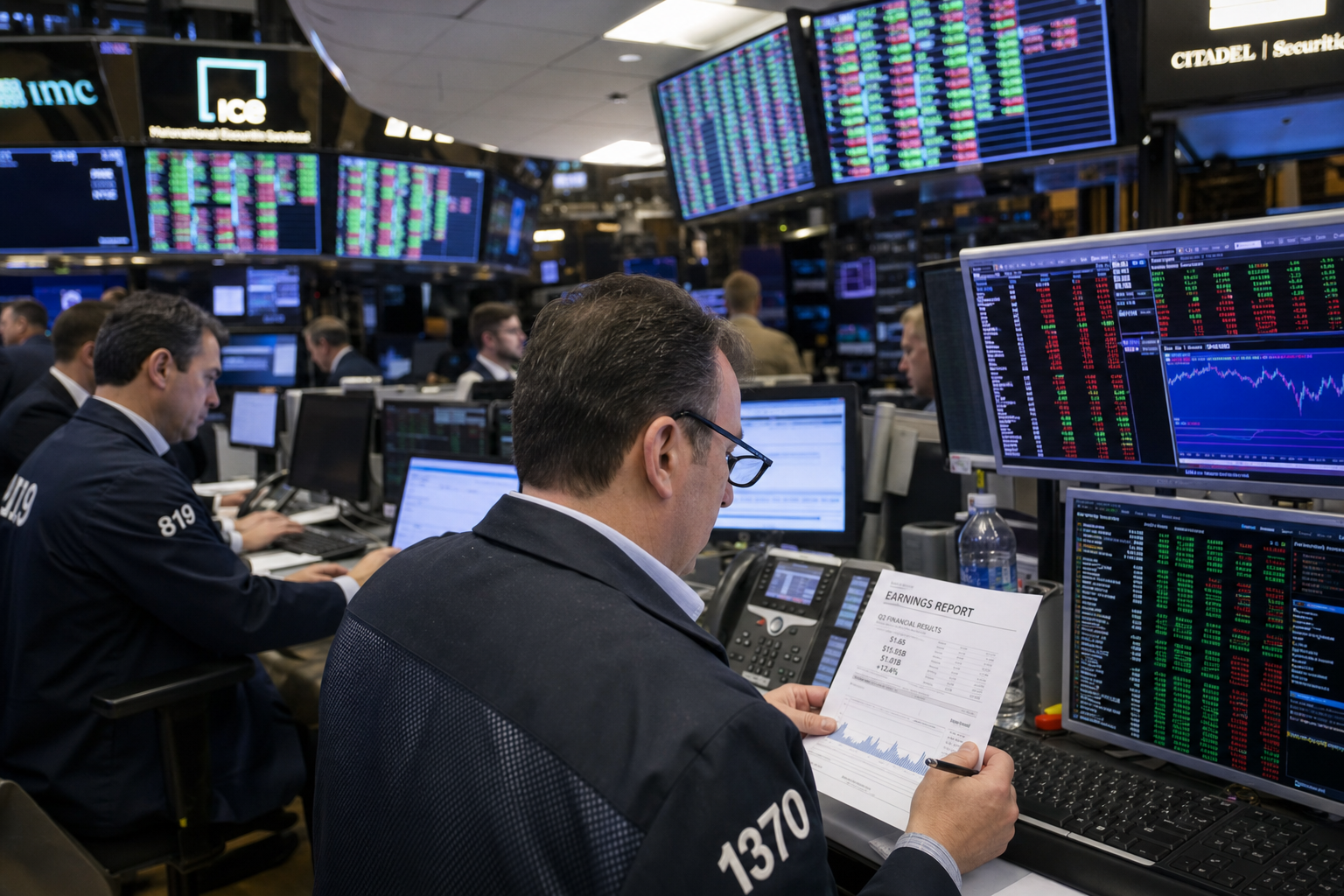
Morning recap: The earnings trade held, mostly
Heading into Friday's session, the setup was constructive. Apple (AAPL) had reported fiscal second-quarter earnings after Thursday's close, beating on both earnings per share and revenue, raising its dividend, and posting what analysts called its strongest quarterly sales growth in more than four years. Shares opened roughly 5% higher, and equity futures followed. The market had reason to feel good about itself.
That optimism largely held through the morning session. The week's earnings wave — Alphabet (GOOGL), Microsoft (MSFT), and Meta (META) all reported on April 29 — had already reset expectations for the quarter. Analysts now project S&P 500 profits grew 27.8% in Q1, the sharpest pace since Q4 2021. That number, by any measure, is a significant upside revision from where estimates stood entering the season.
Apple's result was the final major piece. CEO Tim Cook flagged rising memory costs as a potential headwind for coming quarters, but the market focused on the beat, not the caveat. AAPL's move gave the Nasdaq a clear tailwind into the open.
The shift: Fed friction enters the picture
The complication is not new, but it is persistent. The Federal Open Market Committee — the Fed's rate-setting body — updated its interest rate outlook this week in a direction markets read as unfavorable. The signal: cuts are not coming soon. Internal dissent among committee members, a relatively rare occurrence, added weight to the message.
For equities, the mechanics are straightforward. Higher-for-longer rates raise borrowing costs for companies and compress the present value of future earnings — a dynamic that creates a structural ceiling on how far valuation multiples can expand, even when reported profits are strong. The tension between a 27.8% earnings growth figure and a Fed that will not move is the central narrative of this week, and it has not resolved.
Jerome Powell has not softened his public framing. Analysts who had penciled in cuts for mid-year are revisiting those assumptions. The FOMC dissent suggests the committee itself is not unified, but the dominant lean is clearly toward patience.
The morning session reflected this split personality. Tech names with direct AI exposure held firm or extended gains. Broader cyclicals and rate-sensitive sectors were more hesitant.
AI capex: the number that keeps growing
One thread that gained further texture this week: the sheer scale of AI infrastructure spending. Amazon (AMZN), Microsoft, Alphabet, and Meta are collectively on track to spend approximately $710 billion on AI infrastructure. That figure is not a forecast — it reflects disclosed capital expenditure plans from all four companies.
Meta CFO Susan Li said the company has "continued to underestimate our compute needs," with CEO Mark Zuckerberg announcing higher capex plans tied to rising component costs. Alphabet CEO Sundar Pichai described the company as "compute constrained" — demand for its AI services is outpacing available processing capacity — while pointing to custom chips and the Gemini model family as structural advantages. Alphabet's market capitalization is reportedly nearing $5 trillion, which would position it to surpass Nvidia (NVDA) as the most valuable publicly traded company.
For semiconductor suppliers and power infrastructure providers, $710 billion in committed cloud capex is a generational demand signal. The spending wave is also a double-edged read for the hyperscalers themselves: it confirms that AI monetization is real enough to justify the outlay, but investors are watching closely for evidence that revenue growth will keep pace with the investment.
Intel (INTC) offered a striking data point on the AI trade's reach beyond the Magnificent 7: shares more than doubled in April, driven by AI-related demand — one of the chipmaker's strongest monthly performances on record after years of competitive struggle.
The other side of the economy
Not every story this week was about compute constraints and record profits. Spirit Airlines is preparing to cease operations entirely, according to reports, after failing to secure new financing or reach a deal with creditors. Elevated jet fuel costs compounded what was already a structurally fragile balance sheet. A previous merger attempt with Frontier Airlines and a competing bid from JetBlue both failed to close.
The potential shutdown would mark the end of one of the country's largest budget carriers, with consequences for employees, passengers holding future bookings, and airports where Spirit operates as a primary low-cost option. It is a stark contrast to the week's dominant narrative: while hyperscalers are committing hundreds of billions to AI data centers, capital-intensive businesses with thin margins and fuel exposure are running out of road.
Moderna (MRNA) offered a more encouraging counterpoint outside the tech universe. The company reported Q1 results that beat expectations, with international Covid-19 vaccine sales re-emerging as a growth driver — defying analyst forecasts of a continued revenue slowdown. The beat sent shares higher and provided a near-term reprieve for a stock that has faced sustained pressure since its pandemic-era highs.
Afternoon setup: what to watch into the close
The afternoon session carries two live questions. First, whether AAPL's gains hold or whether profit-taking emerges as the week closes — options positioning around a 5% gap-up on a mega-cap name can create friction near the end of the session. Second, whether the Fed's rate signal prompts any visible rotation out of rate-sensitive growth names as the week's final positioning settles.
Bond markets are the cleaner read on the Fed story. If Treasury yields drift higher into the close, that would confirm the market is pricing in the higher-for-longer message rather than dismissing it. A flattening or rally in bonds would suggest the earnings optimism is winning the tug-of-war for now.
Next week, the focus shifts to whether the AI capex commitments from Meta, Alphabet, and Amazon begin to show up in second-half margin guidance revisions, and whether any additional Fed speakers harden or soften this week's rate signal. The earnings season has delivered; the macro backdrop has not cooperated. That tension carries into May.