Alphabet's $269B Wipeout Leads a Day of Stark AI Contrasts
Monday's session split the AI trade in two: Alphabet bled $269 billion on talent fears while Getty Images doubled on a licensing deal, Intel surged on Apple, and oil's slide below $80 quietly shifted the macro conversation.
The Session
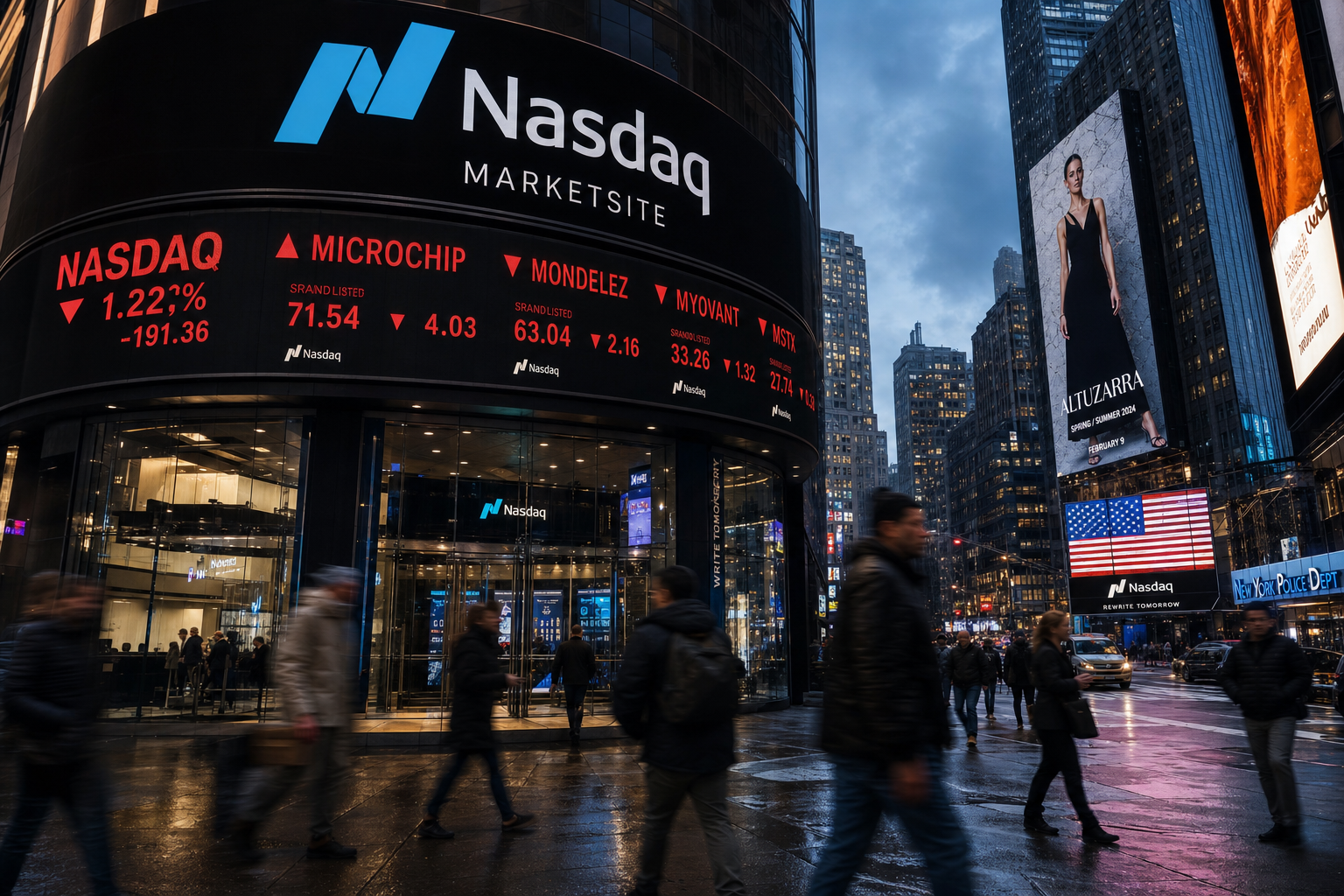
Monday closed as a tale of two markets. Alphabet (GOOGL, GOOG) shed 5.5% — one of its sharpest single-session declines in recent memory — erasing roughly $269 billion in market capitalization after the departure of prominent AI researchers rattled investor confidence. The broader Magnificent Seven complex traded lower in sympathy, with AI spending concerns compounding the Alphabet-specific damage.
Yet the session was not a rout. Intel (INTC) surged on news of a chip manufacturing partnership with Apple (AAPL). Getty Images (GETY) more than doubled. AbbVie (ABBV) announced a $10.9 billion acquisition. The day produced both the kind of destruction that makes headlines and the kind of deal-making that reminds investors the AI buildout is still very much underway.
Winners and Losers
The Alphabet selloff was the session's defining event. Two senior researchers departing Google DeepMind — including Nobel laureate John Jumper, who left for Anthropic — crystallized a fear that has been building quietly: that even the most prestigious AI research institutions face meaningful retention risk as well-funded rivals compete aggressively for talent. Alphabet has not publicly responded to the departures. The $269 billion market-cap loss ranks among the largest single-day wipeouts in the company's history.
INTC was the session's standout winner among large-cap tech. Reports that Apple agreed to design and manufacture chips with Intel domestically sent the stock sharply higher. Bernstein analyst Stacy Rasgon framed the move clearly: investors are effectively taking a position on Intel's foundry ambitions with this trade. Landing Apple — one of the world's most demanding chip customers — as a client would represent a commercial and reputational milestone for a company that has spent years and billions rebuilding its U.S. fabrication capacity. No financial terms were disclosed.
GETY posted the session's most dramatic percentage move, surging 145% after announcing a licensing deal with OpenAI that grants the AI company access to Getty's image library. The scale of the move reflects how scarce concrete evidence has been that content companies can monetize AI relationships rather than simply be disrupted by them. Getty had previously pursued legal action against AI image generators over unauthorized use of its catalog, making a negotiated licensing arrangement a notable strategic pivot. Terms were not disclosed.
In healthcare, ABBV announced it will acquire clinical-stage biotech Apogee Therapeutics (APGE) for $10.9 billion. The deal extends AbbVie's dominance in immunology and inflammation — the therapeutic area anchored by Skyrizi and the legacy Humira franchise — as the company works to offset biosimilar pressure on older products. The acquisition is one of the larger biotech deals of the year.
Under the Surface
The macro picture deserves attention independent of the equity moves. Torsten Slok, chief economist at Apollo Global Management (APO), flagged that crude oil falling below $80 per barrel is already influencing Federal Reserve thinking on interest rates. Lower energy prices feed directly into headline inflation readings, and if sustained, cheaper oil could give policymakers more confidence that inflation is returning to the 2% target — potentially accelerating the timeline for rate cuts.
The argument cuts both ways. Softer oil may also reflect weakening global demand, which carries its own economic risks. The Fed has not signaled any change in its current stance, and Slok stopped short of predicting specific action. But the observation matters: it connects commodity markets to monetary policy in a way that equity-focused investors have largely been ignoring.
JPMorgan's Stephen Parker offered a constructive counterweight to the day's bearish tone, maintaining that the 2026 equity rally remains earnings-driven rather than sentiment-driven — a distinction that matters for durability. The bank's bull-case target for the S&P 500 stands at 8,900 by year-end.
The day's cross-asset picture also included a 20-year natural gas supply agreement between Chevron (CVX) and Microsoft (MSFT) for AI data centers — a deal that underscores how the energy demands of large-scale AI infrastructure are locking in long-dated commitments across sectors. For Chevron, the contract converts a portion of its output into a quasi-fixed revenue stream. For Microsoft, it reduces exposure to spot energy price volatility as its AI buildout scales.
Tuesday's Setup
The most immediate question heading into Tuesday is whether Alphabet management responds publicly to the talent departures. A retention announcement or executive statement could provide a floor for the stock; continued silence may invite further selling. Analysts will be watching for any indication that the departures were isolated or symptomatic of a broader cultural or compensation issue at Google DeepMind.
The Intel-Apple chip arrangement will also draw follow-on scrutiny. Bernstein's Rasgon suggested the market is pricing in a broader commercial opportunity beyond this single contract — meaning Intel's rally could extend if additional foundry customers are confirmed, or reverse if the deal proves narrower than initial reports implied.
On the macro side, any Fed commentary addressing the oil price decline and its implications for the rate path will carry weight. Markets are caught between conflicting signals: Bank of America has projected three rate hikes in 2026, while Apollo's Slok argues that sub-$80 crude argues for a more accommodative posture. That tension is unlikely to resolve without either a clear inflation data point or an explicit Fed signal — neither of which is scheduled imminently.