Alphabet's $208 Billion Selloff Defines a Session Built on Capital and Contradiction
A record equity raise, a record market cap loss, and a divergent earnings day reveal the uncomfortable arithmetic of AI's infrastructure moment.
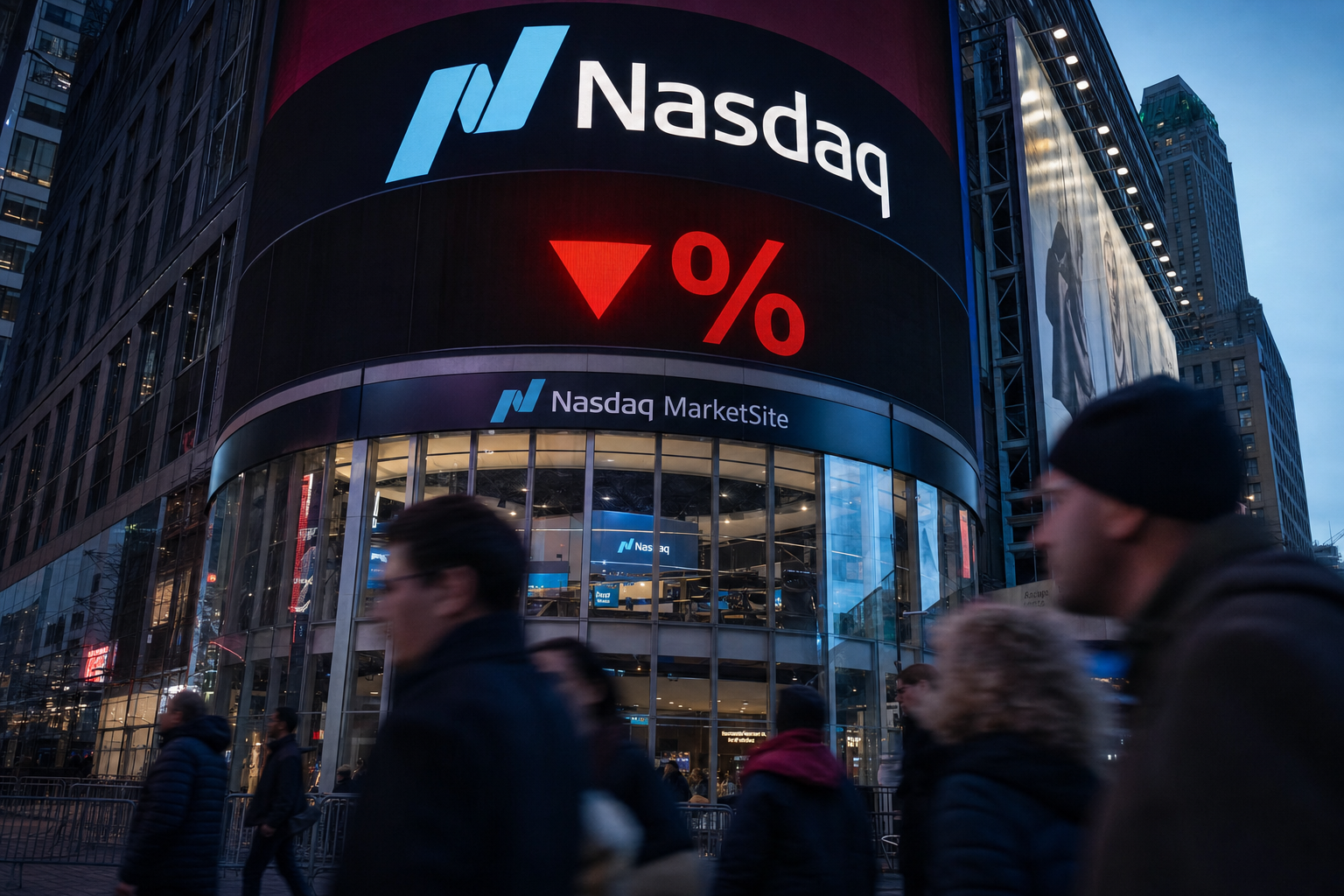
The Session
Tuesday closed as one of the more structurally revealing sessions of the year. The headline number was brutal for Alphabet (GOOGL): a projected $208 billion loss in market capitalization, the company's largest single-day dollar decline on record, triggered not by a missed quarter or a regulatory shock but by its own strategic ambition.
The company announced plans to raise $80 billion through an equity offering — a transaction that would surpass any prior equity capital markets deal in history. The proceeds are earmarked for artificial intelligence infrastructure: data centers, cloud capacity, and the physical backbone of the AI buildout. By any strategic measure, the rationale is coherent. By any accounting of dilution, the shareholder math is painful.
Equity issuance spreads ownership across more investors, reducing the proportional stake of anyone who held shares before the raise. That mechanical reality drove the selloff even as analysts acknowledged the credit-positive nature of the move — funding AI expansion through equity rather than debt keeps leverage low and protects Alphabet's bond ratings. The market, in other words, punished the stock for a decision that strengthens the balance sheet. That tension defined the day.
Winners and Losers
Hewlett Packard Enterprise (HPE) delivered the session's cleanest win. Shares surged approximately 27% — the largest single-day gain in the company's history as a standalone public entity — after HPE reported its biggest earnings beat since 2018. The move reflects a market repricing less-hyped AI beneficiaries: HPE supplies the servers, networking hardware, and hybrid cloud infrastructure that enterprise customers need to run AI workloads, and a blowout quarter confirmed that spending is translating into revenue across the supply chain, not just at the headline chipmakers.
Nvidia (NVDA) told a different story. The company reported revenue growth of 85% year over year alongside a strong forward outlook — numbers that in any prior cycle would have moved a stock materially. The reaction was muted. Expectations have risen to the point where exceptional results are the baseline, and ongoing uncertainty around China export restrictions creates a ceiling on how confidently analysts can model the upside. The contrast between HPE's 27% surge and Nvidia's flat response illustrates a bifurcation that is becoming a defining feature of the AI trade: lower-expectation names that genuinely surprise are rewarded; established leaders must clear an ever-higher bar.
Berkshire Hathaway (BRK.A) had an unusually active session. New CEO Greg Abel committed $10 billion to Alphabet's equity raise as an anchor investor — a notable signal of confidence in the deal's strategic logic — while simultaneously completing an $8 billion all-cash acquisition of U.S. homebuilder Taylor Morrison. Two large capital deployments in a single session suggest Abel intends to run Berkshire's cash reserves actively rather than hold them in reserve. The Taylor Morrison deal gives Berkshire direct exposure to residential construction, complementing its existing housing-adjacent businesses.
JPMorgan (JPM) added to the deal flow. CEO Jamie Dimon signaled the bank is weighing a potential acquisition of approximately $20 billion, without naming a target. He also addressed JPMorgan's retail banking expansion in Europe and offered criticism of current U.S. cryptocurrency legislation — a familiar stance from a CEO who has long been skeptical of digital assets even as the broader financial industry has moved toward engagement.
Under the Surface
The Alphabet selloff carried implications beyond the stock itself. A $208 billion market cap loss in a single session from a company of Alphabet's scale creates index-level drag — GOOGL is a significant weight in both the S&P 500 (^GSPC) and the Nasdaq (^IXIC), meaning passive investors absorbed the hit automatically.
Credit markets, by contrast, likely viewed the session more favorably for Alphabet. Equity financing reduces the need for future debt issuance, which is a straightforward positive for existing bondholders. The divergence between equity and credit market reactions to the same corporate announcement is a recurring feature of large capital raises and worth watching as the offering moves toward execution.
The broader AI spending picture remains unambiguous in its direction. Alphabet's $80 billion raise, Salesforce's $5 billion commitment to Anthropic, and Nvidia's sustained 85% revenue growth all point to a capital expenditure cycle that is accelerating, not plateauing. The question the session raised is not whether AI infrastructure spending continues but who bears the cost — and Tuesday's answer, at least for Alphabet shareholders, was clear.
SpaceX and Tesla (TSLA) remained in the background of the session's narrative. SpaceX is in active negotiations with major banks — including Goldman Sachs, Morgan Stanley, BofA Securities, Citigroup, and J.P. Morgan — over underwriting fees for a potential IPO targeting a valuation of approximately $75 billion. The company is pushing for fees below 0.75%, below typical market rates for a deal of this scale. A separate report raised the prospect of a Tesla-SpaceX merger that could activate a $1 trillion compensation package for Elon Musk without requiring Tesla to meet standard operational milestones — a governance question that Tesla's independent shareholders are likely to contest if the idea advances.
Tomorrow's Setup
The most immediate follow-on is Alphabet's equity offering mechanics. A formal prospectus filing will clarify the dilution math for existing shareholders and reveal the full investor allocation — including how much beyond Berkshire's $10 billion anchor has been committed. The stock's ability to stabilize will depend partly on whether institutional demand for the raise proves deep enough to absorb the supply.
The SpaceX IPO timeline is the next major capital markets event to watch across the Musk ecosystem. Fee negotiations with banks are a precursor to a formal filing, and any movement toward a prospectus would represent a significant catalyst for public market attention.
For the broader AI trade, the session's lesson was structural: the infrastructure buildout is real, the capital commitments are accelerating, and the rewards are flowing to a wider set of companies than the market priced a year ago. HPE's record day is evidence of that diffusion. Nvidia's muted reaction is evidence of the ceiling that comes with being the most obvious beneficiary. Both dynamics are likely to persist.