AI Trade Cracks Under Its Own Weight as Tech Selloff Rolls Into Afternoon
What started as an OpenAI IPO delay report became a full-scale reassessment of whether AI capital spending can justify its cost — and markets are voting no.
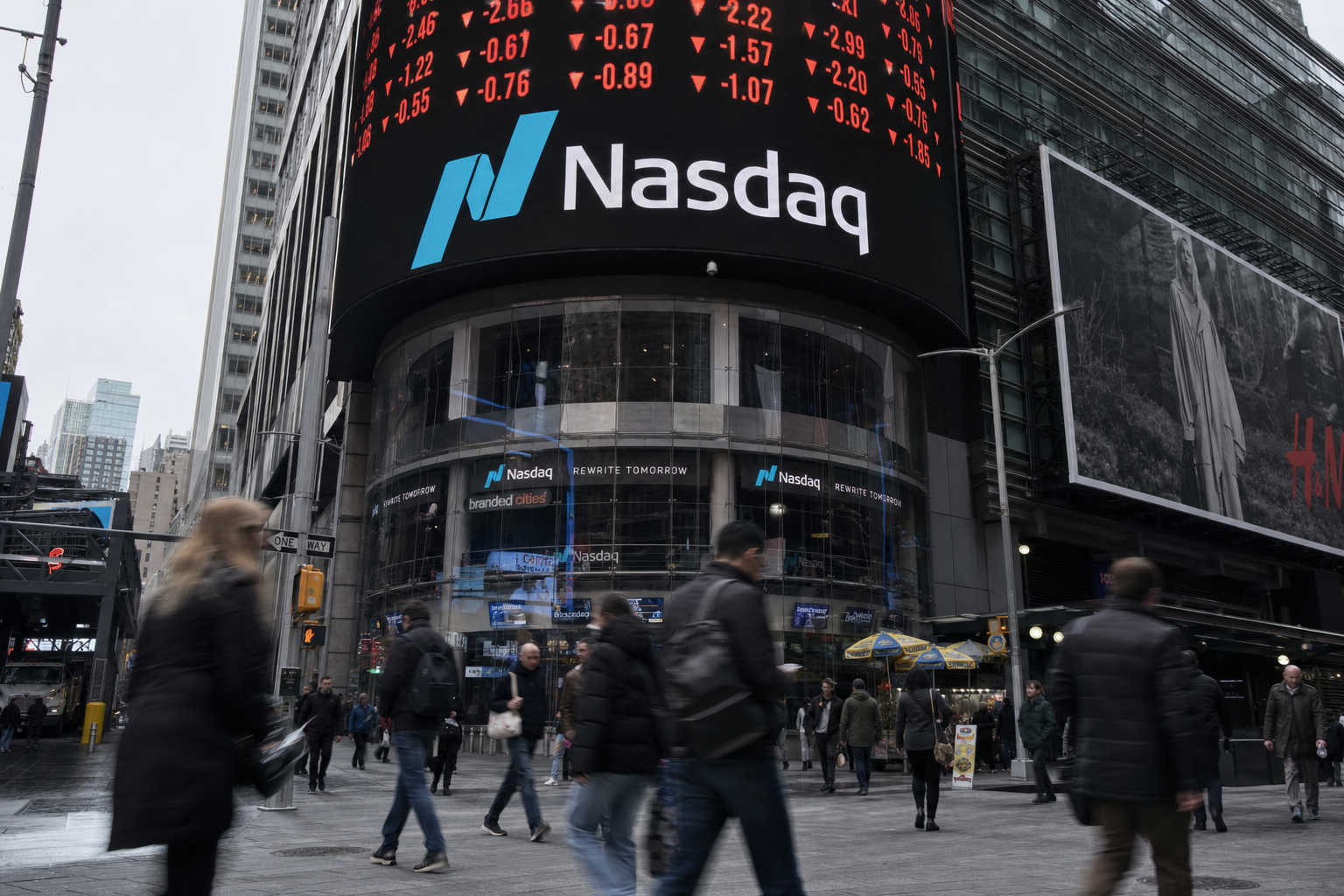
The Morning That Played Out Exactly as Feared
Friday's session opened with no ambiguity. The overnight damage — South Korea's KOSPI down as much as 8%, Japan's Nikkei off around 4.5%, Nasdaq futures sliding in sympathy — translated directly into the U.S. open. There was no bounce, no relief rally, no buy-the-dip instinct powerful enough to offset the shift in narrative. The AI trade, which has been the dominant engine of equity gains for the better part of two years, is being stress-tested in real time.
The trigger was a report that OpenAI is considering delaying its IPO. On the surface, a private company reconsidering its listing timeline shouldn't move entire national indices. But it did, which tells you something more important than the news itself: markets had priced in a great deal of AI optimism, and the architecture supporting that optimism is more fragile than it appeared.
Chips Bear the Brunt
The semiconductor sector absorbed the sharpest losses. NVDA, MU, and AMD all fell significantly — three companies whose revenue trajectories have been almost entirely reframed around AI infrastructure demand over the past 18 months. SanDisk also declined. These are not speculative names; Micron reported non-GAAP gross margins of 84.9% in its most recent fiscal third quarter, and analysts at Evercore had argued the AI rally carried genuine earnings power beneath it. That case isn't wrong, exactly — but it's being overwhelmed by a sentiment shift that operates on a different timescale than earnings cycles.
MSFT hitting a one-year low is the more structurally significant data point. Microsoft is not a speculative AI bet. It is one of the largest companies in the world, with deep enterprise relationships and a diversified revenue base. When its stock reaches a 12-month low on concerns that AI data-center investment is pressuring free cash flow, it signals that the market is no longer willing to fund AI capex on faith. Investors want to see the returns, and they want to see them soon.
AAPL's announcement of AI-related price increases added a different dimension to the unease. Rather than framing AI as a margin expander, Apple's move reads as a cost pass-through — an admission that the spending is real and someone has to absorb it. For a company whose premium is built on consumer loyalty and ecosystem stickiness, that's a meaningful signal.
The Macro Layer Underneath
The tech selloff doesn't exist in isolation. Alongside the AI-specific turbulence, the probability of a Federal Reserve rate hike before year-end has been rising. The mechanics are straightforward: higher rates increase the discount rate applied to future earnings, which compresses the valuations of growth stocks most aggressively. Technology names — particularly those trading on earnings projections years out — are the most exposed cohort.
The combination is what makes Friday's session particularly difficult to trade through. A pure AI sentiment correction is recoverable; it requires either a clarifying statement from OpenAI, a strong earnings print from a major hyperscaler, or simply time. A correction layered on top of a genuine monetary policy pivot is a different animal. Markets that had spent much of the past year pricing in rate cuts are now absorbing the possibility that the next move is up.
Veteran investor Jeremy Grantham of GMO Asset Management has warned that U.S. equities could fall sharply from what he describes as the most expensive market in history. Grantham has issued similar warnings over extended periods, which limits the tactical utility of any single forecast — but the structural observation about valuation is harder to dismiss on a day when the market's most crowded trade is unwinding.
The Isolated Bright Spots
Not everything is red. C — Citigroup — passed the Federal Reserve's 2026 annual stress test and announced a $30 billion share repurchase program alongside plans to increase dividend payments. The stress test clearance is a meaningful gating event: it gives the bank regulatory permission to return capital it would otherwise be required to hold in reserve. For a company in the middle of a multi-year restructuring, it's a concrete milestone. In a session dominated by risk-off flows, Citigroup's announcement stands as one of the few genuinely positive pieces of news.
BA — Boeing — secured a $3.62 billion jet order from China Southern Airlines, a notable addition to its commercial backlog at a time when the manufacturer has been working to rebuild production reliability and restore customer confidence. Large orders from Chinese carriers carry geopolitical complexity given the state of U.S.-China trade relations, but the deal's scale signals that commercial aviation demand between the two countries remains active.
Afternoon Setup
The question for the afternoon session is whether the selling has been exhausted or whether it has further to run. There is no scheduled economic release that would obviously shift the macro picture before the close. No Fed speaker is confirmed to provide guidance on the rate path. The OpenAI IPO story has no official response from the company as of midday — and until one arrives, the vacuum will continue to be filled by the most bearish interpretation.
Watch the QQQ for any sign of stabilization in the Nasdaq complex. Watch NVDA specifically: it has become the de facto sentiment barometer for the AI trade, and its closing level will set the tone for how the weekend news cycle frames the selloff. The VIX — the market's implied volatility gauge — will indicate whether institutional hedging is still being added or whether traders are beginning to cover.
Citigroup's buyback announcement and Boeing's order deal are real, but they are not large enough to reframe a session driven by macro and structural forces. The afternoon belongs to the sellers unless something changes the narrative — and right now, nothing on the calendar suggests it will.