AI Trade Cracks Under Its Own Weight as Global Tech Selloff Closes the Week
A single report about OpenAI's IPO timeline exposed just how much of the global tech rally was built on faith in AI monetization that has yet to arrive.
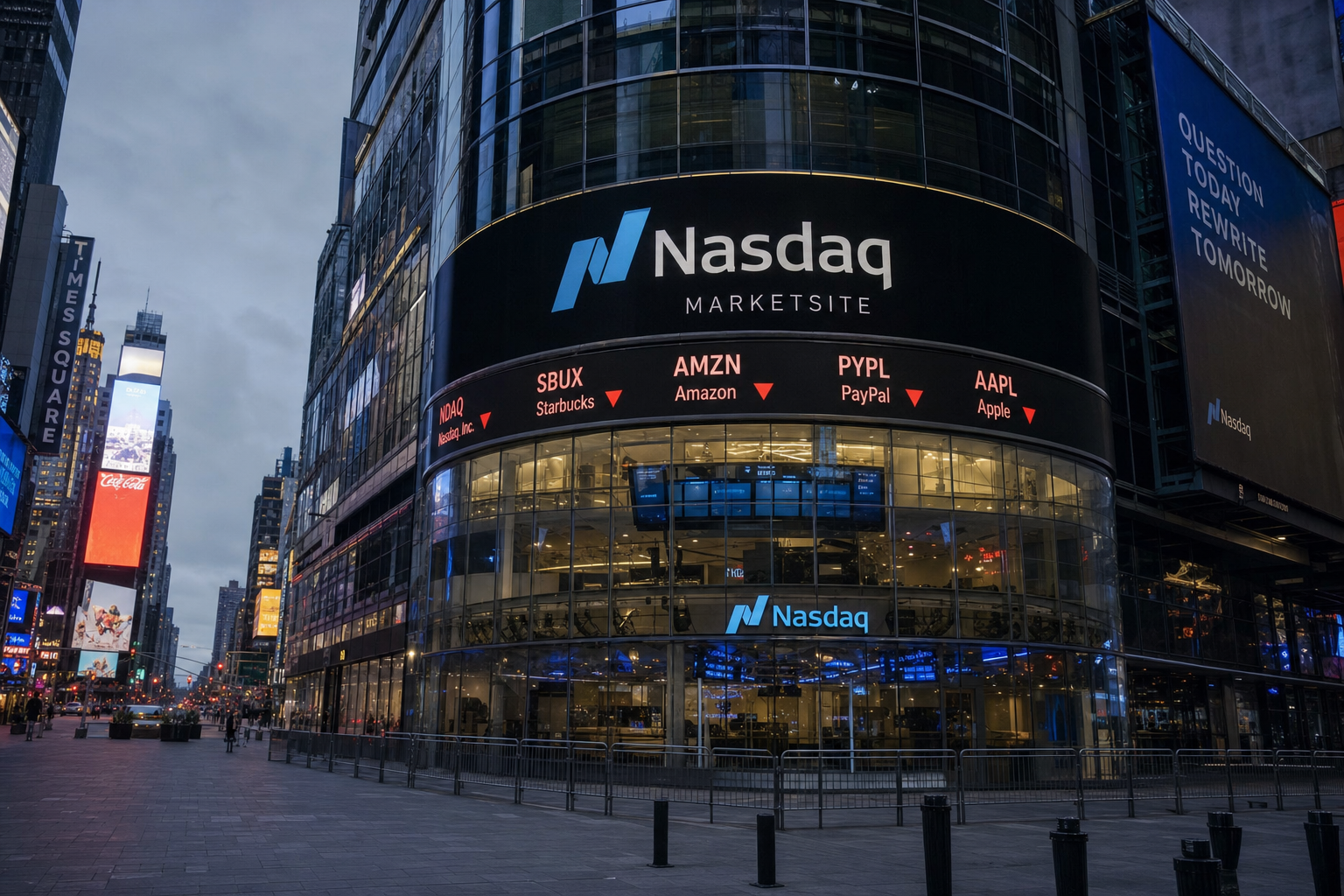
The Session
Friday closed a brutal week for technology investors across every time zone. South Korea's KOSPI fell as much as 8% — severe enough to trigger automatic circuit-breaker trading halts — while Japan's Nikkei dropped around 4.5%. By the time U.S. markets opened, Nasdaq futures had already priced in significant losses, with NVDA, MU, and AMD leading semiconductor declines. MSFT hit a one-year low. AAPL fell on the back of its own AI-driven price increase announcement.
The session was not a surprise in the sense that the conditions for it had been building for weeks. But the speed and geographic breadth of Friday's move suggested the market had been waiting for a reason to reprice — and found one.
The Catalyst and What It Revealed
The immediate trigger was a report that OpenAI is considering delaying its public listing. On the surface, an IPO timing change at a single private company should not move markets across three continents. The fact that it did tells you everything about the architecture of the current rally.
OpenAI's anticipated IPO had functioned as a kind of confidence anchor for the entire AI investment thesis. A near-term listing implied near-term monetization, near-term revenue visibility, and validation that the hundreds of billions being spent on AI infrastructure would eventually produce returns. Remove that anchor, and investors are left holding positions in chip stocks, cloud providers, and software platforms whose valuations assumed the AI buildout would keep accelerating on schedule.
Samsung Electronics and SoftBank Group — a major OpenAI backer — both declined in Asian trading. The correlation was not coincidental. The selloff was a repricing of AI narrative risk, not a reaction to any deterioration in fundamentals.
Winners, Losers, and the Earnings Paradox
The session's most striking feature was the disconnect between fundamentals and price action. Micron reported non-GAAP gross margins of 84.9% for its fiscal third quarter — a result that analysts at Evercore described as beating even the most optimistic forecasts, with genuine "earnings power" behind the AI trade. The stock fell anyway.
AVGO unveiled the Jalapeno AI chip in partnership with OpenAI, with deployment expected in late 2026, extending its custom silicon roadmap at a moment when hyperscalers are actively seeking alternatives to NVDA's general-purpose GPUs. MRVL also reported AI-driven earnings strength. Both stocks faced selling pressure regardless.
This is the hallmark of a sentiment-driven session rather than a fundamentals-driven one. When strong earnings can't hold a bid, the market is telling you the problem isn't the numbers — it's the multiple attached to them.
The one genuine bright spot came from outside the tech sector entirely. C passed the Federal Reserve's 2026 annual stress test and announced a $30 billion share repurchase program alongside plans to increase dividends. For a bank in the middle of a multi-year restructuring, the stress test result was a meaningful signal of financial health — and a reminder that not every sector was caught in Friday's downdraft.
Under the Surface: The Fed Layer
Beneath the AI-specific narrative ran a second, slower-moving current: renewed concern that the Federal Reserve may raise its benchmark interest rate before year-end. This matters independently of OpenAI.
Higher rates compress the valuations of growth stocks by increasing the discount rate applied to future earnings — making those earnings worth less in today's dollars. For a sector where much of the investment case rests on earnings that are still years away, that compression is not trivial. MSFT hitting a one-year low on free cash flow concerns is partly a story about AI capex, but it is also a story about what happens to richly valued companies when the cost of capital starts moving against them.
The macro and the micro reinforced each other on Friday in the worst possible way for equity bulls.
The Valuation Debate Sharpens
Jeremy Grantham of GMO Asset Management chose Friday to issue one of his starkest warnings yet, arguing U.S. equities are at their most expensive level in history and could decline by as much as 70%. Grantham has a long track record of identifying bubbles, though his timing has historically been early — sometimes by years.
On the other side, JPMorgan's head of global markets strategy, Dubravko Lakos-Bujas, acknowledged in the firm's mid-year report that JPMorgan had been overly cautious on 2026 earnings forecasts and now holds a more constructive view. The divergence between these two credible institutions reflects something real: the range of defensible outcomes for U.S. equities is unusually wide right now, and Friday did nothing to narrow it.
Tomorrow's Setup
The two variables that will determine whether Friday's selloff stabilizes or deepens are both unresolved heading into the weekend.
First, any official clarification from OpenAI on its IPO timeline. A statement confirming the delay extends the uncertainty; a denial or revised timeline could provide a meaningful floor for AI-linked names. Neither has materialized as of the close.
Second, Federal Reserve communication. Markets will closely parse any Fed commentary in the coming days for signals on whether a rate hike is genuinely on the table or whether the current anxiety is running ahead of the data. The combination of elevated valuations, AI capex skepticism, and rate uncertainty is a difficult one to hold through — and institutional positioning heading into next week will reflect that.
The onsemi agreement to acquire Synaptics for approximately $7 billion — a move into edge AI and physical AI processing — offers a quieter signal worth watching: even as cloud AI spending faces scrutiny, deal-making in AI hardware at the device level continues. That divergence between cloud AI skepticism and edge AI investment may be one of the more durable themes to emerge from a session that, for most participants, was simply painful.