AI Stocks and Rate Fear Collide in Nasdaq's Worst Day in Over a Year
A stronger-than-expected jobs report has reignited Fed rate hike fears, triggering a broad risk-off selloff that exposed the fragility underlying the AI-driven equity rally.
The Catalyst: Jobs Data Reframes the Rate Narrative
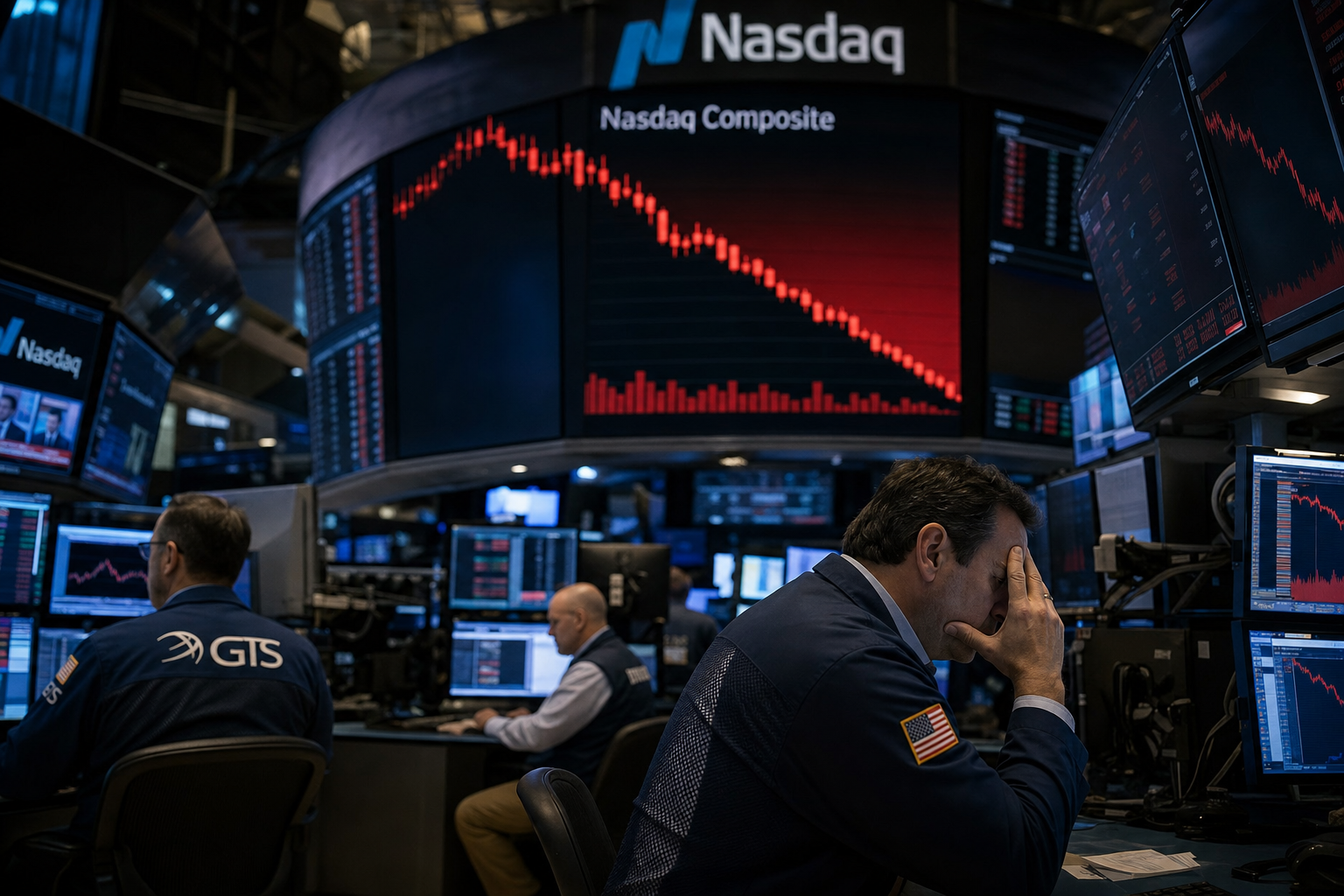
Friday's market selloff was not a random bout of volatility — it was a structural repricing event. The Nasdaq Composite dropped 4.2%, marking its worst single-session decline in more than a year, while the S&P 500 posted its worst day of 2026. The trigger was a stronger-than-expected nonfarm payrolls report, which forced investors to materially revise their expectations for Federal Reserve policy. Where markets had been pricing in rate cuts later this year, the probability of at least one additional rate hike surged following the data release.
The mechanics are straightforward: robust employment data signals persistent inflationary pressure, reducing the Fed's urgency — or willingness — to ease financial conditions. Higher-for-longer rates are a direct headwind for long-duration growth assets, and nothing in today's equity market carries more duration risk than AI-related technology stocks.
AI Stocks Bear the Brunt
The selloff was not uniform. AI-exposed equities, which have been the primary engine of index gains through 2025 and into 2026, led the decline. This is a classic dynamic: when the discount rate rises, the present value of future earnings compresses most severely for companies whose valuations are built on long-horizon cash flow projections. The AI trade, by its nature, is a bet on earnings that are years — in some cases, decades — away.
The QQQ (Invesco QQQ Trust) and SPY (SPDR S&P 500 ETF) both reflected the damage at the index level, but the concentration of losses in the AI complex suggests investors are beginning to question whether current valuations adequately compensate for a higher-rate environment. Capital expenditure concerns also resurfaced, with investors scrutinizing whether the massive infrastructure buildout underpinning AI monetization can be justified if the cost of capital remains elevated.
Contagion Across Asset Classes
The selloff was notably broad-based, extending well beyond equities. Bitcoin suffered one of its worst weekly performances since 2024, underscoring how risk appetite deteriorated across the board. Gold and bonds also declined — an unusual configuration that signals the market is not simply rotating into safe havens, but rather repricing the entire risk-free rate environment. When bonds sell off alongside equities, it typically reflects a fundamental reassessment of monetary policy trajectory rather than simple equity-specific fear.
This cross-asset correlation breakdown is a warning sign for portfolio managers who have relied on traditional diversification. In a regime where the Fed is tightening rather than easing, the negative stock-bond correlation that defined the post-2008 era may not hold.
Context: How Durable Is This Repricing?
It would be premature to declare the AI bull market over on the basis of a single jobs report. However, today's action does reveal meaningful vulnerabilities. First, positioning in AI names was crowded — the speed and magnitude of the selloff suggests forced deleveraging, not merely profit-taking. Second, the market had been operating on an implicit assumption that the Fed's next move would be a cut; that assumption is now in serious doubt.
The critical question for investors is whether today's selloff represents a healthy correction within a secular uptrend or the beginning of a more sustained de-rating of AI valuations. The answer hinges largely on the next several weeks of inflation data. If CPI prints remain sticky, the Fed's hawkish pivot will gain credibility, and current AI multiples — many of which still price in aggressive earnings growth — will face continued pressure.
Forward-Looking Perspective
Professional investors should treat today's session as a stress test of their AI exposure rather than a buying signal. Valuation discipline — long out of fashion during the AI euphoria — reasserts its relevance in a higher-rate world. Companies with near-term, demonstrable AI monetization (rather than speculative future revenue) should prove more resilient. Those with heavy capital expenditure commitments and distant profitability timelines are most exposed.
The Fed's June meeting now carries significantly more weight. Any hawkish language from Chair Powell could extend the de-rating, while a dovish hold might stabilize sentiment. For now, the burden of proof has shifted: the AI trade must justify its valuation premium in a world where the risk-free rate is no longer an afterthought.