AI Spending Cracks, SpaceX Soars, and Europe Eyes Rate Hikes
Three divergent stories are pulling markets in opposite directions midday: Oracle's AI capex alarm, a blockbuster SpaceX IPO, and an ECB poised to tighten for the first time since 2023.
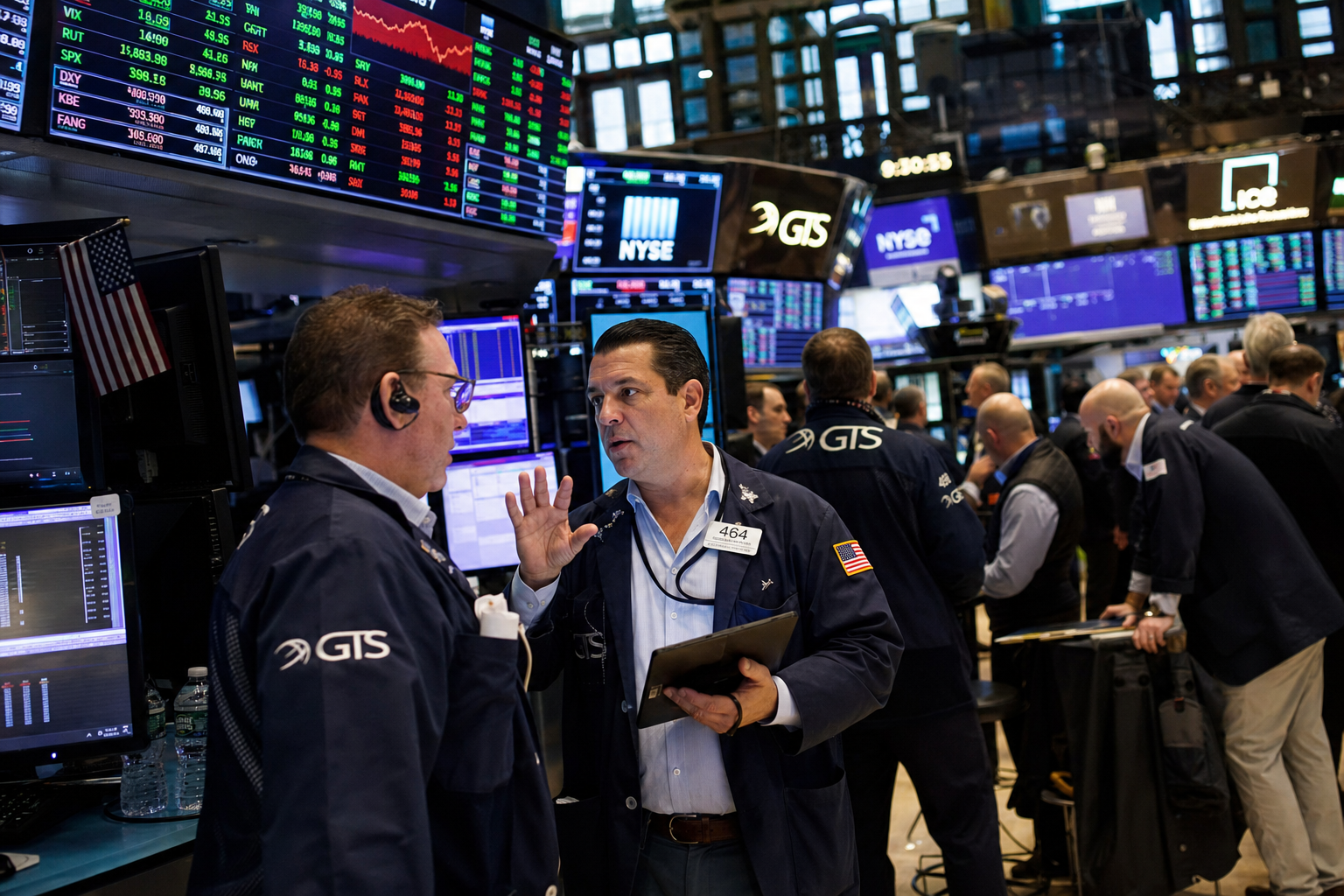
Morning Recap: The AI Trade Cracks Open
The session opened with a clear overhang from Oracle (ORCL), which had disclosed capital expenditure projections of $95 billion by fiscal 2027 — a figure that landed badly in after-hours trading and carried its weight into Thursday's open. ORCL has now shed roughly 20% over five trading sessions, with the single-session after-hours drop alone running close to 9%. The message from investors is blunt: spending at that scale needs revenue justification that isn't visible yet.
What looked like an Oracle-specific problem this morning has broadened into a sector-wide reassessment. A separate analysis circulating among institutional desks found that of 157 gigawatts of AI data center capacity planned across Wall Street's roughly $800 billion buildout, only 84 gigawatts are expected to be operational by 2030. The shortfall reflects real-world constraints — power grid permitting, construction timelines, land access — that don't bend to capital commitments. Alphabet (GOOGL), Meta (META), Amazon (AMZN), and Microsoft (MSFT) are all named in that capacity gap analysis, and their shares have absorbed the read-across.
The morning's narrative, then, is not simply that Oracle missed expectations. It's that the market is beginning to price execution risk into the entire AI infrastructure complex — and doing so with some force.
The Shift: Selective Appetite, Not Blanket Retreat
What's notable about the midday picture is that the skepticism is targeted rather than indiscriminate. Two stories running alongside the Oracle selloff illustrate the distinction clearly.
Intel (INTC) climbed approximately 5% after Bank of America raised its rating from Underperform all the way to Buy, citing improving visibility in Intel's server processor business and its foundry operations — contract chip manufacturing for third parties. That's a meaningful upgrade from the bank's most negative rating, and the market responded. Intel's move suggests investors are still willing to reward companies with credible, near-term hardware stories, even as they punish those with open-ended capex commitments.
Separately, Neura Robotics closed a $1.4 billion Series C — described as the largest ever for a full-stack robotics company — with Amazon (AMZN) and Nvidia (NVDA) among the backers. The round signals that private capital hasn't abandoned AI-adjacent hardware; it's just becoming more selective about where along the value chain it deploys.
That selectivity is the session's defining theme. Broad AI infrastructure sentiment is under pressure. Specific hardware and robotics plays are still attracting capital. The trade has matured enough that investors are differentiating.
SpaceX: A Striking Counterpoint
SpaceX (SPCX) sits in sharp contrast to everything happening in AI infrastructure. Reports indicate the company's IPO is approximately four times oversubscribed at a $1.77 trillion valuation — demand running well ahead of available supply heading into pricing. If that valuation holds at close, the offering would rank among the largest public market debuts on record.
Elon Musk is also scheduled to speak at an event hosted by ASML, the Dutch semiconductor equipment maker, where he is expected to discuss Terafab, his planned chipmaking facility. The dual news flow — an imminent IPO and a semiconductor manufacturing announcement — keeps investor attention unusually concentrated on Musk's portfolio of ventures.
The contrast with Oracle is worth sitting with. Both companies are deeply embedded in the infrastructure buildout that AI requires. One is being punished for the cost of that buildout. The other is being rewarded with record IPO demand. The difference appears to be investor perception of execution credibility and revenue visibility — SpaceX's launch business generates hard, recurring revenue that makes the valuation feel anchored in something concrete.
ECB: The Macro Overlay Tightens
Beyond equities, the session carries a significant macro thread. European Central Bank officials have signaled that a rate increase is possible as early as July — which would mark the ECB's first hike since 2023. The driver is inflation pressure tied directly to the ongoing conflict involving Iran, which has disrupted energy supply chains across the eurozone.
This matters beyond European bond markets. The ECB spent much of 2024 and 2025 cutting rates to support growth. A pivot back to tightening — raising rates to cool inflation — shifts the policy backdrop for European equities, credit spreads, and the euro itself. Higher borrowing costs ripple through government debt servicing, corporate financing, and equity discount rates.
The geopolitical dimension amplifies the stakes. Rystad Energy has warned that if the U.S.-Iran ceasefire were to collapse, oil could reach $150 per barrel. At that price level, inflation pressure would not be confined to Europe — it would force a reassessment of rate paths at central banks globally, including the Federal Reserve. The ECB's July signal is not just a European story; it's a leading indicator of how persistent energy-driven inflation could reshape monetary policy across multiple regions.
China: Regulatory Risk Returns
Adding a third geographic layer to the session, Alibaba (BABA) and JD.com (JD) both declined after Beijing regulators publicly criticized major e-commerce platforms for misleading promotional practices. Chinese tech stocks had staged a meaningful recovery as regulatory headwinds appeared to ease — and any indication that scrutiny is returning tends to prompt sharp de-risking in the sector.
The selloff in BABA and JD carries implications beyond the two stocks. Emerging market indices and ETFs with significant China exposure will feel the weight, and investors who rotated back into Chinese internet equities on signs of economic stabilization are now being reminded that policy risk in Beijing can materialize quickly and without detailed advance warning.
Afternoon Setup
Three things will shape the remainder of the session. First, SpaceX IPO pricing — if confirmed before the close, the market's reaction to the final valuation will test whether the four-times oversubscription translates into actual first-day performance or whether demand softens at the margin. Second, any ECB commentary that firms up the July rate hike timeline will move European rates and the euro, with knock-on effects for U.S. Treasury yields and dollar positioning. Third, watch whether the Oracle-driven AI capex concern continues to broaden into GOOGL, META, AMZN, and MSFT — or whether those stocks stabilize as investors conclude the Oracle read-across is overstated.
The session's underlying tension is between two valid market instincts: skepticism about the economics of AI infrastructure at scale, and genuine excitement about specific companies executing within that infrastructure. Both are present today, and neither has fully won the argument.