AI Rally Hits New Highs While Consumer Foundations Show Cracks
Thursday's session delivered a split verdict: AI infrastructure trades roared higher on landmark deals, while the Fed's preferred inflation gauge and a collapsing savings rate pointed to growing stress beneath the surface.
The Session
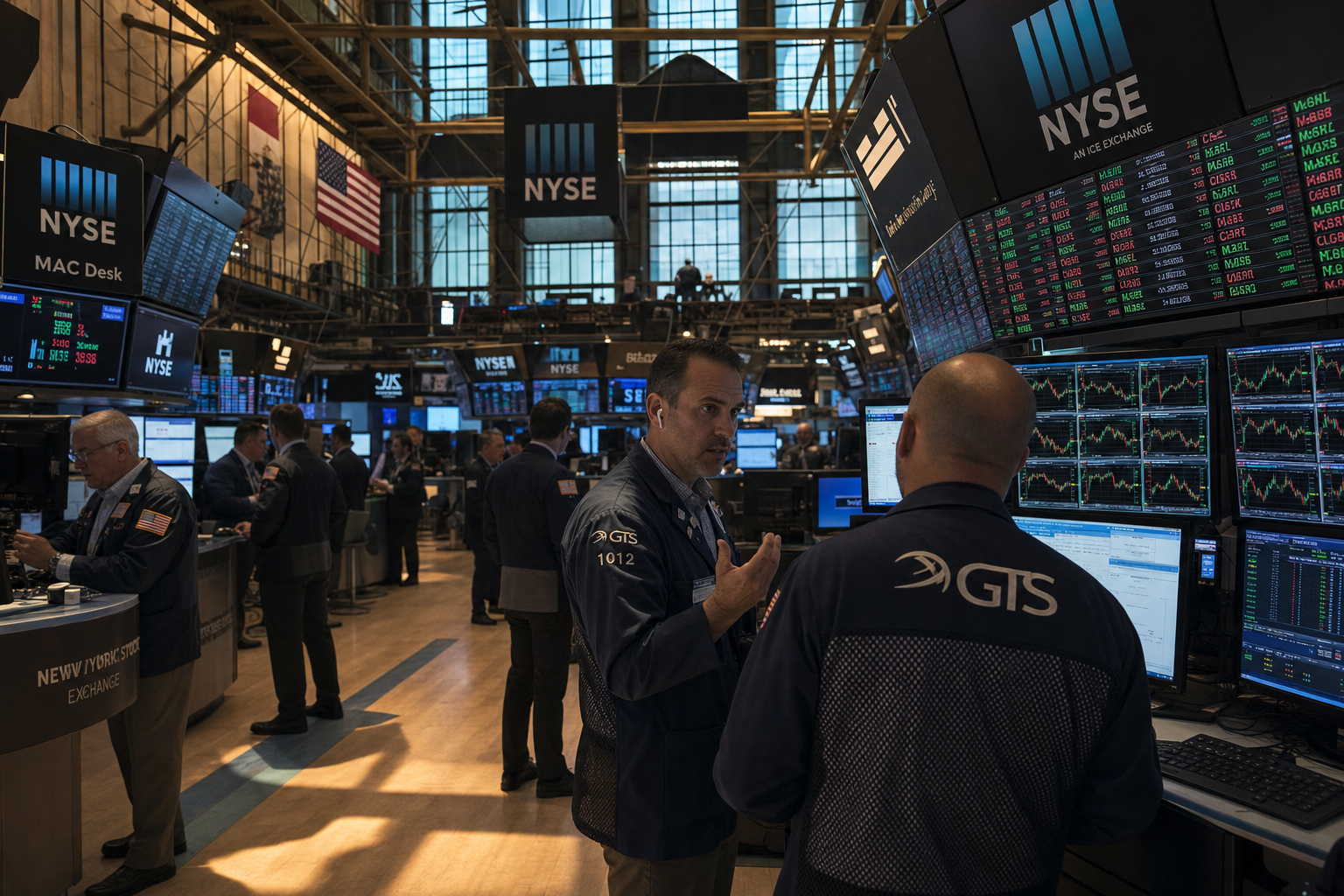
Thursday closed as one of the more schizophrenic sessions of the year. On the scoreboard, AI-linked names delivered some of the sharpest single-day moves of the current cycle. Beneath the headline equity action, however, two macro data releases landed with the quiet force of a slow leak: the Federal Reserve's preferred inflation gauge rose to its highest level since late 2023, and the U.S. personal savings rate fell to 2.6% — a figure that matches April 2008, the last time households were this stretched before a major economic dislocation.
The tension between those two realities — a momentum-driven AI trade and a deteriorating consumer foundation — defined the session and will carry into June.
Winners and Losers
Snowflake (SNOW) was the session's standout mover. Shares jumped roughly 35% after the company reported first-quarter results for fiscal year 2027 that beat expectations, and simultaneously announced a $6 billion partnership with Amazon's (AMZN) AWS cloud division. The CEO described the quarter as an AI "inflection point" — language that markets took seriously given the deal's scale. A 35% single-session gain for a large-cap software name is rare, and the AWS commitment provides Snowflake with both revenue visibility and a significant distribution advantage as enterprises accelerate AI workload deployments.
The deal also reinforces a structural shift: hyperscalers — the handful of companies operating massive cloud infrastructure, including Amazon, Microsoft, and Alphabet — are deepening commercial ties with independent data and AI software vendors rather than building all capabilities in-house. That is a meaningful signal for the broader cloud software sector.
SK Hynix (SKHYY) crossed the $1 trillion market capitalization threshold after shares climbed 9.3%, joining Micron Technology (MU) in the ranks of trillion-dollar memory companies. Sandisk (SNDK) also posted significant gains. The bull case rests on surging demand for high-bandwidth memory, the specialized chip architecture required for advanced AI accelerators. Analysts cited in source material argue the memory boom is far from over, pointing to AI infrastructure spending commitments from Meta, Microsoft, Alphabet, and Amazon. That said, the speed and magnitude of recent moves prompted some caution about near-term positioning — the term "climactic top" appeared in analyst commentary, a technical descriptor for a parabolic surge that can precede a sharp reversal.
Dell Technologies (DELL) gained approximately 7% after securing a five-year, $9.7 billion enterprise software agreement with the U.S. Department of Defense. The contract provides multi-year revenue visibility and validates Dell's repositioning around government cloud and AI infrastructure at a moment when federal technology spending is expanding. Defense contracts of this scale are largely insulated from the consumer-side pressures weighing on the broader economy — a meaningful distinction given Thursday's macro data.
On the credit side, the merger involving Warner Bros. Discovery (WBD) and Paramount's Skydance transaction produced a $15 billion cross-border term loan B — a leveraged loan extended to companies with significant existing borrowings, typically used to finance acquisitions — making it the largest such deal since the Global Financial Crisis. The sheer size of the financing tests institutional appetite for high-yield credit at precisely the moment when the macro backdrop is tightening.
Under the Surface
The macro data released Thursday deserves more attention than equity indices alone would suggest.
The PCE price index — the Personal Consumption Expenditures measure that the Fed watches most closely when calibrating interest rate policy — climbed to its highest reading since late 2023. Real incomes, adjusted for that inflation, declined on a year-over-year basis, meaning households are effectively earning less in purchasing-power terms. The data complicates any near-term case for rate cuts and keeps the prospect of a prolonged higher-for-longer rate environment on the table.
The savings rate data is the more historically charged signal. At 2.6%, the U.S. personal savings rate — the share of disposable income that households set aside rather than spend — matches the lowest level recorded since April 2008. Sustained readings at this level can indicate that consumers are drawing down financial buffers to maintain spending, a dynamic that is unsustainable if income growth does not accelerate. Neither the PCE print nor the savings rate figure is conclusive in isolation, but together they suggest the consumer foundation underpinning U.S. growth may be considerably thinner than equity valuations currently imply.
JPMorgan Chase (JPM) added another dimension to the financial landscape. CEO Jamie Dimon signaled the bank has capacity to deploy up to $20 billion for strategic acquisitions — a statement that positions JPMorgan as one of the most active potential acquirers in financial services. The announcement carries a dual read: confidence in the bank's capital position on one hand, and meaningful execution and regulatory risk on the other, given JPMorgan's scale as the largest U.S. bank by assets. No specific targets were named.
Tomorrow's Setup
The defining question heading into Friday is whether the macro data begins to register more forcefully in asset prices. Thursday's session largely compartmentalized the PCE and savings rate prints — equity markets absorbed them without visible distress, with AI-linked names providing enough upside momentum to offset the macro drag. That compartmentalization has limits.
Watch for any Fed commentary responding to the elevated PCE reading. Any signal that rate cuts are being pushed further out — or that a hike is back in play — would land differently in a market where valuations in the semiconductor and cloud software space are stretched by most conventional measures.
The Warner Bros. $15 billion leveraged loan will also serve as a near-term gauge of credit market health. How institutional lenders price and absorb that paper will say something meaningful about risk appetite heading into a macro environment that is quietly becoming less accommodating.
Snowflake's post-earnings trading will be worth monitoring for confirmation of Thursday's surge. Large single-session moves in software names have occasionally faded in subsequent sessions as initial enthusiasm meets position-sizing reality. Whether SNOW holds its gains will influence sentiment across the cloud software peer group.
The savings rate data will feed into broader consumer spending revisions in coming weeks. Retail, discretionary, and consumer credit names are the sectors most directly exposed if that 2.6% figure proves to be a leading indicator rather than a statistical anomaly.