After Powell: What the Fed Chair Transition Means for Markets
Jerome Powell's departure marks the end of an era defined by crisis management and rate volatility — and opens a pivotal question about central bank independence.
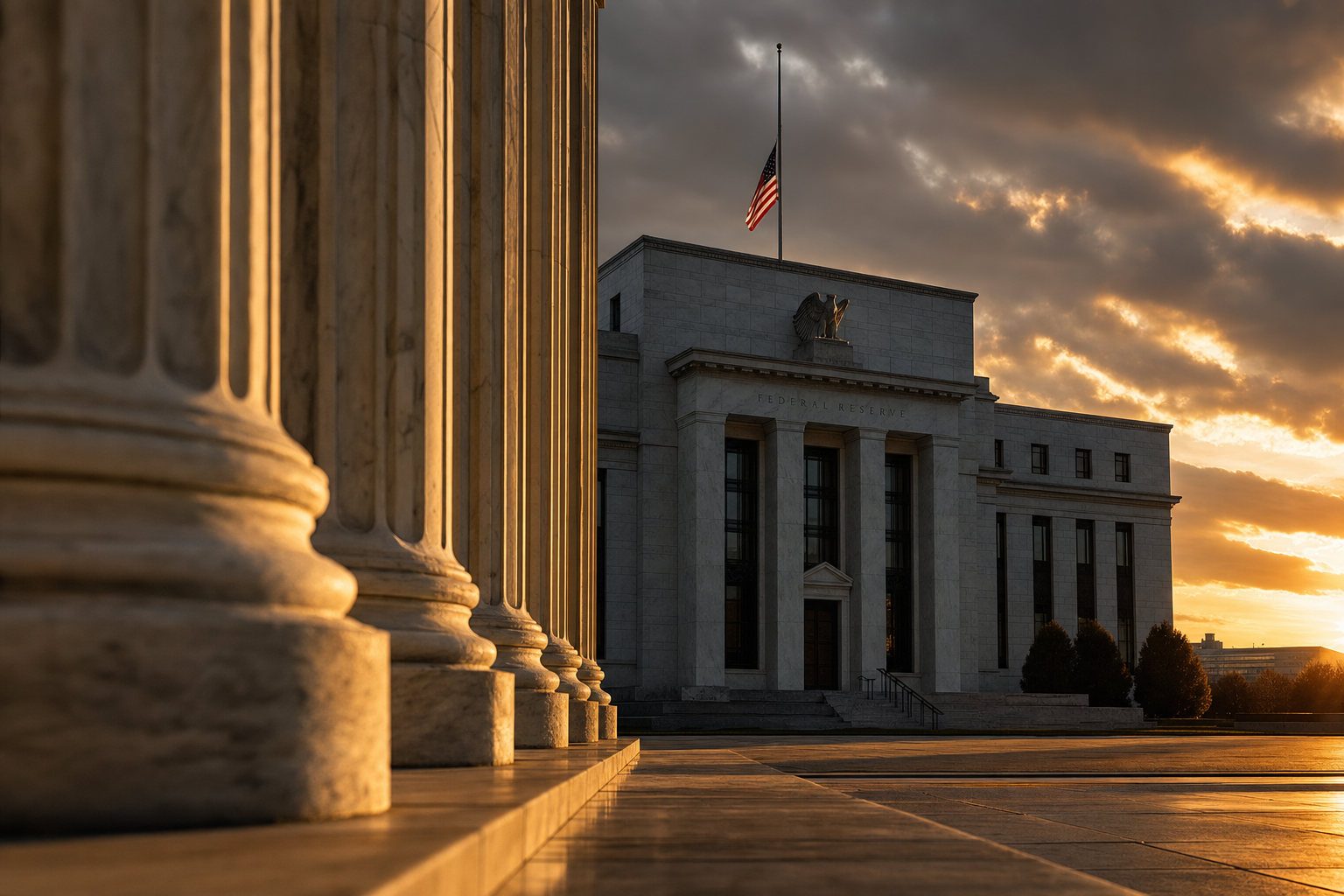
The End of the Powell Era
Jerome Powell's tenure as Federal Reserve Chair closes not with a quiet handoff but with one of the most consequential monetary policy transitions in decades. Having navigated the COVID-era zero-rate experiment, the most aggressive tightening cycle since Paul Volcker, and persistent political pressure from the White House, Powell leaves behind a Fed that is institutionally tested but structurally intact. The central question for professional investors is not what Powell did — but what comes next, and whether his successor will preserve the independence that anchors dollar-denominated asset valuations globally.
A Legacy Defined by Extremes
Powell's tenure, which began in February 2018, was defined by two historic pivots. The first was the emergency rate-cutting campaign of 2020, which brought the federal funds rate to the zero lower bound and expanded the Fed's balance sheet to nearly $9 trillion. The second was the 2022–2023 tightening cycle, which delivered 525 basis points of rate increases in roughly 16 months — the fastest pace of monetary tightening in four decades.
By most macroeconomic measures, the outcome was a relative success. The U.S. avoided a technical recession during the tightening cycle, core PCE inflation declined from a peak of approximately 5.6% toward the 2% target, and labor markets remained historically tight. Critics argue that the Fed was too slow to recognize inflation as structural rather than transitory in 2021 — a misjudgment that forced the aggressive catch-up tightening. That criticism is fair. But the soft landing, however imperfect, was not a foregone conclusion.
The Independence Question
What defines the transition moment most sharply is not monetary policy mechanics but central bank independence. Throughout 2025 and into 2026, the Trump administration applied sustained public pressure on Powell to cut rates aggressively, with the President at various points suggesting Powell should be removed before his term's natural conclusion. Powell consistently and publicly resisted, asserting the Fed's statutory independence.
This friction matters enormously to bond markets and foreign central banks. The term premium on U.S. Treasuries — the extra yield investors demand to hold long-duration government debt — is partly a function of confidence in apolitical monetary policy. Any perception that the incoming Fed Chair is more politically accommodating risks embedding a structural premium into the long end of the yield curve, with cascading effects on mortgage rates, corporate borrowing costs, and equity valuations.
What Markets Should Watch
For investors, the transition creates several distinct risk vectors:
1. Confirmation and credibility signaling. The Senate confirmation process for Powell's successor will itself be a market event. Testimony before the Senate Banking Committee will be parsed for any deviation from orthodox inflation-targeting language. A nominee who hedges on the 2% target or signals tolerance for above-target inflation in exchange for growth will face immediate Treasury market pushback.
2. Fed communication continuity. Powell institutionalized a particular style of forward guidance — press conferences after every FOMC meeting, careful management of market expectations through the dot plot. A new chair who disrupts communication norms introduces volatility even before any policy change occurs.
3. The rate path itself. As of mid-2026, the Fed is navigating a delicate balance: inflation not fully vanquished, growth moderating, and trade policy uncertainty (particularly tariff-related price pressures) complicating the inflation outlook. The incoming chair inherits a policy environment with no clean playbook.
Forward-Looking Perspective
The S&P 500 and U.S. Treasury market have historically absorbed Fed leadership transitions without lasting disruption — provided the successor signals continuity on the inflation mandate. The Bernanke-to-Yellen and Yellen-to-Powell handoffs were largely orderly. The risk this time is that the political context is more charged, and global confidence in U.S. institutional credibility is already under scrutiny.
Investors should monitor the 10-year Treasury yield and the DXY dollar index as real-time credibility gauges during the confirmation process. A spike in the former alongside a decline in the latter would signal that markets are pricing in a loss of Fed independence — a scenario that would reprice risk assets broadly.
Powell's legacy is ultimately one of resilience under pressure. Whether that resilience outlasts his chairmanship depends on who sits next in that seat, and whether they can convince markets that the Fed's mandate remains inflation control — not political accommodation.