After Powell: How Fed Leadership Transition Reshapes Rate Expectations
Jerome Powell's departure as Fed Chair introduces a new layer of policy uncertainty at a moment when inflation pressures are already testing market resilience.
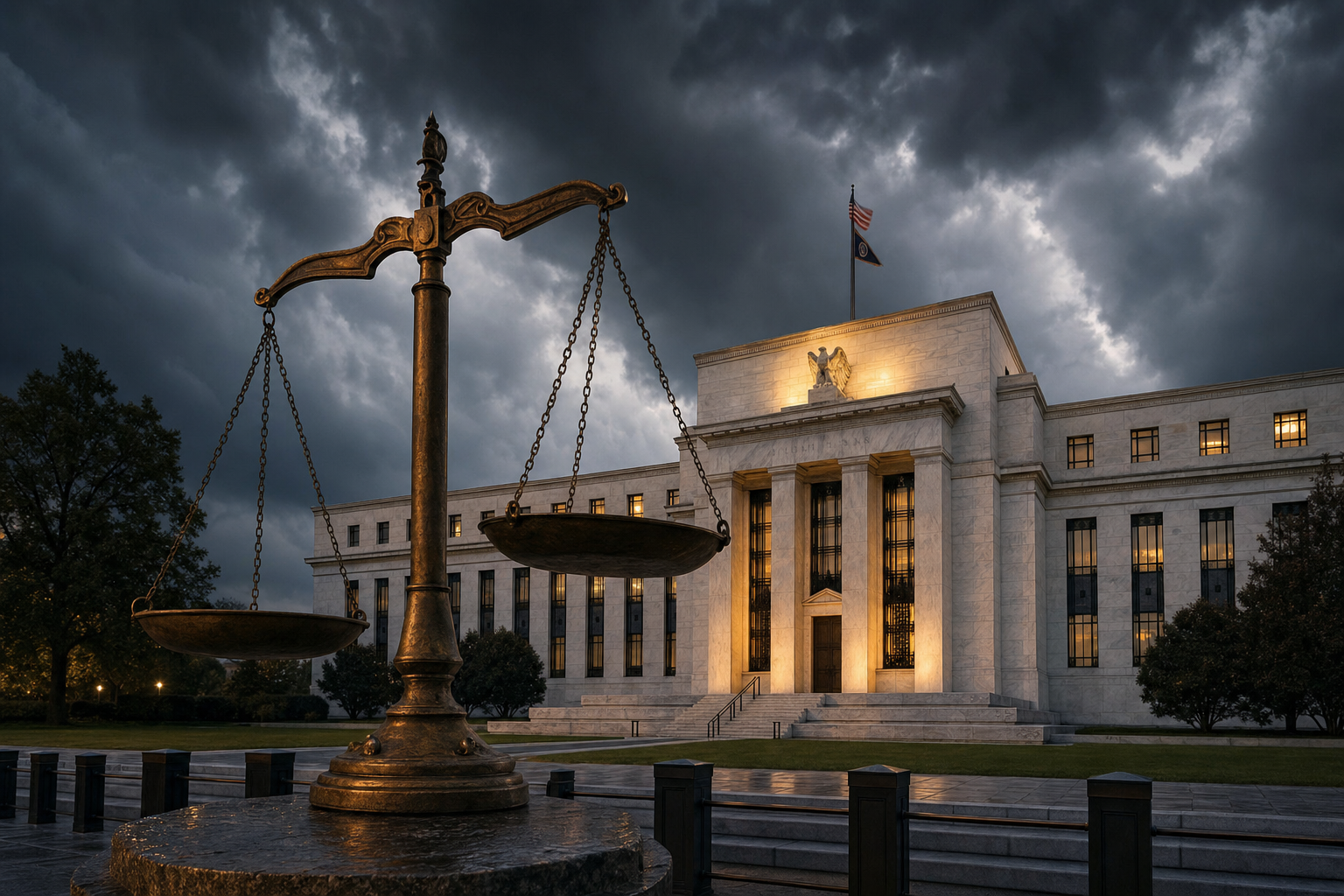
A Pivotal Moment for Monetary Policy
The exit of Jerome Powell as Federal Reserve Chair marks one of the most consequential leadership transitions in U.S. monetary policy in over a decade. Coming at a time when inflation fears have re-intensified — driven by rising energy prices and persistent services inflation — the change at the top of the Fed introduces meaningful uncertainty into an already fragile macro environment. For professional investors, the central question is not merely who succeeds Powell, but what that succession signals about the future path of interest rates.
The Market Reaction: A Preview of What's at Stake
Equity markets responded sharply to news of Powell's departure, with major U.S. indices closing lower as the announcement coincided with a broader risk-off session. Rising Treasury yields and surging oil prices compounded the selloff, reflecting a market grappling with dual anxieties: the possibility of a more politically accommodative Fed successor, and the inflationary backdrop that would make dovish pivots genuinely dangerous.
The 10-year Treasury yield — the benchmark most sensitive to long-run inflation expectations — is the instrument to watch. Any perception that Powell's successor will be more tolerant of above-target inflation, or more susceptible to political pressure to cut rates prematurely, risks a sustained repricing of the long end of the curve. That, in turn, would pressure equity valuations, particularly in rate-sensitive sectors like real estate, utilities, and high-multiple growth technology.
Powell's Legacy and the Inflation Credibility Question
Powell's tenure will be defined by two distinct chapters: the historically aggressive tightening cycle of 2022–2023, which brought the federal funds rate from near zero to over 5%, and the subsequent navigation of a soft-landing scenario that, until recently, appeared largely successful. His credibility as an inflation fighter — hard-won through politically uncomfortable rate hikes — provided the Fed with significant institutional capital.
That credibility is not automatically transferable. Central bank credibility is a fragile asset, built over years and capable of being undermined quickly. Markets will scrutinize every public statement from Powell's successor for signals about their tolerance for inflation overshoot, their independence from the White House, and their interpretation of the Fed's dual mandate. Any ambiguity will be priced in — and not favorably.
The Political Dimension
The timing of this transition cannot be divorced from its political context. Appointing a Fed Chair who is perceived as more amenable to rate cuts would provide near-term relief to borrowers and potentially boost asset prices. However, the bond market — often described as the ultimate arbiter of fiscal and monetary discipline — is unlikely to reward such a move if inflation remains elevated. The risk of a "bond vigilante" response, where investors sell Treasuries to protest loose policy, is a genuine constraint on any incoming chair's room to maneuver.
Historically, Fed transitions have produced periods of elevated rate volatility. The 1987 appointment of Alan Greenspan, for instance, coincided with the October crash, though causality was complex. Investors should anticipate a similar period of price discovery as the market recalibrates its expectations around the new chair's policy framework.
Forward-Looking Positioning
For portfolio managers, the Powell exit warrants several tactical and strategic considerations:
- Duration risk deserves reassessment. If the new Fed leadership is perceived as dovish, a short-term rally in Treasuries is possible — but the medium-term inflation risk argues for caution on long-duration fixed income.
- Inflation-linked securities (TIPS) and commodities exposure may serve as useful hedges during the transition period.
- Financial sector equities present a mixed picture: steeper yield curves benefit bank net interest margins, but credit quality concerns rise if rate policy becomes erratic.
- Gold has historically performed well during periods of central bank credibility uncertainty and warrants consideration as a portfolio hedge.
The Fed's independence is not merely an institutional nicety — it is a foundational pillar of U.S. financial market stability. How the incoming chair establishes their credibility in the first months of tenure will set the tone for risk assets well into 2027.